

Comparison
BLUETTI Apex 300 vs EcoFlow DELTA Pro 3
Essential Backup Compared
Choose BLUETTI Apex 300 or EcoFlow DELTA Pro 3 for essential backup with matched battery kits, outlet limits, runtime estimates and home connection checks.
By thisWATT EditorialUpdated November 3, 20269 min read2 picks
Our recommendation: EcoFlow DELTA Pro 3
Expandable storage with a choice of appliance or installed circuit backup.
Limit: It cannot pair with DELTA Pro Ultra; circuit backup requires compatible connection hardware and an electrician.
On this page · Our picks at a glance
Our picks at a glance
- 1
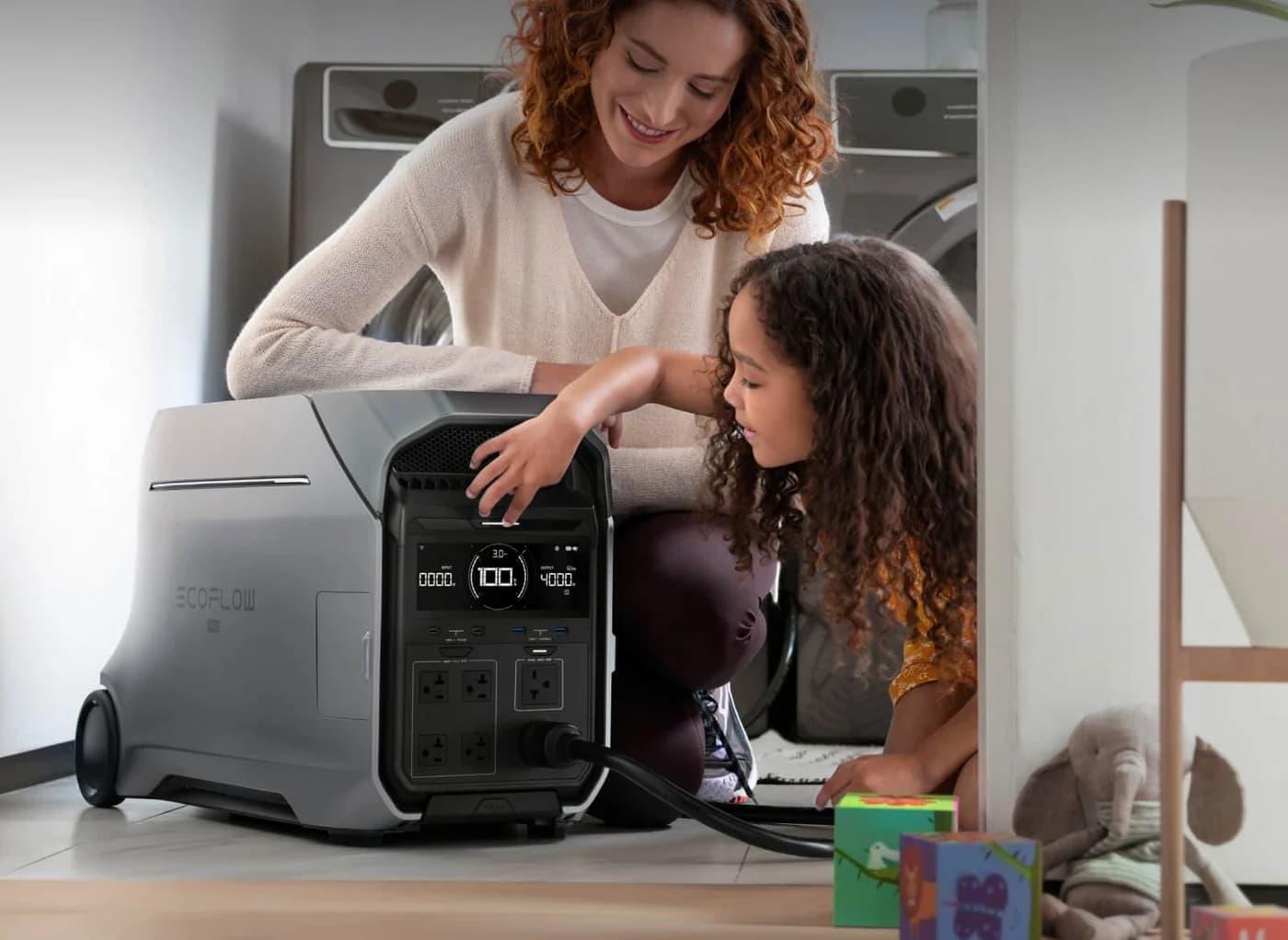
Choose for: Expandable storage with a choice of appliance or installed circuit backup.
Limit: It cannot pair with DELTA Pro Ultra; circuit backup requires compatible connection hardware and an electrician.
- 2
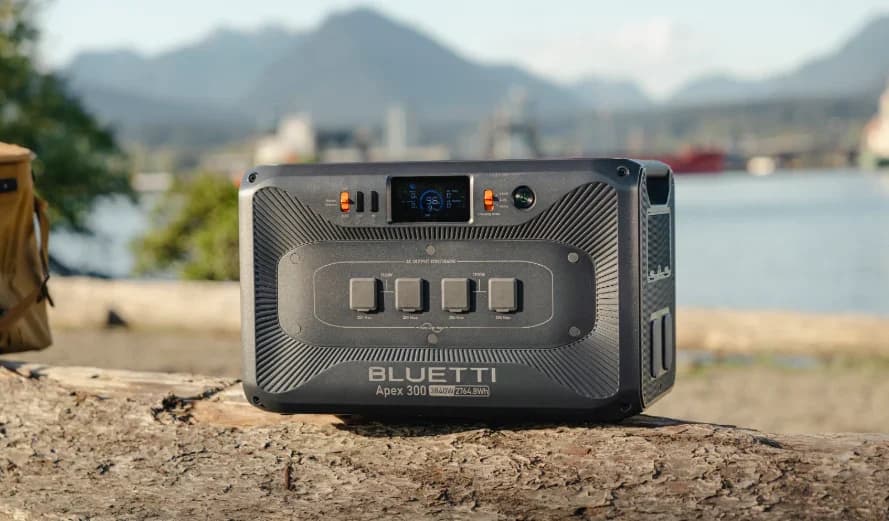
Choose for: Long maker-rated cell cycle life for a backup plan.
Limit: USB and 12 V outputs require the separate Hub D1; the manual excludes server/workstation UPS use.
For most buyers choosing BLUETTI vs EcoFlow for essential backup, start with the EcoFlow DELTA Pro 3: its base unit stores more energy and includes USB and DC outputs. Choose the BLUETTI Apex 300 when you need its mixed-voltage outlet arrangement or prefer its B300K expansion path, after checking the outlet limits below. These are US configurations; the recommendation comes from manufacturer documents, with estimated runtimes rather than physical testing.
Quick picks
Compare specifications and all conditions
More backup energy before buying batteries
- Our pick
- DELTA Pro 3
- The deciding tradeoff
- Larger base battery; heavier station
Ordinary 120V outlets alongside a 240V appliance
- Our pick
- Apex 300
- The deciding tradeoff
- Both remain available in its 240V setting, with reduced socket limits
Similar stored energy in an expanded kit
- Our pick
- Compare the baskets below
- The deciding tradeoff
- Apex needs two B300K batteries; EcoFlow needs one matching extra battery
Full comparison table
Swipe to compare. Row labels stay visible.
| Your priority | Our pick | The deciding tradeoff |
|---|---|---|
| More backup energy before buying batteries | DELTA Pro 3 | Larger base battery; heavier station |
| Ordinary 120V outlets alongside a 240V appliance | Apex 300 | Both remain available in its 240V setting, with reduced socket limits |
| Similar stored energy in an expanded kit | Compare the baskets below | Apex needs two B300K batteries; EcoFlow needs one matching extra battery |
Scroll horizontally to see every column
| Your priority | Our pick | The deciding tradeoff |
|---|---|---|
| More backup energy before buying batteries | DELTA Pro 3 | Larger base battery; heavier station |
| Ordinary 120V outlets alongside a 240V appliance | Apex 300 | Both remain available in its 240V setting, with reduced socket limits |
| Similar stored energy in an expanded kit | Compare the baskets below | Apex needs two B300K batteries; EcoFlow needs one matching extra battery |
This page compares the two platforms for the same job. For smaller stations, use our four-brand comparison; for other home systems, see home battery backup.
Base units: capacity and output are different decisions
The Apex US manual and DELTA Pro 3 manual give these figures. Cycle ratings come from the BLUETTI specification data and EcoFlow's manual.
Nominal battery capacity
- BLUETTI Apex 300
- 2,764.8Wh
- EcoFlow DELTA Pro 3
- 4,096Wh
Rated AC output, shared total
- BLUETTI Apex 300
- 3,840W
- EcoFlow DELTA Pro 3
- 4,000W
Starting-power evidence
- BLUETTI Apex 300
- 7,680W is Power Lifting for resistive loads; no equivalent surge figure established here
- EcoFlow DELTA Pro 3
- 8,000W surge
AC receptacles
- BLUETTI Apex 300
- Four 5-20R, TT-30R, 14-50R
- EcoFlow DELTA Pro 3
- Four 5-20R, TT-30R, L14-30R, 6-20R
USB / DC on the station
- BLUETTI Apex 300
- Separate Hub D1 required
- EcoFlow DELTA Pro 3
- Two USB-C, two USB-A; DC5521 and Anderson
Chemistry; maker's cycle rating
- BLUETTI Apex 300
- LiFePO4; 6,000+ to 80%
- EcoFlow DELTA Pro 3
- LFP; 4,000 to at least 80%, under EcoFlow's stated conditions
Station weight
- BLUETTI Apex 300
- About 83.78 lb
- EcoFlow DELTA Pro 3
- About 113.54 lb
Full comparison table
Swipe to compare. Row labels stay visible.
| US standalone station | BLUETTI Apex 300 | EcoFlow DELTA Pro 3 |
|---|---|---|
| Nominal battery capacity | 2,764.8Wh | 4,096Wh |
| Rated AC output, shared total | 3,840W | 4,000W |
| Starting-power evidence | 7,680W is Power Lifting for resistive loads; no equivalent surge figure established here | 8,000W surge |
| AC receptacles | Four 5-20R, TT-30R, 14-50R | Four 5-20R, TT-30R, L14-30R, 6-20R |
| USB / DC on the station | Separate Hub D1 required | Two USB-C, two USB-A; DC5521 and Anderson |
| Chemistry; maker's cycle rating | LiFePO4; 6,000+ to 80% | LFP; 4,000 to at least 80%, under EcoFlow's stated conditions |
| Station weight | About 83.78 lb | About 113.54 lb |
Scroll horizontally to see every column
| US standalone station | BLUETTI Apex 300 | EcoFlow DELTA Pro 3 |
|---|---|---|
| Nominal battery capacity | 2,764.8Wh | 4,096Wh |
| Rated AC output, shared total | 3,840W | 4,000W |
| Starting-power evidence | 7,680W is Power Lifting for resistive loads; no equivalent surge figure established here | 8,000W surge |
| AC receptacles | Four 5-20R, TT-30R, 14-50R | Four 5-20R, TT-30R, L14-30R, 6-20R |
| USB / DC on the station | Separate Hub D1 required | Two USB-C, two USB-A; DC5521 and Anderson |
| Chemistry; maker's cycle rating | LiFePO4; 6,000+ to 80% | LFP; 4,000 to at least 80%, under EcoFlow's stated conditions |
| Station weight | About 83.78 lb | About 113.54 lb |
The output ratings are close; the battery capacities are not. Extra batteries add stored energy without adding another station inverter.
Source: Manufacturer capacities in the comparison table above
Best starting point: EcoFlow DELTA Pro 3
Buy the Pro 3 first if its base battery covers your outage plan: it avoids buying expansion hardware just to reach the larger starting capacity. Its USB-C ports provide up to 100W each and USB-A up to 18W each; the DC5521 and Anderson outputs share a 378W maximum, per the manual. That makes it our simpler starting basket for a mix of AC and compatible DC devices.
EcoFlow
A 4,096Wh LFP home-backup power station with 4,000W of 120V/240V output (8,000W surge), 2,600W of dual solar input and expansion to 12kWh per unit, listed by EcoFlow as UL 9540 certificated.
Check package and model options
- 4,096 Wh capacity
- 4,000 W AC out
- LiFePO4
The catch is voltage selection. The manual says enabling the high-voltage AC output disables the low-voltage output, and vice versa. Count the sockets available in your chosen mode before buying. Our EcoFlow backup family guide handles the wider family decision.
Best for mixed-voltage plug-in loads: BLUETTI Apex 300
Apex makes sense when you want an ordinary 120V load running alongside a 240V load. Its voltage selector retains the 120V sockets in the 240V position, but the manual reduces each 5-20R to 16A, with a 1,920W limit per pair; TT-30R also falls to 16A. The 14-50R supplies split-phase output at up to 16A on battery, within the station's total output ceiling.
BLUETTI
A 2,764.8Wh LiFePO4 home-backup unit with 3,840W of AC output, a NEMA 14-50R and TT-30R, 2,400W of solar input and expansion with up to six B300K batteries per unit.
Check package and model options
- 2,764.8 Wh capacity
- 3,840 W AC out
- LiFePO4
Budget the accessory for your actual DC needs. Hub D1's manual documents a separate 700W DC hub with USB-C and selectable 12V/24V outputs. The B300K has a small 12W USB-A output of its own. Neither accessory adds another AC inverter.
Expanded baskets for roughly the same energy budget
For an approximately 8kWh nominal target, compare these complete AC appliance baskets. Totals below are arithmetic from the makers' component capacities, not usable energy measured at the outlets.
Station
- Apex basket
- One Apex 300
- EcoFlow basket
- One DELTA Pro 3
Expansion batteries
- Apex basket
- Two B300K for Apex 300, 2,764.8Wh each
- EcoFlow basket
- One DELTA Pro 3 Smart Extra Battery, 4,096Wh
Battery cables
- Apex basket
- Two CA90 cables; verify both are included
- EcoFlow basket
- Included EcoFlow Extra Battery Cable
Nominal total (Wh)
- Apex basket
- 3 × 2,764.8 = 8,294.4
- EcoFlow basket
- 2 × 4,096 = 8,192
AC output remains
- Apex basket
- 3,840W
- EcoFlow basket
- 4,000W
Optional for DC loads
- Apex basket
- Hub D1, depending on ports needed
- EcoFlow basket
- Compatible device cables; station ports are built in
Full comparison table
Swipe to compare. Row labels stay visible.
| What to order | Apex basket | EcoFlow basket |
|---|---|---|
| Station | One Apex 300 | One DELTA Pro 3 |
| Expansion batteries | Two B300K for Apex 300, 2,764.8Wh each | One DELTA Pro 3 Smart Extra Battery, 4,096Wh |
| Battery cables | Two CA90 cables; verify both are included | Included EcoFlow Extra Battery Cable |
| Nominal total (Wh) | 3 × 2,764.8 = 8,294.4 | 2 × 4,096 = 8,192 |
| AC output remains | 3,840W | 4,000W |
| Optional for DC loads | Hub D1, depending on ports needed | Compatible device cables; station ports are built in |
Scroll horizontally to see every column
| What to order | Apex basket | EcoFlow basket |
|---|---|---|
| Station | One Apex 300 | One DELTA Pro 3 |
| Expansion batteries | Two B300K for Apex 300, 2,764.8Wh each | One DELTA Pro 3 Smart Extra Battery, 4,096Wh |
| Battery cables | Two CA90 cables; verify both are included | Included EcoFlow Extra Battery Cable |
| Nominal total (Wh) | 3 × 2,764.8 = 8,294.4 | 2 × 4,096 = 8,192 |
| AC output remains | 3,840W | 4,000W |
| Optional for DC loads | Hub D1, depending on ports needed | Compatible device cables; station ports are built in |
The B300K manual shows Apex expansion and specifies CA90 for Apex/B300K connections. Its US sales page includes a CA90 with the selected Apex battery. The EcoFlow battery manual names the matching station and included cable.
Hub A1 is for parallel Apex stations, not a required part of this single-station basket. BLUETTI's public Apex FAQ still calls some B300K cables P090A, while its B300K manual and current box contents specify CA90 for this pairing. Hub D1's manual names a P090D connector; its product page says P090A. Buy the Apex-specific battery/cable variant and obtain confirmation if the package uses a different name. An extra battery alone, a panel-only package and a station-plus-battery kit are different purchases.
Voltage, bypass and UPS traps
Bypass means AC input and output operate together. Apex's ordinary AC input is limited to 120V, 15A and 1,800W for charging plus bypass; its separate P050A path has different ratings. The page's 12kW bypass headline is not battery inverter output. Its manual gives 20ms switching generally; the 0ms arrangement specifically requires the 240V setting, grid power through the 15A input and the two left AC outlets.
EcoFlow specifies 10ms station UPS transfer. Its US bypass output is 100–120V, although battery output supports split phase. X-Fusion can supplement AC input from the battery up to rated output; that does not turn the wall supply into an unlimited continuous source. The manual says UPS operation requires input exceeding the connected load so the battery can retain charge; it lists bypass input at 15A for up to three hours, then 12A continuous.
For intermittent fridge loads, BLUETTI says to disable ECO mode; EcoFlow says to set AC timeout to never. Otherwise an idle output can shut off.
Same-load runtime estimates: size energy, then check starts
For a controlled estimate, use hours = nominal Wh × 95% × 90% ÷ (load W + 20W). Apex's manual gives 95% depth of discharge, inverter efficiency over 90% and about 20W self-consumption; we conservatively use 90% efficiency. Applying those same allowances to EcoFlow is a comparison assumption, not an EcoFlow efficiency or idle-draw measurement.
For example, Apex at a steady 300W: 2,764.8 × 95% × 90% ÷ (300 + 20) gives about seven hours. The same assumed losses give the Pro 3 4,096 × 95% × 90% ÷ (300 + 20), about eleven hours.
100W: estimate in hours, rounded
- Apex alone
- About 20
- Pro 3 alone
- About 29
- Apex basket above
- About 59
All specifications
- EcoFlow basket above
- About 58
300W: estimate in hours, rounded
- Apex alone
- About 7
- Pro 3 alone
- About 11
- Apex basket above
- About 22
All specifications
- EcoFlow basket above
- About 22
Full comparison table
Swipe to compare. Row labels stay visible.
| Constant appliance load | Apex alone | Pro 3 alone | Apex basket above | EcoFlow basket above |
|---|---|---|---|---|
| 100W: estimate in hours, rounded | About 20 | About 29 | About 59 | About 58 |
| 300W: estimate in hours, rounded | About 7 | About 11 | About 22 | About 22 |
Scroll horizontally to see every column
| Constant appliance load | Apex alone | Pro 3 alone | Apex basket above | EcoFlow basket above |
|---|---|---|---|---|
| 100W: estimate in hours, rounded | About 20 | About 29 | About 59 | About 58 |
| 300W: estimate in hours, rounded | About 7 | About 11 | About 22 | About 22 |
These are scenarios, not appliance-specific promises. Use a fridge's average energy consumption across its cycling period; our refrigerator watts guide explains the measurement. Temperature, reserve settings and actual losses change runtime.
Check starting demand separately. BLUETTI warns that some motors/compressors start at two to four times rated power; its Power Lifting mode is explicitly for resistive heating loads. EcoFlow's surge rating does not establish that your particular pump will start. Obtain the appliance's starting requirement and confirm compatibility with the maker.
Measure your essential loads
Use energy over time for cycling appliances and add the loads that run together.
Choose the energy basket
Apply the stated runtime assumptions to your outage duration and leave reserve.
Check starts and connection mode
Confirm the motor demand, available outlets and supported home connection before ordering.
Solar, recharge and winter limits
Compare the built-in solar inputs, rather than accessory-system headlines:
Solar paths
- Apex 300
- Two × 1,200W; each 12–60V, 20A
- DELTA Pro 3
- High: 1,600W, 30–150V, 15A; low: 1,000W, 11–60V, 20A
Combined solar ceiling
- Apex 300
- 2,400W in Turbo; Standard limits solar to 1,440W
- DELTA Pro 3
- 2,600W across both paths
Charging temperature
- Apex 300
- 32–104°F
- DELTA Pro 3
- 32–113°F
Discharging temperature
- Apex 300
- −4–104°F
- DELTA Pro 3
- 14–113°F
Full comparison table
Swipe to compare. Row labels stay visible.
| Input | Apex 300 | DELTA Pro 3 |
|---|---|---|
| Solar paths | Two × 1,200W; each 12–60V, 20A | High: 1,600W, 30–150V, 15A; low: 1,000W, 11–60V, 20A |
| Combined solar ceiling | 2,400W in Turbo; Standard limits solar to 1,440W | 2,600W across both paths |
| Charging temperature | 32–104°F | 32–113°F |
| Discharging temperature | −4–104°F | 14–113°F |
Scroll horizontally to see every column
| Input | Apex 300 | DELTA Pro 3 |
|---|---|---|
| Solar paths | Two × 1,200W; each 12–60V, 20A | High: 1,600W, 30–150V, 15A; low: 1,000W, 11–60V, 20A |
| Combined solar ceiling | 2,400W in Turbo; Standard limits solar to 1,440W | 2,600W across both paths |
| Charging temperature | 32–104°F | 32–113°F |
| Discharging temperature | −4–104°F | 14–113°F |
The Apex charging-mode table makes Turbo relevant to reaching its solar ceiling. SolarX 4K is separate equipment; do not count its contribution as a base-unit feature. EcoFlow's higher-voltage input offers a different array option, but both require checking panel open-circuit voltage, current and the specified solar cable. EcoFlow warns that voltage varies with temperature and actual charging depends on weather and panel angle.
Both temperature ranges distinguish charging from discharging; a battery that can run a load in the cold may still be too cold to charge. The cited B300K and EcoFlow extra-battery manuals also specify temperature limits: check every component where the kit will live. Do not infer a wall-recharge time from maximum solar watts or from a charging headline that assumes different equipment.
Supported home connections and listing evidence
These baskets cover direct appliance use. A house connection adds the approved transfer equipment and its cables, plus a licensed electrician and a permit where required. This is a purchasing decision, not a wiring guide.
BLUETTI's US Apex page names AT1 for essential circuits. EcoFlow's manual describes an inlet with a transfer switch, or Smart Home Panel 2 with its Power Input/Output Cable; remember the station-socket restriction above. Obtain an itemized quote for the exact station, batteries, panel or switch, and connection cable.
EcoFlow's US product-page data claims UL 9540 certification for DELTA Pro 3. BLUETTI's Apex specification data says “UL” without identifying the standard. Neither statement, by itself, verifies the listing scope of every expanded configuration here. UL's guidance explains that an energy-storage system evaluates components together. Ask the maker and electrician for documentation covering the complete proposed combination; this guide has not independently verified those system listings.
Black Friday and Cyber Monday bundle checks
How we choose
We compared official US product data and manuals, checked accessory roles, and calculated both baskets with the same runtime assumptions. The voltage and bypass limits determine our picks before expansion headlines. Manufacturer cycle ratings are not forecasts of years of service; EcoFlow states its conditions, while BLUETTI's cited rating provides less detail. The cable-name conflict is disclosed above. We have not physically tested these systems or independently verified installation approvals.
Verdict
Choose DELTA Pro 3 for the larger starting battery and built-in DC connections. Choose Apex 300 for its mixed-voltage outlet arrangement after checking the reduced limits. At similar expanded capacity, our runtime model produces similar endurance: let the actual outlets, required accessories and documented home connection decide.
Frequently asked questions
Is BLUETTI or EcoFlow better for home backup?
For this pair, start with DELTA Pro 3 if you want more energy in the base unit and built-in USB and DC outputs. Choose Apex 300 when its simultaneous mixed-voltage outlet arrangement solves your particular load plan. Compare expanded baskets separately: Apex plus two B300K batteries is close in stored energy to Pro 3 plus one matching extra battery.
Can both power 120V and 240V appliances simultaneously?
Apex 300 retains 120V outlets in its 240V setting, subject to reduced outlet limits. DELTA Pro 3's manual says its low-voltage and high-voltage output controls cannot operate together. Its L14-30R is a split-phase outlet, so a supported home connection is a separate question from using the station's ordinary outlets. Have the electrician confirm the complete arrangement.
Does the Apex 300 need Hub A1 or Hub D1 for extra batteries?
The manuals show a single Apex 300 with B300K expansion batteries directly attached; specify the Apex-compatible CA90 cables. Hub A1 serves parallel power stations. Hub D1 adds DC outputs and is optional for the AC-only basket here. A B300K also has its own 12W USB-A output, which may cover a small USB load without the hub.
Can I leave either station plugged in as an automatic backup?
Check the actual outlet and mode first. Apex's zero-millisecond claim requires its 240V setting, the 15A AC input and the two left AC outlets; otherwise its manual describes 20ms switching. EcoFlow quotes 10ms for the station, but its US bypass output is limited to 100–120V. Neither station's headline transfer time establishes the behavior of an installed home panel.
EcoFlow DELTA Pro 3
AmazonRelated guides
Comparison · Home Backup Batteries
Goal Zero Yeti PRO 4000 vs EcoFlow DELTA Pro 3: Complete Systems
Compare Yeti PRO 4000 and DELTA Pro 3 by voltage, batteries, solar and home connection kits. Choose the complete backup system that fits your loads and space.
Comparison · Home Backup Batteries
EcoFlow DELTA Pro 3 vs Anker SOLIX F3800 Plus: Complete Backup Kits
Choose the right EcoFlow or Anker backup kit with matched battery and panel lists, overnight energy estimates, charging restrictions and checks before you buy.
Explainer · Home Backup Batteries
How Many Watts Does a House Use? Size Your Essential Backup

Separate household energy use from running watts, motor starts and outage hours. Build an essential-loads worksheet and choose a home backup battery that fits.