

Comparison
EcoFlow DELTA Pro 3 vs Anker SOLIX F3800 Plus
Complete Backup Kits
Choose the right EcoFlow or Anker backup kit with matched battery and panel lists, overnight energy estimates, charging restrictions and checks before you buy.
By thisWATT EditorialUpdated November 3, 20269 min read2 picks
Our recommendation: EcoFlow DELTA Pro 3
Expandable storage with a choice of appliance or installed circuit backup.
Limit: It cannot pair with DELTA Pro Ultra; circuit backup requires compatible connection hardware and an electrician.
On this page · Our picks at a glance
Our picks at a glance
- 1
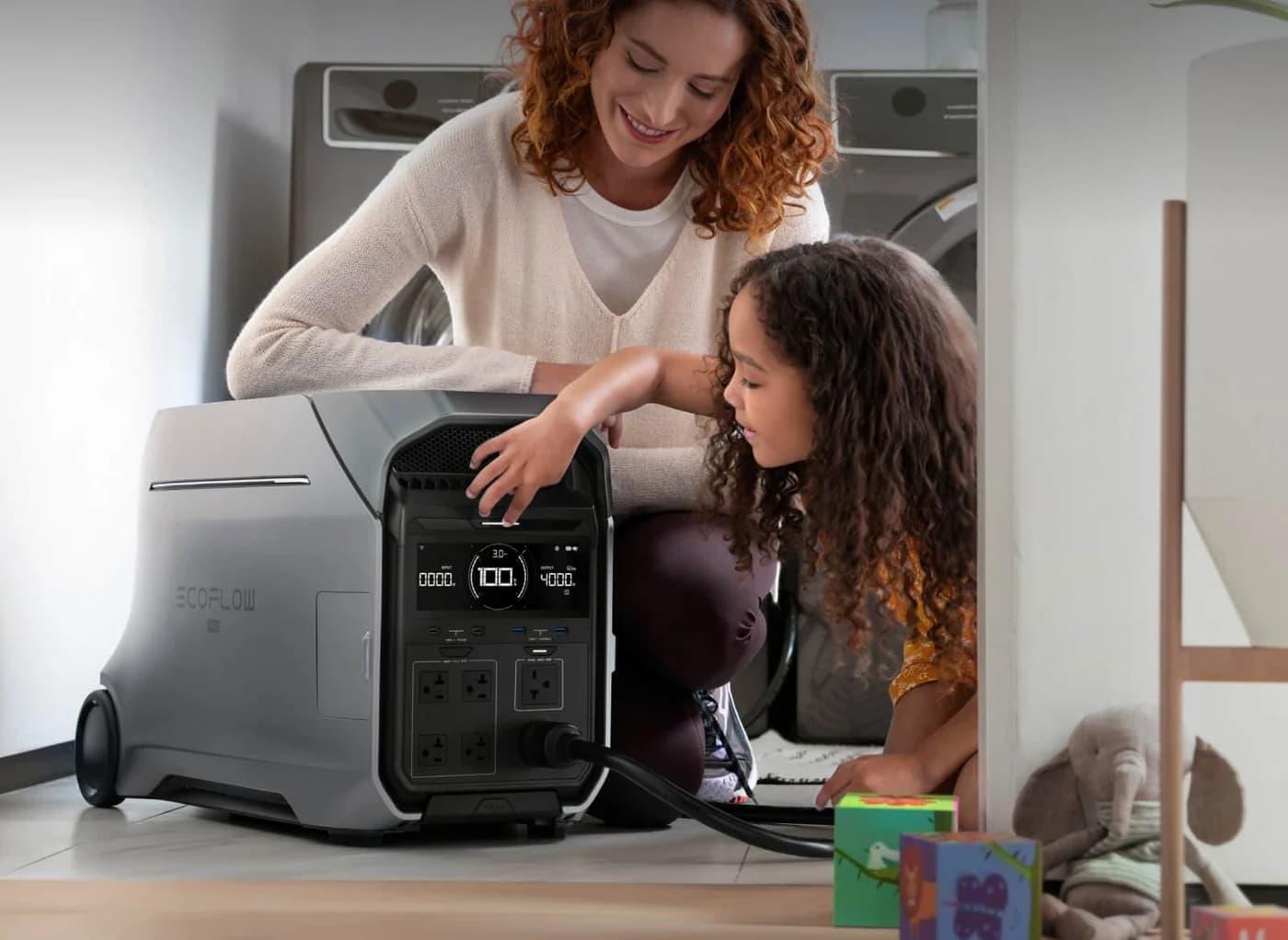
Choose for: Expandable storage with a choice of appliance or installed circuit backup.
Limit: It cannot pair with DELTA Pro Ultra; circuit backup requires compatible connection hardware and an electrician.
- 2
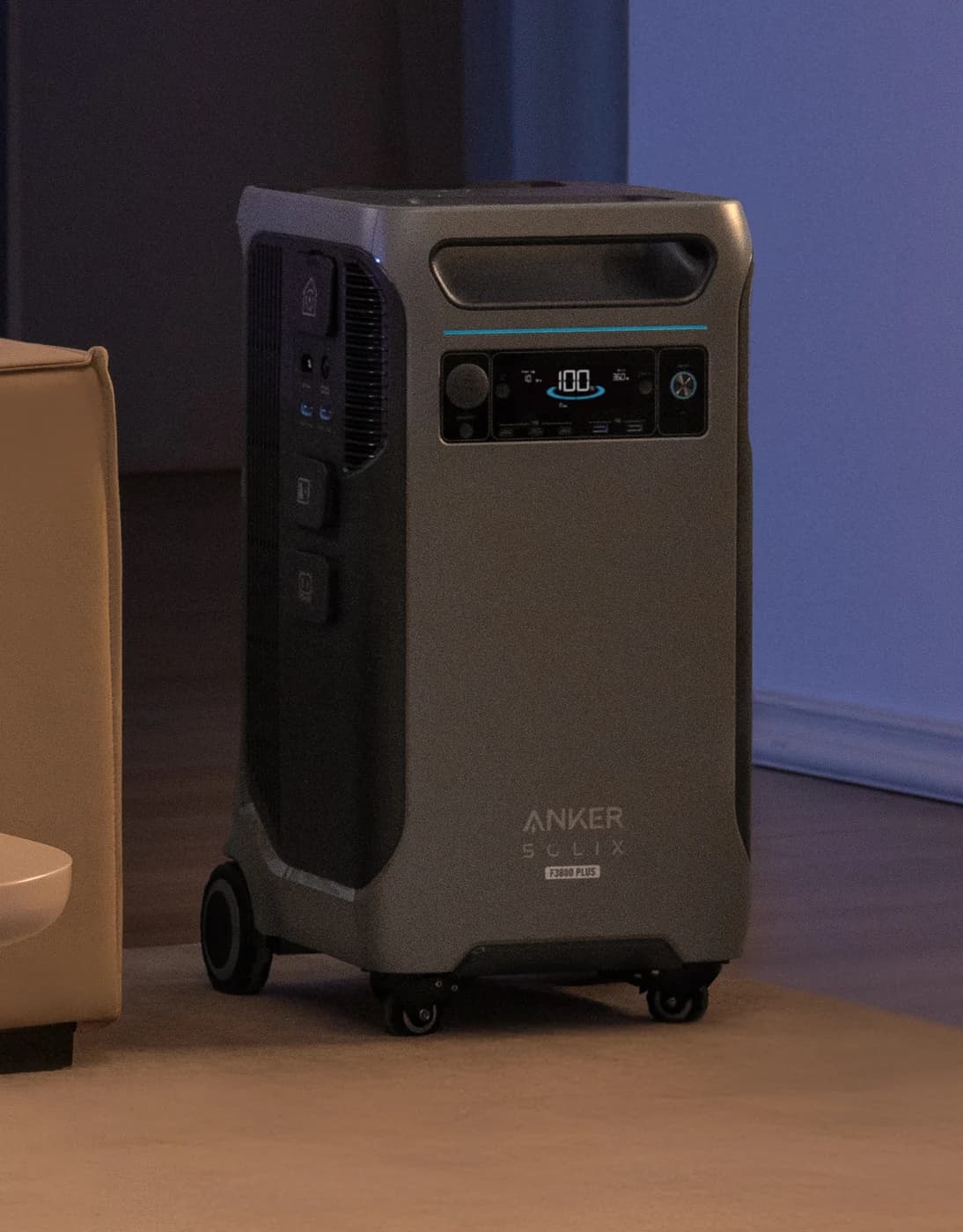
Choose for: A larger backup system with solar and generator input options.
Limit: 240 V output is unavailable while charging from a 120 V outlet; no surge rating is published in the cited specs.
Choose EcoFlow DELTA Pro 3 for an essential-load plan within its 4,000W continuous limit; choose Anker SOLIX F3800 Plus when you need 6,000W or its documented generator bypass. EcoFlow stores slightly more energy, but Anker supplies more running power: the better purchase depends on your loads, outlets and recharge arrangement. For connected circuits, buy the supported panel and cables as a complete system specified by a licensed electrician, with permits where required.
Quick picks
Compare specifications and all conditions
Modest appliance backup
- Our pick
- DELTA Pro 3
- Deciding condition
- Loads fit 4,000W and its selected outlet bank
Heavier simultaneous loads
- Our pick
- F3800 Plus
- Deciding condition
- You need its 6,000W continuous allowance
Automatic essential circuits
- Our pick
- Either supported panel kit below
- Deciding condition
- Approve circuit loads, recharge behavior and listing scope first
Full comparison table
Swipe to compare. Row labels stay visible.
| Your job | Our pick | Deciding condition |
|---|---|---|
| Modest appliance backup | DELTA Pro 3 | Loads fit 4,000W and its selected outlet bank |
| Heavier simultaneous loads | F3800 Plus | You need its 6,000W continuous allowance |
| Automatic essential circuits | Either supported panel kit below | Approve circuit loads, recharge behavior and listing scope first |
Scroll horizontally to see every column
| Your job | Our pick | Deciding condition |
|---|---|---|
| Modest appliance backup | DELTA Pro 3 | Loads fit 4,000W and its selected outlet bank |
| Heavier simultaneous loads | F3800 Plus | You need its 6,000W continuous allowance |
| Automatic essential circuits | Either supported panel kit below | Approve circuit loads, recharge behavior and listing scope first |
For smaller alternatives, use our brand comparison; for the wider system decision, see home battery backup.
One US station versus one US station
These are maker ratings, not measurements. The EcoFlow manual and Anker specifications describe the standalone stations, without optional batteries or panels.
DELTA Pro 3
- Continuous AC output
- 4,000W
- Matching expansion batteries per station
- Up to two
- Nominal storage
- 4,096Wh
All specifications
- Separate surge rating
- 8,000W
- L14-30R output
- 120/240V, 16.7A
- Maximum solar input
- 2,600W combined
- Station weight
- About 113.54 lb
F3800 Plus
- Continuous AC output
- 6,000W
- Matching expansion batteries per station
- Up to six BP3800
- Nominal storage
- 3,840Wh
All specifications
- Separate surge rating
- Not separately specified in the linked spec table
- L14-30R output
- 120/240V, 25A
- Maximum solar input
- 3,200W combined
- Station weight
- 136.7 lb
Full comparison table
Swipe to compare. Row labels stay visible.
| Specification | DELTA Pro 3 | F3800 Plus |
|---|---|---|
| Nominal storage | 4,096Wh | 3,840Wh |
| Continuous AC output | 4,000W | 6,000W |
| Separate surge rating | 8,000W | Not separately specified in the linked spec table |
| L14-30R output | 120/240V, 16.7A | 120/240V, 25A |
| Maximum solar input | 2,600W combined | 3,200W combined |
| Matching expansion batteries per station | Up to two | Up to six BP3800 |
| Station weight | About 113.54 lb | 136.7 lb |
Scroll horizontally to see every column
| Specification | DELTA Pro 3 | F3800 Plus |
|---|---|---|
| Nominal storage | 4,096Wh | 3,840Wh |
| Continuous AC output | 4,000W | 6,000W |
| Separate surge rating | 8,000W | Not separately specified in the linked spec table |
| L14-30R output | 120/240V, 16.7A | 120/240V, 25A |
| Maximum solar input | 2,600W combined | 3,200W combined |
| Matching expansion batteries per station | Up to two | Up to six BP3800 |
| Station weight | About 113.54 lb | 136.7 lb |
Source: US manufacturer specifications linked above; outlet limits still apply
Equivalent-job kit lists
The quantities below are required contents: count a bundled cable once. These configurations match a job, rather than claiming identical capacities. Solar panels and fuel generators are optional recharge equipment, not prerequisites for stored-battery backup.
Direct appliance backup
- EcoFlow bill of materials
- One DELTA Pro 3; supplied AC charging cable; appliance cords suited to the chosen outlets
- Anker bill of materials
- One F3800 Plus; supplied AC charging cable; appliance cords suited to its outlets
Longer appliance backup
- EcoFlow bill of materials
- Above, plus one 4,096Wh DELTA Pro 3 Smart Extra Battery and its supplied EcoFlow Extra Battery Cable: about 8kWh (4,096Wh + 4,096Wh)
- Anker bill of materials
- Above, plus one 3,840Wh BP3800 and its supplied Battery-to-Host Cable: 7,680Wh calculated total
Automatic essential circuits, base storage
- EcoFlow bill of materials
- One DELTA Pro 3; Smart Home Panel 2 distribution panel and battery connection box; one EcoFlow Power Input/Output Cable
- Anker bill of materials
- One F3800 Plus; Smart Home Power Kit containing Home Power Panel, subpanel, circuit breaker and ground bar; one Home Power Panel Cable
Automatic circuits, longer storage
- EcoFlow bill of materials
- Previous panel configuration plus the matching extra battery and battery cable above
- Anker bill of materials
- Previous panel configuration plus the BP3800 and battery cable above
Full comparison table
Swipe to compare. Row labels stay visible.
| Job | EcoFlow bill of materials | Anker bill of materials |
|---|---|---|
| Direct appliance backup | One DELTA Pro 3; supplied AC charging cable; appliance cords suited to the chosen outlets | One F3800 Plus; supplied AC charging cable; appliance cords suited to its outlets |
| Longer appliance backup | Above, plus one 4,096Wh DELTA Pro 3 Smart Extra Battery and its supplied EcoFlow Extra Battery Cable: about 8kWh (4,096Wh + 4,096Wh) | Above, plus one 3,840Wh BP3800 and its supplied Battery-to-Host Cable: 7,680Wh calculated total |
| Automatic essential circuits, base storage | One DELTA Pro 3; Smart Home Panel 2 distribution panel and battery connection box; one EcoFlow Power Input/Output Cable | One F3800 Plus; Smart Home Power Kit containing Home Power Panel, subpanel, circuit breaker and ground bar; one Home Power Panel Cable |
| Automatic circuits, longer storage | Previous panel configuration plus the matching extra battery and battery cable above | Previous panel configuration plus the BP3800 and battery cable above |
Scroll horizontally to see every column
| Job | EcoFlow bill of materials | Anker bill of materials |
|---|---|---|
| Direct appliance backup | One DELTA Pro 3; supplied AC charging cable; appliance cords suited to the chosen outlets | One F3800 Plus; supplied AC charging cable; appliance cords suited to its outlets |
| Longer appliance backup | Above, plus one 4,096Wh DELTA Pro 3 Smart Extra Battery and its supplied EcoFlow Extra Battery Cable: about 8kWh (4,096Wh + 4,096Wh) | Above, plus one 3,840Wh BP3800 and its supplied Battery-to-Host Cable: 7,680Wh calculated total |
| Automatic essential circuits, base storage | One DELTA Pro 3; Smart Home Panel 2 distribution panel and battery connection box; one EcoFlow Power Input/Output Cable | One F3800 Plus; Smart Home Power Kit containing Home Power Panel, subpanel, circuit breaker and ground bar; one Home Power Panel Cable |
| Automatic circuits, longer storage | Previous panel configuration plus the matching extra battery and battery cable above | Previous panel configuration plus the BP3800 and battery cable above |
The Pro 3 battery manual confirms its cable; Anker's BP3800 page lists its cable and compatibility with both F3800 generations. For panel connections, use the Panel 2 manual, Anker kit contents and the separately offered Home Power Panel Cable.
Anker's owner manual calls the backup load center optional, then says Backup mode requires it; its current kit title includes the subpanel. Obtain a written contents list, including station cables and electrician-supplied installation materials. A manual transfer arrangement is another option, but an existing inlet or switch needs the electrician's approval for this exact source; it is not an automatic-panel substitute with the same features.
EcoFlow DELTA Pro 3: our pick for modest essential loads
EcoFlow
A 4,096Wh LFP home-backup power station with 4,000W of 120V/240V output (8,000W surge), 2,600W of dual solar input and expansion to 12kWh per unit, listed by EcoFlow as UL 9540 certificated.
Check package and model options
- 4,096 Wh capacity
- 4,000 W AC out
- LiFePO4
Pick EcoFlow when 4,096Wh and 4,000W meet the job. Its manual states 4,000 cycles while retaining at least 80% battery health under specified conditions. Adding a matching battery extends storage without buying another station inverter.
The outlet trap: the US low-voltage and high-voltage output banks cannot operate together. The high-voltage bank includes the split-phase L14-30R; do not expect the separate household sockets to remain available when that bank is selected. Using the rear AC POWER IN/OUT connection for Panel 2 disables the station's AC input socket and all AC output sockets.
Anker SOLIX F3800 Plus: our pick for higher running loads
Anker SOLIX
A 3,840Wh LFP home-backup power station on wheels with 6,000W of 120V/240V output, up to 3,200W of solar input, a 6,000W generator/HPP bypass port and expansion with up to six BP3800 batteries.
Check package and model options
- 3,840 Wh capacity
- 6,000 W AC out
- LiFePO4
Choose Anker for its 6,000W continuous ceiling, not longer runtime by default: its base battery is 3,840Wh. Its L14-30R is rated at 25A, and its TT-30R at 3,000W; socket shape alone does not grant the full station rating at every outlet. Anker's US overview specifies 3,000-plus cycles to 80% capacity.
Buy the Plus deliberately. Anker's comparison distinguishes the older F3800's 2,400W solar ceiling and lack of generator bypass from the Plus's 3,200W solar input and generator connection. BP3800 is an expansion battery, not another station.
Size the overnight job before adding batteries
Separate simultaneous running watts, motor starting demand and overnight energy. Neither a larger inverter nor EcoFlow's X-Boost mode establishes that a particular pump or compressor will start; obtain its actual starting requirement. EcoFlow describes X-Boost as more suitable for heating loads and unsuitable for devices with voltage protection.
For an illustrative eight-hour night, assume 300W average load and budget 80% of nominal capacity for delivered energy after combined losses, station consumption and reserve. That allowance is our scenario assumption, not a measured efficiency for either station. Energy = watts × hours; required nominal storage = energy ÷ the assumed usable fraction.
300W
- Arithmetic for eight hours
- 300 × 8 ÷ 80% = 3,000Wh nominal required
- Kit decision, assuming running and starting limits also fit
- Either base station suffices on this estimate
600W
- Arithmetic for eight hours
- 600 × 8 ÷ 80% = 6,000Wh nominal required
- Kit decision, assuming running and starting limits also fit
- Add one matching extra battery to either station
Full comparison table
Swipe to compare. Row labels stay visible.
| Example average load | Arithmetic for eight hours | Kit decision, assuming running and starting limits also fit |
|---|---|---|
| 300W | 300 × 8 ÷ 80% = 3,000Wh nominal required | Either base station suffices on this estimate |
| 600W | 600 × 8 ÷ 80% = 6,000Wh nominal required | Add one matching extra battery to either station |
Scroll horizontally to see every column
| Example average load | Arithmetic for eight hours | Kit decision, assuming running and starting limits also fit |
|---|---|---|
| 300W | 300 × 8 ÷ 80% = 3,000Wh nominal required | Either base station suffices on this estimate |
| 600W | 600 × 8 ÷ 80% = 6,000Wh nominal required | Add one matching extra battery to either station |
For a runtime estimate, the base-station calculations are 4,096Wh × 80% ÷ 300W for EcoFlow and 3,840Wh × 80% ÷ 300W for Anker. Use a lower usable fraction if you need more reserve or expect greater losses. Use measured average energy for cycling appliances, with our refrigerator watts guide and watt calculator as planning companions.
Charging while supplying loads: the restrictions that change the pick
Battery only
- EcoFlow DELTA Pro 3
- Select the low- or high-voltage outlet bank
- Anker F3800 Plus
- All listed AC outlet groups available, subject to total and individual limits
Ordinary AC charging
- EcoFlow DELTA Pro 3
- US manual lists 100–120V bypass, 4,000W total; see conflict below
- Anker F3800 Plus
- On 120V wall input, L14-30R and the right three household sockets are unavailable; left three UPS sockets have a 1,440W bypass limit. TT-30R availability is disputed; see below
Generator charging
- EcoFlow DELTA Pro 3
- AC input is specified for charge-only at 100–240V; the rear AC POWER IN/OUT route disables all AC sockets
- Anker F3800 Plus
- With the Generator Input Adapter and a 240V generator, L14-30R and TT-30R remain available; all NEMA 5-20R sockets are disabled
Full comparison table
Swipe to compare. Row labels stay visible.
| Connection state | EcoFlow DELTA Pro 3 | Anker F3800 Plus |
|---|---|---|
| Battery only | Select the low- or high-voltage outlet bank | All listed AC outlet groups available, subject to total and individual limits |
| Ordinary AC charging | US manual lists 100–120V bypass, 4,000W total; see conflict below | On 120V wall input, L14-30R and the right three household sockets are unavailable; left three UPS sockets have a 1,440W bypass limit. TT-30R availability is disputed; see below |
| Generator charging | AC input is specified for charge-only at 100–240V; the rear AC POWER IN/OUT route disables all AC sockets | With the Generator Input Adapter and a 240V generator, L14-30R and TT-30R remain available; all NEMA 5-20R sockets are disabled |
Scroll horizontally to see every column
| Connection state | EcoFlow DELTA Pro 3 | Anker F3800 Plus |
|---|---|---|
| Battery only | Select the low- or high-voltage outlet bank | All listed AC outlet groups available, subject to total and individual limits |
| Ordinary AC charging | US manual lists 100–120V bypass, 4,000W total; see conflict below | On 120V wall input, L14-30R and the right three household sockets are unavailable; left three UPS sockets have a 1,440W bypass limit. TT-30R availability is disputed; see below |
| Generator charging | AC input is specified for charge-only at 100–240V; the rear AC POWER IN/OUT route disables all AC sockets | With the Generator Input Adapter and a 240V generator, L14-30R and TT-30R remain available; all NEMA 5-20R sockets are disabled |
Anker's SOLIX FAQ lists TT-30R as available during 120V wall charging, with a 1,440W bypass limit, while its Anker.com FAQ says only the three 120V UPS outlets can be used. Obtain written clarification before relying on TT-30R to power an RV while wall charging.
Anker's Generator Input Adapter page states a 3,300W battery recharge maximum for a standalone Plus, rising to 6,000W with expansion batteries. That is distinct from bypass output. Do not budget all incoming generator power for charging while also feeding loads.
Anker specifies a 20 ms UPS transfer on the left three household sockets in its wall-input scenario; that is not a promise of uninterrupted 240V backup. A station UPS figure also does not establish the transfer behavior of an installed panel system.
Solar, expansion and winter limits
EcoFlow's solar inputs differ: 30–150V, 15A, 1,600W via Solar to XT60 cable, and 11–60V, 20A, 1,000W via Solar to XT60i cable. Anker specifies two 11–165V, 17A, 1,600W inputs and includes two solar charging cables. Specify the actual panels, voltage and current before ordering a solar bundle; the input ceiling is not a forecast of harvested energy.
Anker explicitly says rooftop solar cannot recharge F3800 Plus through Home Power Panel during an outage; its documented alternative is compatible solar connected directly to the station. Extra batteries do not fix an unavailable recharge path. EcoFlow allows two matching expansion batteries per station; Anker allows six BP3800. Expand only to cover your energy requirement.
Charging
- EcoFlow
- 32–113°F
- Anker
- 32–104°F
Discharging
- EcoFlow
- 14–113°F
- Anker
- −4–104°F
Full comparison table
Swipe to compare. Row labels stay visible.
| Station temperature rating | EcoFlow | Anker |
|---|---|---|
| Charging | 32–113°F | 32–104°F |
| Discharging | 14–113°F | −4–104°F |
Scroll horizontally to see every column
| Station temperature rating | EcoFlow | Anker |
|---|---|---|
| Charging | 32–113°F | 32–104°F |
| Discharging | 14–113°F | −4–104°F |
Anker's colder discharge rating does not authorize below-freezing charging. Check the expansion batteries' own limits and the proposed location too.
Panel compatibility and complete-system listing evidence
Use Smart Home Panel 2 for the documented Pro 3 configuration here. Panel 3's separate manufacturer terms describe Ultra X interoperability; its higher generation number does not establish Pro 3 support. Panel 2 also prohibits mixing Pro 3 with DELTA Pro or DELTA Pro Ultra on that panel. Anker's Home Power Panel supports 120/240V split phase, not 120/208V.
EcoFlow labels its Pro 3 product “UL9540 Certificated.” That maker claim does not identify every permitted battery, panel and cable combination. The Anker specifications reviewed here do not establish a complete-kit UL 9540 listing; that is an evidence gap, not a finding that the product is uncertified.
UL Solutions distinguishes UL 2743 portable power packs from UL 9540 stationary energy storage systems. It also says combining independently certified components does not create a listed system. Ask the installer for the certificate and permitted configuration covering the exact station, battery count, connection equipment and intended installation, plus the local authority's acceptance.
Before ordering a Black Friday or Cyber Monday bundle
Have a licensed electrician handle home connections and permits where required. Obtain answers on service voltage, backed-up circuits, simultaneous and starting loads, outlet availability during recharge, installation materials and the configuration's listing scope. Have the electrician check the load on each leg as well as the total; the L14-30R current ratings above still apply.
Choose the job
Direct appliance backup or professionally connected essential circuits.
Approve the load plan
Check running power, starting demand and overnight energy separately.
Match every component
Confirm station generation, battery count, panel and both kinds of connection cable.
Check the exact offer
Identify the seller, warranty, returns and installation scope before checking the live price.
A station-only listing, a solar bundle, an extra-battery bundle and a panel kit describe different contents. Compare the written bill of materials, not the largest system number in the heading. Buy the base kit when the energy and output calculations support it; add batteries for an identified shortfall.
How we choose
This comparison uses official US specifications, online manuals, manufacturer accessory documentation and UL's explanation of certification scope. Recommendations reflect published limits and compatibility, without physical testing. Calculated capacities are addition; overnight figures use explicit assumptions and are estimates. Conflicting manufacturer statements remain visible rather than becoming unconditional recommendations. Existing station product records are reused; accessory ASINs remain unverified and their links lead to maker documentation.
Verdict
Choose DELTA Pro 3 for a modest essential-load plan that fits its inverter and outlet restrictions. Choose F3800 Plus for more simultaneous running power or its documented generator-bypass arrangement. For installed backup, approve the supported panel, cables, recharge mode and complete-system listing evidence before choosing either bundle.
Frequently asked questions
Which is better for home backup, EcoFlow or Anker?
Choose DELTA Pro 3 when your simultaneous loads fit its 4,000W ceiling and its outlet arrangement suits your appliances. Choose F3800 Plus when you need the larger 6,000W continuous allowance. EcoFlow stores 4,096Wh versus Anker's 3,840Wh, so the higher-output station does not automatically run the same load longer. For connected circuits, compare the complete supported panel configuration and its listing evidence before ordering.
Which smart panel should I buy with DELTA Pro 3?
The documented connection here is Smart Home Panel 2, its battery connection box and EcoFlow Power Input/Output Cable. The Pro 3 and Panel 2 manuals explicitly describe that pairing. Do not substitute Smart Home Panel 3 because its number is higher: its separate manufacturer terms describe Ultra X interoperability, which does not establish Pro 3 compatibility. Have a licensed electrician specify the complete configuration and permits where required.
Can Anker F3800 Plus supply 240V while charging?
With the documented 240V generator connection through Anker's Generator Input Adapter, its L14-30R remains available, but its NEMA 5-20R sockets are disabled. With ordinary 120V wall charging, the L14-30R is unavailable. Anker's adapter heading also advertises wall outlets while its FAQ says not to connect the adapter directly to the grid; obtain written clarification before planning that charging route.
Do extra batteries increase output power?
Treat extra batteries as added energy storage, not another inverter. DELTA Pro 3 plus one matching extra battery provides about 8kWh (4,096Wh + 4,096Wh); F3800 Plus plus one BP3800 totals 7,680Wh (3,840Wh + 3,840Wh). Their station output ceilings remain 4,000W and 6,000W respectively. A second station is a different purchase and needs the maker's supported combining equipment; an expansion battery alone is not a replacement station.
EcoFlow DELTA Pro 3
AmazonRelated guides
Comparison · Home Backup Batteries
Goal Zero Yeti PRO 4000 vs EcoFlow DELTA Pro 3: Complete Systems
Compare Yeti PRO 4000 and DELTA Pro 3 by voltage, batteries, solar and home connection kits. Choose the complete backup system that fits your loads and space.
Comparison · Home Backup Batteries
BLUETTI Apex 300 vs EcoFlow DELTA Pro 3: Essential Backup Compared
Choose BLUETTI Apex 300 or EcoFlow DELTA Pro 3 for essential backup with matched battery kits, outlet limits, runtime estimates and home connection checks.
Explainer · Home Backup Batteries
How Many Watts Does a House Use? Size Your Essential Backup

Separate household energy use from running watts, motor starts and outage hours. Build an essential-loads worksheet and choose a home backup battery that fits.