

Comparison
EcoFlow DELTA Pro 3 vs Ultra: Batteries and Smart Panels
Choose the right EcoFlow DELTA Pro 3 or Ultra system with battery and smart panel compatibility, kit contents, runtime estimates and winter recharge advice.
By thisWATT EditorialUpdated November 2, 20268 min read2 picks
Our picks at a glance
- See on Amazon1
Best starting point for essential loads
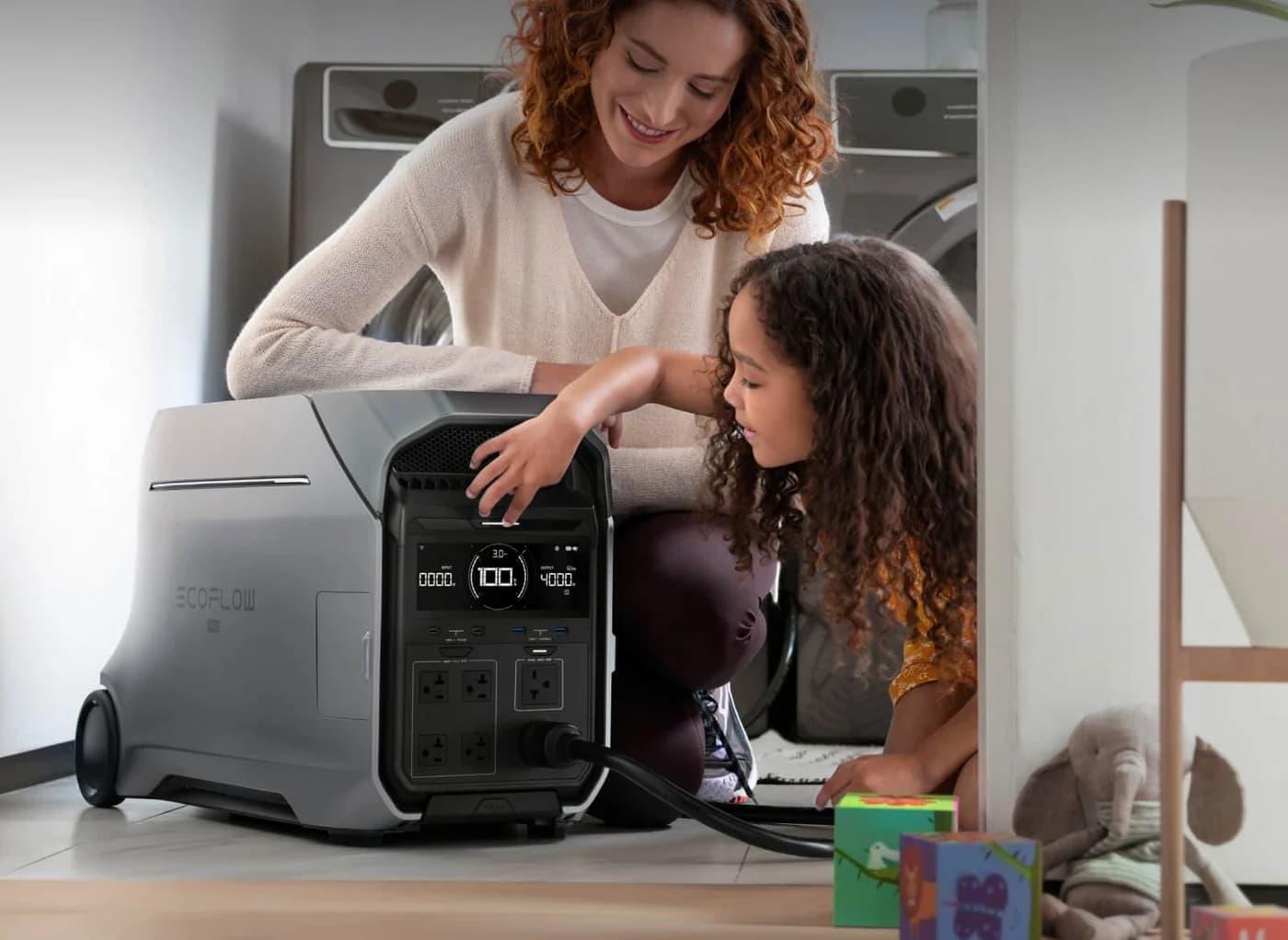
EcoFlow DELTA Pro 3 Portable Power Station (4,096Wh, 120V/240V)4096 Wh capacity · 4000W AC out · LiFePO4
- See on Amazon2
Best for higher running loads on Panel 2
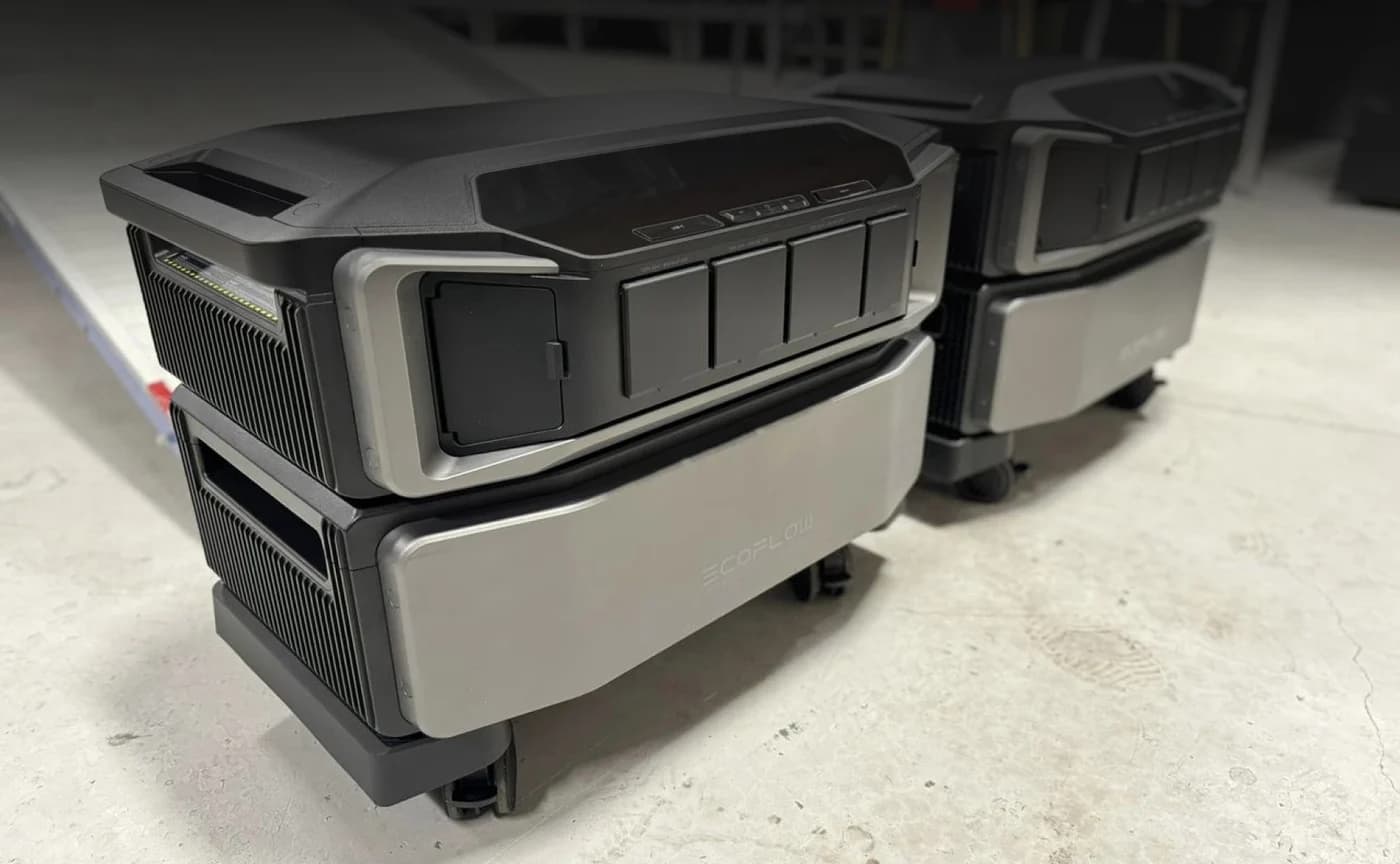
EcoFlow DELTA Pro Ultra Whole-Home Backup (Inverter + 6kWh Battery)6144 Wh capacity · 7200W AC out · LiFePO4
Choose EcoFlow DELTA Pro 3 for essential loads that fit its 4,000W continuous output; choose the original DELTA Pro Ultra for 7,200W and a larger battery stack. For a new Smart Home Panel 3 installation, also compare Ultra X: Panel 3 currently does not support Pro 3. Those distinctions come from EcoFlow's Pro 3 specifications, Ultra specifications and Panel 3 FAQ.
thisWATT is reader-supported: when you buy through our links, we may earn a commission at no extra cost to you. As an Amazon Associate, thisWATT earns from qualifying purchases.
Quick picks: start with the configuration
| Your situation | Our choice | Contents to specify |
|---|---|---|
| Essential loads within the smaller inverter's limit | DELTA Pro 3 | Complete station; add a Pro 3 extra battery for longer runtime |
| Higher simultaneous demand with Panel 2 | Original DELTA Pro Ultra | Inverter plus battery; panel and connection cable explicitly included or ordered separately |
| Planning Panel 3 or needing more output | Compare DELTA Pro Ultra X before ordering | Its standard bundle is one inverter plus two batteries; it is a different generation |
| Already own an older DELTA Pro battery | Check reuse with Pro 3 first | Latest firmware on all devices; do not confuse the extra battery with the original station |
These configurations follow EcoFlow's Pro 3 FAQ, Ultra package notes and Ultra X bundle description. For cross-brand alternatives, use our home battery backup guide.
DELTA Pro 3 vs original Ultra: single-system comparison
| Maker's specification | DELTA Pro 3 | Original DELTA Pro Ultra |
|---|---|---|
| Starter hardware | Battery and inverter integrated | One inverter plus one separate battery |
| Nominal starter capacity | 4,096Wh | 6,144Wh |
| Continuous AC output | 4,000W | 7,200W |
| Surge rating | 8,000W | 10.8kW |
| US output voltage | 120/240V split phase | 120/240V split phase |
| Maximum solar input | 2,600W across two ports | 5,600W across two ports |
| Single-system battery ceiling, maker's rounded label | 12kWh: station plus two Pro 3 extra batteries | 30kWh: one inverter with five Ultra batteries total |
Sources: the models' own Pro 3 and Ultra specification tables. Continuous output is the sizing figure; surge and Pro 3's 6,000W X-Boost label are separate ratings.
Source: EcoFlow US specifications linked above
Best starting point for essentials: DELTA Pro 3
Start here when your simultaneous running load and motor starts fit its ratings. It includes its battery, supports Panel 2, and weighs about 113.5 lb according to EcoFlow. Plan its location before delivery.
EcoFlow
EcoFlow DELTA Pro 3 Portable Power Station (4,096Wh, 120V/240V)
A 4,096Wh LFP home-backup power station with 4,000W of 120V/240V output (8,000W surge), 2,600W of dual solar input and expansion to 12kWh per unit, listed by EcoFlow as UL 9540 certificated.
Comes in 7 versions: see which to buy
- 4096 Wh capacity
- 4000W AC out
- LiFePO4
Outlet trap: EcoFlow's FAQ says the front 120V outlet group and 240V group cannot operate together. Selecting 240V enables the split-phase L14-30 and 240V outlet while disabling the separate 120V outlets. Separately, the Panel 2 owner manual says Pro 3's AC input and output sockets are disabled when connected through its AC POWER IN/OUT port. Plan household loads around the installed system.
Best for higher running loads on Panel 2: original DELTA Pro Ultra
Choose original Ultra when its higher continuous output solves a real load requirement or you need its larger single-inverter battery ceiling. Its inverter weighs 70 lb and each original battery 111.8 lb, per the specifications. Check handling space for both components.
EcoFlow
EcoFlow DELTA Pro Ultra Whole-Home Backup (Inverter + 6kWh Battery)
A modular whole-home backup system pairing a 7,200W 120V/240V inverter with a 6,144Wh LFP battery, expandable to 30kWh per inverter, with up to 5,600W of solar input; listed by EcoFlow as UL 9540 certificated.
Comes in 7 versions: see which to buy
- 6144 Wh capacity
- 7200W AC out
- LiFePO4
Recharge trap: the Ultra FAQ says 240V X-Stream charging through the AC inlet disables all AC output; 120V charging can retain 240V output. Have the installer confirm the intended recharge path during an outage. An inverter-only or battery-only offer is an incomplete starter system.
Ultra X is different: EcoFlow specifies a 12kW inverter with two batteries in its standard bundle. Its FAQ says battery packs must occupy both battery ports for the full output, and older Ultra batteries with serial numbers beginning Y712 require its upgrade procedure. Do not transfer original Ultra's limits to Ultra X.
Battery compatibility: match the whole name
A station contains storage and an inverter; a modular Ultra splits those functions. An extra battery adds storage, while a smart panel manages household circuits. Neither battery capacity nor panel circuit count establishes inverter output. EcoFlow's package descriptions and sizing explanation distinguish these roles.
| Battery-only component | Capacity | Confirmed station or inverter partner | Buying trap |
|---|---|---|---|
| DELTA Pro Smart Extra Battery, older model | 3,600Wh | Original DELTA Pro; Pro 3 with latest firmware | EcoFlow says it will not be restocked; treat this as an ownership/reuse option |
| DELTA Pro 3 Smart Extra Battery | 4,096Wh | DELTA Pro 3 | Pro 3's FAQ explicitly rejects use with original DELTA Pro |
| Current DELTA Pro Ultra Series Smart Extra Battery | 6,144Wh | Original Ultra and Ultra X inverters | Battery-only purchase; inverter generation still determines output |
Sources: older battery, Pro 3 battery, Ultra Series battery and Pro 3 compatibility FAQ.
The older battery page lists only original DELTA Pro under applicable models; Pro 3's FAQ explicitly adds Pro 3 support on current firmware. It also allows mixing older and Pro 3 extra batteries, with possible state-of-charge imbalance. That permission does not extend to mixing Pro 3 and Ultra systems.
Smart Home Panel 2 vs 3: supported combinations
| US system | Smart Home Panel 2 | Smart Home Panel 3 |
|---|---|---|
| DELTA Pro 3 | Supported; do not mix with Ultra or original Pro on this panel | Currently unsupported |
| Original DELTA Pro Ultra | Supported | Supported through the specified Smart Inlet Box and Power Input/Output Cable; EPS limitations apply |
| DELTA Pro Ultra X | Not confirmed in the cited Panel 2 documentation | Supported with the specified Smart Inlet Box Connection Cable |
Sources: Panel 2 FAQ, its owner manual, and Panel 3 specifications and FAQ. Panel 3's FAQ permits Ultra and Ultra X together using their corresponding cables.
Panel 2 manages up to twelve 120V circuits or six 240V circuits, per EcoFlow's bundle FAQ. Panel 3 has 32 controlled branches. Its 200A headline is not its continuous rating: the specification and FAQ give 160A continuous, with 200A described as peak current. Panel current also does not describe battery output.
Both panel choices require a licensed electrician and permits where required; Panel 3 specifies EcoFlow-authorized, trained installers. Request the exact panel, inlet box and cable names in the quote.
Single-system storage vs advertised fleet maxima
Pro 3's 36kWh/12kW system figure requires three stations, six Pro 3 extra batteries and Panel 2. Its 48kWh footnote instead names three stations, three extra batteries, three Smart Generator 4000 units and Panel 2. Treat that banner as a fuel-assisted configuration, not battery-only storage. See the configuration footnotes.
Original Ultra's 90kWh/21.6kW figure requires three inverters and fifteen batteries with Panel 2. One inverter still has a five-battery ceiling and 7,200W continuous output. More batteries extend runtime; those fleet output figures require more inverters. See Ultra's specifications.
Essential-circuit runtime: estimates with the arithmetic
For illustration, assume a 300W average combined load. This is a planning scenario, not a measured appliance package. EcoFlow's runtime explanation uses estimated hours = capacity in Wh × 0.85 ÷ average load in W. The loss allowance is an assumption, not measured efficiency for either model; no separate cold-weather or station-overhead deduction is included.
| Configuration | Estimated-hours calculation | Rounded estimate |
|---|---|---|
| Pro 3 alone | 4,096 × 0.85 ÷ 300 | About twelve hours |
| Pro 3 plus one matching battery | (4,096 × 2) × 0.85 ÷ 300 | About twenty-three hours |
| Original Ultra plus one battery total | 6,144 × 0.85 ÷ 300 | About seventeen hours |
| Original Ultra plus two batteries total | (6,144 × 2) × 0.85 ÷ 300 | About thirty-five hours |
Capacities come from the Pro 3 battery configurations and Ultra specifications. Use average energy consumption for cycling loads, then check startup demand separately. Our refrigerator wattage guide explains that distinction.
Check power
Add simultaneous running watts and check appliance startup requirements against the chosen inverter.
Choose duration
Substitute your average load and required hours into the runtime calculation; include your reserve.
Plan replenishment
Confirm a compatible recharge source and its behavior while supplying the planned loads.
Winter recharge and placement
That assumed load uses 300W × 24 hours = 7,200Wh daily at the appliances, before conversion and charging losses. Ask for a cloudy-day recharge route that can replace that consumption while keeping essential loads supplied.
Pro 3's stated charging range is 32–113°F, while discharge is 14–113°F. Original Ultra lists −4–113°F for charging and discharging and battery self-heating below freezing. Those are the makers' operating limits, not promises of unchanged cold-weather runtime. Pro 3's IP65 claim concerns its battery pack; EcoFlow identifies the main unit as IP20 and calls for dry, sheltered placement. Sources: Pro 3 FAQ and Ultra specifications.
For solar, Pro 3 specifies 30–150V, 15A, 1,600W on high-PV and 11–60V, 20A, 1,000W on low-PV. Ultra specifies 80–450V, 15A, 4,000W and 30–150V, 15A, 1,600W, respectively. These are separate port limits from the same spec tables, not guaranteed winter harvest. Have the installer verify the array and recharge plan; use our portable solar panel guide for the compatibility questions.
How we choose
We compared EcoFlow's US specifications, package contents, manuals and compatibility FAQs. Recommendations follow running load, storage needs and confirmed component support. We have not physically evaluated these systems; runtimes are calculations. Unconfirmed Panel 2 support for Ultra X remains unconfirmed, and firmware qualifications remain attached to the claims they qualify.
For listing claims, EcoFlow calls both stations “UL9540 Certificated.” That is manufacturer wording. UL Solutions distinguishes UL 9540 system safety from UL 9540A fire testing. Ask the electrician to verify the exact system certification in Product iQ, the approved equipment combination, installation location and permit requirements before ordering.
Verdict
Buy Pro 3 for loads within its inverter rating and add its matching battery when duration is the shortfall. Choose original Ultra for higher running demand or more storage per inverter. For Panel 3, compare Ultra X and original Ultra's operating restrictions first. Your final parts list should name the inverter or station, battery model and quantity, panel generation, connection equipment and installation scope.
Frequently asked questions
What is the difference between EcoFlow DELTA Pro 3 and DELTA Pro Ultra?
DELTA Pro 3 integrates a 4,096Wh battery and 4,000W inverter in one station. The original DELTA Pro Ultra uses separate components: a 7,200W inverter and a 6,144Wh battery in its starter set. Both support Smart Home Panel 2. Ultra X is another inverter generation; its standard bundle contains an inverter and two batteries.
Does the original DELTA Pro extra battery work with DELTA Pro 3?
Yes. EcoFlow's Pro 3 FAQ explicitly supports the older DELTA Pro Smart Extra Battery after all devices receive the latest firmware. It also permits mixing that battery with a Pro 3 extra battery, while warning of unequal state of charge. The reverse is unsupported: a Pro 3 extra battery does not work with the original DELTA Pro station.
Does EcoFlow Smart Home Panel 3 support DELTA Pro 3?
Currently, no, according to EcoFlow's Panel 3 FAQ. Panel 2 supports Pro 3. Panel 3 supports Ultra X and the original Ultra through the specified Smart Inlet Box and corresponding cables. Original Ultra has additional EPS restrictions, so its presence in a compatibility list does not establish every operating mode or advertised switchover behavior.
Do I need a smart home panel to use an EcoFlow backup battery?
You can power compatible plug-in devices directly from a complete station or inverter-and-battery system. A battery-only component is not a complete AC power source. For household circuits, have a licensed electrician assess a supported smart panel or approved transfer equipment, with permits where required. Never energize house wiring through a wall outlet.
Best starting point for essential loads
EcoFlow DELTA Pro 3 Portable Power Station (4,096Wh, 120V/240V)
Related guides
Anker SOLIX F3800 vs F3800 Plus: Models, Batteries, and Home Backup Kits
Choose the right Anker SOLIX F3800 or F3800 Plus: compare charging, outlets, BP3800 batteries and home backup kits, with clear limits for each configuration.
Updated November 2, 2026Read
Jackery Explorer 5000 Plus: Batteries, Switches and Runtime
Choose your Jackery Explorer 5000 Plus setup with battery and transfer-switch comparisons, runtime estimates, and charging limits explained before buying.
Updated November 2, 2026Read

Best Battery Backup for a Sump Pump: Pumps, Batteries and Power Stations
Choose a sump pump battery backup that fits your pit, water flow and outage needs. Compare dedicated pumps, combo systems, batteries and a power station option.
Updated November 2, 2026Read