

Comparison
Anker SOLIX F3800 vs F3800 Plus: Models, Batteries, and Home Backup Kits
Choose the right Anker SOLIX F3800 or F3800 Plus: compare charging, outlets, BP3800 batteries and home backup kits, with clear limits for each configuration.
By thisWATT EditorialUpdated November 2, 20269 min read2 picks
Our picks at a glance
- See on Amazon1
Default choice for a new F3800 system
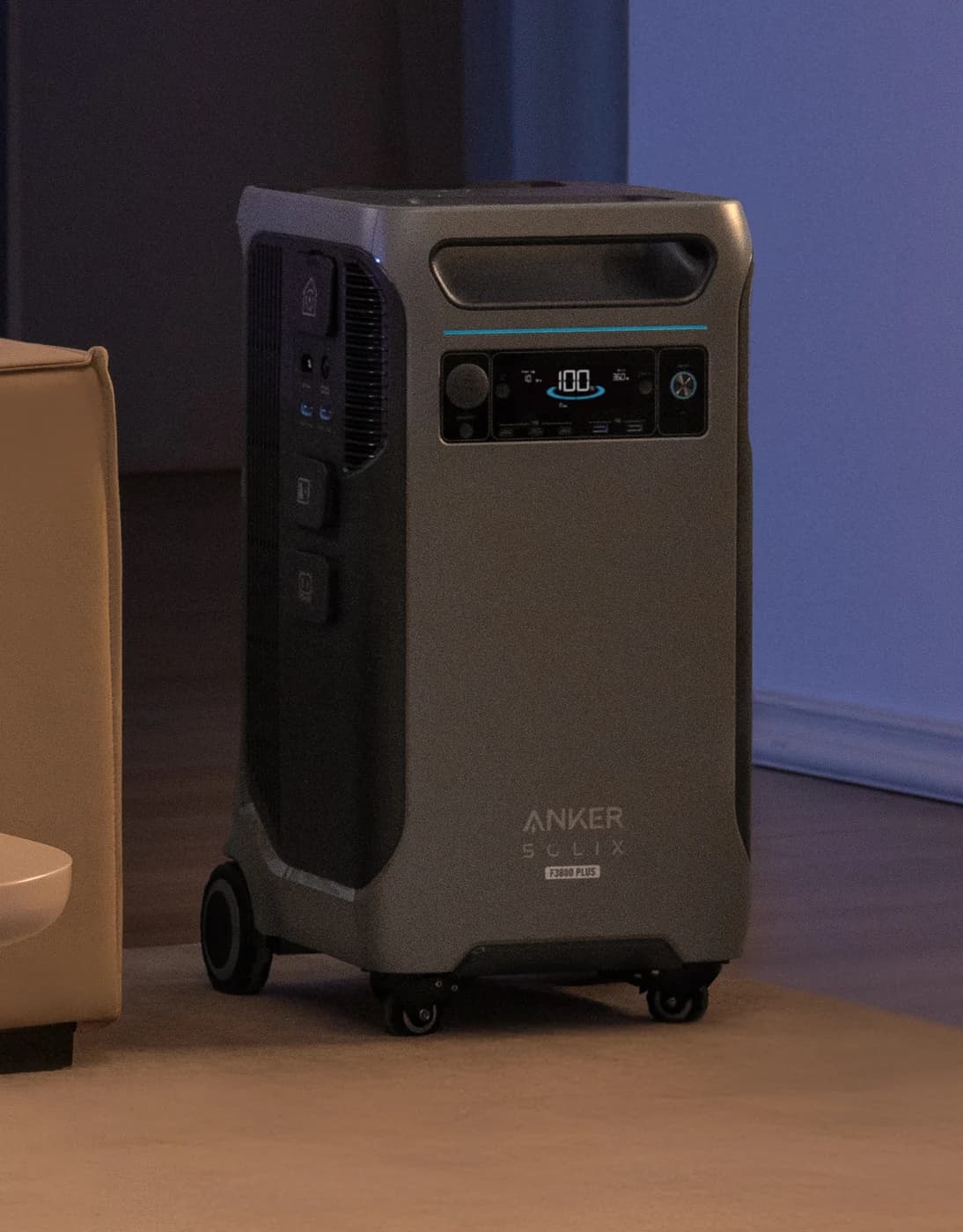
Anker SOLIX F3800 Plus Portable Power Station (3,840Wh, 120V/240V)3840 Wh capacity · 6000W AC out · LiFePO4
- See on Amazon2
Alternative when 4,000W is enough
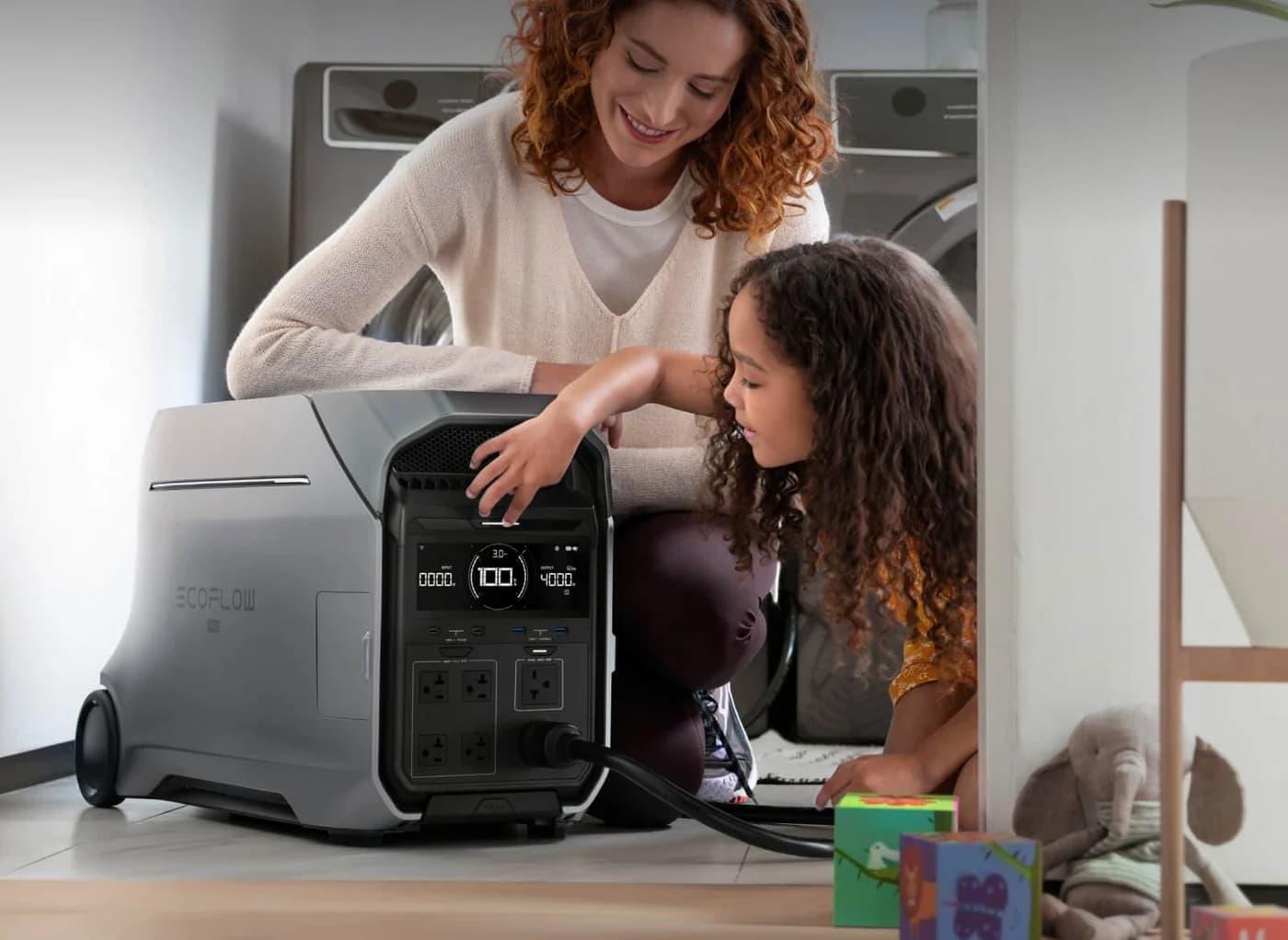
EcoFlow DELTA Pro 3 Portable Power Station (4,096Wh, 120V/240V)4096 Wh capacity · 4000W AC out · LiFePO4
For a new Anker SOLIX F3800 system, choose the F3800 Plus if you need its higher solar input or generator bypass; both US generations still start at 3,840Wh and 6,000W of 120V/240V output. Keep an original F3800 if its charging limits and outlets already suit you; choose a BP3800 expansion battery when storage is the shortfall, since it works with either generation. Choose the house connection separately: Smart Home Power Kit and Home Backup Kit describe different equipment, not a larger battery.
thisWATT is reader-supported: when you buy through our links, we may earn a commission at no extra cost to you. As an Amazon Associate, thisWATT earns from qualifying purchases.
Quick picks
| Your need | Our pick | Reason to choose it |
|---|---|---|
| New system with the upgraded inputs | F3800 Plus | Higher solar ceiling and generator bypass; same base storage and output |
| Keep an existing station; extend backup | BP3800 | Compatible storage expansion for both generations |
| Daily energy management and automatic backup | Home Power Panel / Smart Home Power Kit | Installed home interface; verify the subpanel and package contents |
| Compare another brand before committing | EcoFlow DELTA Pro 3 | More base storage, lower continuous output, separately specified surge |
F3800 vs F3800 Plus: the US models compared
These are manufacturer ratings for a single station unless a row explicitly says otherwise.
| Specification | Original F3800 | F3800 Plus |
|---|---|---|
| Stored energy | 3,840Wh | 3,840Wh |
| Continuous AC output / voltage | 6,000W total; 120V/240V | 6,000W total; 120V/240V |
| Separate surge figure | Not stated in the cited comparison | Not stated in the cited specifications |
| Solar input ceiling | 2,400W total; 1,200W per input | 3,200W total; 1,600W per input |
| Solar voltage / current | 11–60V; up to 27A with firmware 2.1.1 or later; see conditions below | 11–165V; 17A maximum per input |
| Ordinary wall charging | 120V; 1,800W maximum | 120V; 1,800W maximum |
| Generator input accessory | No charging through the Home Power Panel port | Supported; separate accessory and operating restrictions |
| High-power sockets | NEMA 14-50 and L14-30 | TT-30R and L14-30R |
| Expansion | Up to six BP3800 batteries | Up to six BP3800 batteries |
- 2,400WOriginal F3800 maximum solar input
- 3,200WF3800 Plus maximum solar input
Default choice for a new system: Anker SOLIX F3800 Plus
Anker SOLIX
Anker SOLIX F3800 Plus Portable Power Station (3,840Wh, 120V/240V)
A 3,840Wh LFP home-backup power station on wheels with 6,000W of 120V/240V output, up to 3,200W of solar input, a 6,000W generator/HPP bypass port and expansion with up to six BP3800 batteries.
Comes in 7 versions: see which to buy
- 3840 Wh capacity
- 6000W AC out
- LiFePO4
The Plus earns our default recommendation for the extra recharge options, rather than extra running watts. Its base package lists the station, AC charging cable, two solar charging cables and manual; it does not list solar panels, an expansion battery or a Home Power Panel. Anker's standalone Plus page shows Sold Out; verify the exact bundle's availability before scheduling installation.
The Plus's TT-30R is rated 120V, 25A and 3,000W, while its L14-30R is 120V/240V, 25A and 6,000W, within the 6,000W shared total. Use the stated current limit, rather than the connector name, to choose an RV or EV load. The key limitation: plugging the Plus into a 120V wall outlet disables its 240V L14-30R and the right-hand bank of ordinary outlets.
Anker lists the three left-hand UPS outlets and TT-30R as available in that condition, with a 1,440W bypass limit; only the UPS outlets get the stated 20 ms switchover.
Original F3800: keep it when its connections fit
The original retains the same base storage and continuous output, and its high-power sockets include NEMA 14-50 where the Plus has TT-30R. If your equipment already fits that station, adding compatible storage may solve more than replacing it. Anker's former US F3800 product URL now displays Plus content; identify the original using its name and ports in the model-labelled comparison.
Anker's Home Power Panel page also says the original's 240V ports do not function in UPS mode.
Add runtime: Anker SOLIX BP3800 expansion battery
The BP3800 is a 3,840Wh LFP battery compatible with F3800 and F3800 Plus, and its box includes the battery-to-host cable. It cannot charge or discharge independently, and it does not add another AC inverter. The BP3800's published weight is 72.8 lb, so plan where the expanded system will live before ordering.
Anker permits mixed F3800 and Plus stations through either Home Power Panel or Double Power Hub; that is different from directly connecting stations as expansion batteries.
Connect the house: Home Power Panel and the US kit
The US Smart Home Power Kit is titled Smart Home Panel + Subpanel + Circuit Breaker + Ground Bar; the owner manual identifies the Home Power Panel as A17B1. It supports 120/240V split-phase, excludes 120/208V, and can connect to either station generation. The manual supports one or two stations, and says its 12-circuit backup load center is required for Backup mode.
Contents conflict to resolve: the current kit title includes a subpanel, while the owner manual labels its 12-circuit backup load center optional. Have the order specify the included subpanel, station cables and installation scope; do not treat a bare panel, a transfer-switch kit and an installed system as interchangeable. Any connection to house wiring needs a licensed electrician and a permit where required.
Independent alternative: EcoFlow DELTA Pro 3
EcoFlow
EcoFlow DELTA Pro 3 Portable Power Station (4,096Wh, 120V/240V)
A 4,096Wh LFP home-backup power station with 4,000W of 120V/240V output (8,000W surge), 2,600W of dual solar input and expansion to 12kWh per unit, listed by EcoFlow as UL 9540 certificated.
Comes in 7 versions: see which to buy
- 4096 Wh capacity
- 4000W AC out
- LiFePO4
If your loads fit 4,000W continuous, consider DELTA Pro 3: EcoFlow states 4,096Wh, 8,000W surge, 120V/240V output and 2,600W solar input. It has more starting storage than either Anker, but less continuous output; its surge rating is not a substitute for continuous watts.
Check price on Amazon. For broader brand choices, see our home battery backup guide.
Buying guide: order the components that solve your problem
| Configuration to request | Bill of materials | What it changes |
|---|---|---|
| Standalone Plus | Station + included AC and solar charging cables | Direct appliance use; home interface purchased separately |
| Longer backup | Station + BP3800 + battery-to-host cable | Adds stored energy |
| Portable solar kit | Plus + two 400W panels in the named kit | Adds panels; does not fill the solar-input ceiling |
| Smart home kit | Station + Smart Home Power Kit; verify cables and installation | Adds the installed home interface |
| Generator charging | Plus + compatible generator + specified input accessory | Adds a recharge path, with outlet restrictions |
| Higher output | Two stations + compatible Home Power Panel or Double Power Hub arrangement | Raises combined output; batteries alone do not |
Solar and AC recharge limits
For the original, Anker's generation table specifies 11–15V at 10A, or 15–60V at up to 27A, with firmware 2.1.1 or later, still capped at 1,200W per input. The Home Power Panel page retains older 11–32V/10A and 32–60V/25A guidance; the comparison explicitly associates that with firmware 1.7.8 or earlier. Check the installed firmware and exact input specification with Anker before reusing an array.
The Plus instead lists 11–165V, 17A and 1,600W per input. A bundle's panel wattage does not establish compatibility; screen its voltage, current and connectors using our solar panel guide. Generator input is not ordinary AC charging. Anker states 3,300W maximum recharge from a 240V generator for a bare Plus, and advertises 6,000W with expansion batteries.
That is distinct from its 1,800W standard wall input and from the 6,000W bypass ceiling. With that generator connection, the ordinary NEMA 5-20R outlets are disabled; the L14-30R and TT-30R remain available within their published limits. Unresolved accessory wording: the current product title advertises 240V wall-outlet bypass, yet the same adapter page's safety FAQ says not to connect the adapter directly to the grid.
Ask Anker to identify the exact approved accessory and configuration for wall charging before ordering; we do not supply a connection procedure. The Plus page also limits its advertised generator bypass to a single Plus; the adapter FAQ describes an alternative through a Home Power Panel station port. Have the electrician verify which stations can remain connected in your proposed generator arrangement.
Keep a fuel generator outdoors, away from doors, windows and vents, as the CPSC advises.
Stored watt-hours, continuous watts and system maxima
Anker's configuration table gives 3,840Wh / 6,000W for one original station, 7,680Wh / 6,000W with an expansion battery, and 7,680Wh / 12,000W for two stations with the combining equipment. The Plus starts at the same storage and output, and Anker also lists a two-Plus home kit at 7,680Wh / 12,000W. Surge is separate: Anker does not publish a distinct surge rating in these cited tables, so we do not turn its system maximum into an appliance-starting guarantee.
Tap a label to explore. You can also hover or use your keyboard.
Scroll across to see every column
| Option | Stored energy | AC output |
|---|---|---|
One F3800Standalone battery storage and AC output. Sources: 1: Anker compares original F3800, two-station kits and station-plus-battery kits by stored energy and output. | 3840 Wh | 6000 W |
One F3800 + BP3800Expansion doubles storage and keeps station output unchanged. Sources: 1: Anker compares original F3800, two-station kits and station-plus-battery kits by stored energy and output., 2: BP3800 is a 3,840Wh LFP expansion battery compatible with F3800 and F3800 Plus. | 7680 Wh | 6000 W |
Two F3800 stations + Double Power HubThe compatible hub combines station output; house connections need an electrician. Sources: 1: Anker compares original F3800, two-station kits and station-plus-battery kits by stored energy and output., 3: Double Power Hub combines two F3800 stations for 12,000W of 120V/240V split-phase output. | 7680 Wh | 12000 W |
Bars start at zero and share a scale within each column.
Ratings vary with operating mode, input connection and individual outlets.
Source notes3 references
Anker compares original F3800, two-station kits and station-plus-battery kits by stored energy and output.
www.ankersolix.com — source for Anker compares original F3800, two-station kits and station-plus-battery kits by stored energy and output.Select Power That Meets Your Needs F3800 Portable Power Station F3800 Home Backup 2× F3800 + Power Backup Kit Anker SOLIX F3800 + Expansion Battery Specs AC Output Power 6,000W 6,000W 12,000W 6,000W AC Output Voltage 120V/240V 120V/240V 120V/240V 120V/240V AC Input 120V 120V 120V 120V Battery Capacity 3840Wh 3840Wh 7680Wh 7680Wh
BP3800 is a 3,840Wh LFP expansion battery compatible with F3800 and F3800 Plus.
www.ankersolix.com — source for BP3800 is a 3,840Wh LFP expansion battery compatible with F3800 and F3800 Plus.3,840Wh Long-Lasting LFP Battery Seamless Expansion for Anker SOLIX F3800 and F3800 Plus
Double Power Hub combines two F3800 stations for 12,000W of 120V/240V split-phase output.
www.ankersolix.com — source for Double Power Hub combines two F3800 stations for 12,000W of 120V/240V split-phase output.12,000W of Dual-Voltage Power: With Double Power Hub , your output rises to 12,000W, and you gain 120V/240V split-phase power—great for all appliances at home.
One station plus six BP3800 batteries totals 26,880Wh; two stations plus twelve batteries total 53,760Wh, the rounded 53.8kWh system headline. For two original stations on Home Power Panel, the manual requires equal numbers of expansion batteries on each station. For a hypothetical steady 1,000W load, 3,840Wh ÷ 1,000W = 3.84 hours is an ideal capacity-only estimate before losses, reserve settings and the station's own consumption.
Use measured average demand for cycling loads; our refrigerator sizing guide explains the distinction.
Winter siting and the electrician's brief
The Plus specification permits charging at 32–104°F (0–40°C) and discharging at −4–104°F (−20–40°C). A location within the discharge range can therefore still be too cold to recharge. Home Power Panel needs an indoor, dry, ventilated location.
Rooftop solar trap: Anker says the Plus cannot recharge through Home Power Panel from rooftop solar during an outage; it describes solar connected directly to the station instead. Ask the electrician to document the following before you buy:
Loads
Confirm running demand, motor starts and the required outlets.
Storage
Choose the backup duration and appropriate battery allowance.
Home interface
Confirm the service voltage, kit contents, permits and mode-specific output.
Outage recharge
Identify which solar or generator charging path remains available.
How we choose
This comparison uses official US manufacturer product pages, configuration tables and the Home Power Panel owner manual; it is a specification-based assessment, not a physical product test. We separate station ratings from system totals and read port availability alongside input ratings. The remaining purchase questions are the conflicting wall-input accessory wording, the kit-versus-manual subpanel description, and the exact working-mode limits for the proposed installation.
Verdict
Buy the F3800 Plus for its upgraded inputs, keep a suitable original F3800 for the same base storage and continuous output, and add BP3800 when you need more stored energy.
Frequently asked questions
What is the difference between Anker SOLIX F3800 and F3800 Plus?
Both US stations have 3,840Wh storage and 6,000W of 120V/240V output. The Plus raises solar input from 2,400W to 3,200W, increases the solar voltage ceiling from 60V to 165V, and adds generator bypass through an accessory. It also replaces the original's NEMA 14-50 socket with a TT-30R. Choose it for those inputs and connections, rather than expecting more stored energy.
Does the BP3800 battery work with F3800 Plus?
Yes. Anker explicitly lists BP3800 compatibility with both F3800 and F3800 Plus. Each expansion battery adds 3,840Wh, and its package includes a battery-to-host cable. It cannot charge or discharge independently. Adding a battery increases storage without raising the standalone station's 6,000W output ceiling; a second station and a compatible combining interface address higher output requirements.
Can F3800 Plus run 240V appliances while charging?
The charging connection decides. When plugged into a 120V wall outlet, the Plus's L14-30R is unavailable and usable bypass output is limited to 1,440W. With the supported 240V generator connection, Anker lists L14-30R bypass up to 6,000W, but disables the ordinary NEMA 5-20R outlets. Confirm the exact input, accessory and appliance connection before buying for simultaneous charging and backup.
Will rooftop solar recharge F3800 Plus through Home Power Panel during an outage?
No, according to Anker's product FAQ. Its outage charging option is solar connected directly to the station's solar inputs, each rated 11–165V, 17A maximum and 1,600W maximum. Home Power Panel's normal integration with rooftop solar therefore does not establish solar charging during a blackout. Ask your electrician to document the charging path that remains available when utility power fails.
Is the Home Power Panel the same as a Home Backup Kit?
Check the exact bundle name and contents. The Smart Home Power Kit is listed with a smart panel, subpanel, circuit breaker and ground bar. Anker also sells Home Backup Kit bundles described as including a transfer switch. They are different home connection choices; neither label alone confirms a station or expansion battery is included. Use a licensed electrician for house connections and obtain a permit where required.
Default choice for a new F3800 system
Anker SOLIX F3800 Plus Portable Power Station (3,840Wh, 120V/240V)
Related guides
Jackery Explorer 5000 Plus: Batteries, Switches and Runtime
Choose your Jackery Explorer 5000 Plus setup with battery and transfer-switch comparisons, runtime estimates, and charging limits explained before buying.
Updated November 2, 2026Read
EcoFlow DELTA Pro 3 vs Ultra: Batteries and Smart Panels
Choose the right EcoFlow DELTA Pro 3 or Ultra system with battery and smart panel compatibility, kit contents, runtime estimates and winter recharge advice.
Updated November 2, 2026Read

Best Battery Backup for a Sump Pump: Pumps, Batteries and Power Stations
Choose a sump pump battery backup that fits your pit, water flow and outage needs. Compare dedicated pumps, combo systems, batteries and a power station option.
Updated November 2, 2026Read