

Best picks
Best Power Stations for Camping
Size Your Weekend, Save Weight
Choose a camping power station for phones, fans or a portable fridge, with 48-hour energy budgets, carrying weights, charging plans and clear model differences.
By thisWATT EditorialUpdated November 3, 20269 min read1 pick
Our recommendation: EcoFlow RIVER 3 Plus
A smaller station with optional stacked battery expansion.
Limit: The stated 858 Wh total requires the separate 572 Wh EB600 battery.
On this page · Our picks at a glance
Our picks at a glance
- 1
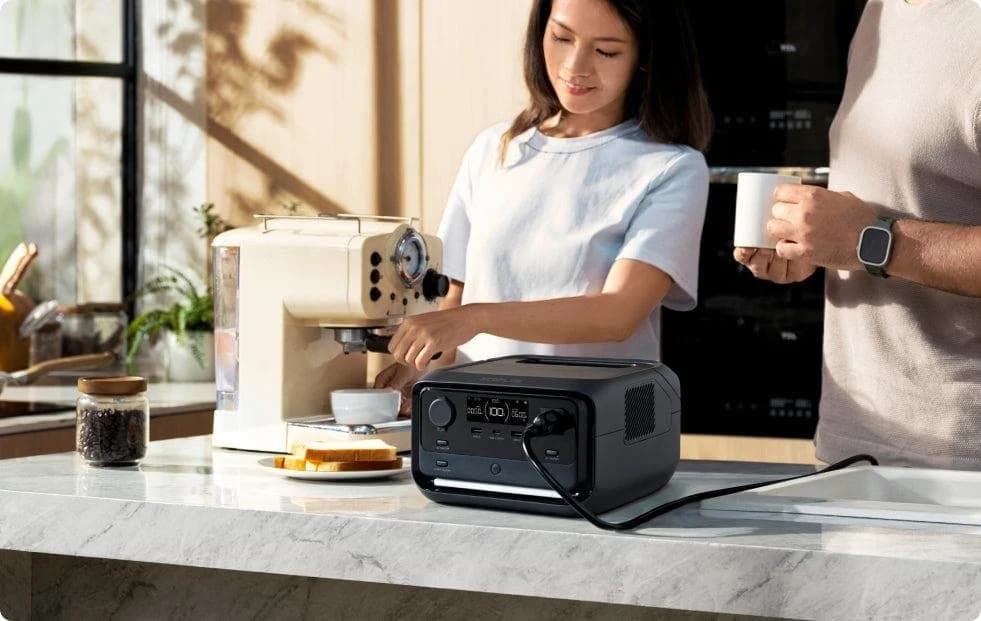
Choose for: A smaller station with optional stacked battery expansion.
Limit: The stated 858 Wh total requires the separate 572 Wh EB600 battery.
For car camping with a fan, laptop or modest portable-fridge load, our default pick is the Anker SOLIX C1000 Gen 2; for phones and lights, start with the lighter Anker SOLIX C300 instead. The best power station for camping is the smallest one that covers your actual energy budget with a workable recharge plan. A fridge needs its own calculation before any station earns a weekend recommendation.
Quick picks: match the station to the trip
Compare specifications and all conditions
Carry-focused tent option: Anker C300, AC model
- Capacity
- 288Wh
- Continuous AC
- 300W
- Station weight
- 9.1 lb
All specifications
- Maximum solar input
- 100W
Small station with more AC headroom: EcoFlow RIVER 3 Plus
- Capacity
- 286Wh
- Continuous AC
- 600W
- Station weight
- 10.4 lb
All specifications
- Maximum solar input
- 220W
Car camping / modest DC-fridge plan: Anker C1000 Gen 2
- Capacity
- 1,024Wh
- Continuous AC
- 2,000W
- Station weight
- 24.9 lb
All specifications
- Maximum solar input
- 600W
Higher solar ceiling: BLUETTI Elite 100 V2
- Capacity
- 1,024Wh
- Continuous AC
- 1,800W
- Station weight
- About 25.3 lb
All specifications
- Maximum solar input
- 1,000W Turbo; 600W Standard
Full comparison table
Swipe to compare. Row labels stay visible.
| Trip / choice | Capacity | Continuous AC | Station weight | Maximum solar input |
|---|---|---|---|---|
| Carry-focused tent option: Anker C300, AC model | 288Wh | 300W | 9.1 lb | 100W |
| Small station with more AC headroom: EcoFlow RIVER 3 Plus | 286Wh | 600W | 10.4 lb | 220W |
| Car camping / modest DC-fridge plan: Anker C1000 Gen 2 | 1,024Wh | 2,000W | 24.9 lb | 600W |
| Higher solar ceiling: BLUETTI Elite 100 V2 | 1,024Wh | 1,800W | About 25.3 lb | 1,000W Turbo; 600W Standard |
Scroll horizontally to see every column
| Trip / choice | Capacity | Continuous AC | Station weight | Maximum solar input |
|---|---|---|---|---|
| Carry-focused tent option: Anker C300, AC model | 288Wh | 300W | 9.1 lb | 100W |
| Small station with more AC headroom: EcoFlow RIVER 3 Plus | 286Wh | 600W | 10.4 lb | 220W |
| Car camping / modest DC-fridge plan: Anker C1000 Gen 2 | 1,024Wh | 2,000W | 24.9 lb | 600W |
| Higher solar ceiling: BLUETTI Elite 100 V2 | 1,024Wh | 1,800W | About 25.3 lb | 1,000W Turbo; 600W Standard |
These are US models and manufacturer figures, not measured usable capacity. Sources: C300 manual, RIVER specifications, C1000 specifications and Elite manual. BLUETTI's product page rounds weight to 25 lb; its manual says about 25.3 lb. We use the manual figure for packing.
Delivery check: BLUETTI's page currently says Elite 100 V2 ships from November 12. EcoFlow's page mixes sold-out text with an available base variant in its product data; confirm the selected package's delivery. Jackery explicitly says Explorer 300 v2 is sold out, so it is not a current purchase pick here.
Build a 48-hour camping energy budget
Use energy in Wh = watts × hours actually running. Capacity buys duration; continuous output limits what runs together. Use the watt calculator for conversions and your own inputs.
The table is an illustrative packing worksheet, not a claim about typical devices. BLUETTI's comparison uses a 15Wh phone, 60Wh laptop, 10W camping light, 40W fan and 50W portable fridge; we borrow those load sizes, then choose the quantities, hours and compressor duty cycles below. Replace them with your device labels or measured consumption.
For these USB/DC plans, we budget only 80% of nameplate capacity for delivered energy, leaving room for losses and reserve. This is our planning allowance, not measured efficiency for any station. It does not establish a continuous-AC runtime.
Tent: phones and light
- Delivered energy calculation, Wh
- Two phones × 15Wh × two days = 60; 10W light × three hours × two evenings = 60
- Total Wh
- 120
- Minimum nameplate Wh: total ÷ 0.8
- 150
All specifications
- Decision
- C300 or RIVER; skip the larger station
Car: add laptop and fan
- Delivered energy calculation, Wh
- Tent 120 + two 60Wh laptop charges + 40W fan × four hours × two evenings
- Total Wh
- 560
- Minimum nameplate Wh: total ÷ 0.8
- 700
All specifications
- Decision
- Choose the larger Anker or BLUETTI
Fridge: light duty, direct DC
- Delivered energy calculation, Wh
- Tent 120 + 50W compressor × 25% running time × 48 hours
- Total Wh
- 720
- Minimum nameplate Wh: total ÷ 0.8
- 900
All specifications
- Decision
- A 1,024Wh station leaves limited margin; arrange a recharge
Fridge: heavier duty, direct DC
- Delivered energy calculation, Wh
- Tent 120 + 50W compressor × 50% running time × 48 hours
- Total Wh
- 1,320
- Minimum nameplate Wh: total ÷ 0.8
- Exceeds 1,024 even before losses
All specifications
- Decision
- These standalone picks need recharging or more capacity
Full comparison table
Swipe to compare. Row labels stay visible.
| Illustrative trip | Delivered energy calculation, Wh | Total Wh | Minimum nameplate Wh: total ÷ 0.8 | Decision |
|---|---|---|---|---|
| Tent: phones and light | Two phones × 15Wh × two days = 60; 10W light × three hours × two evenings = 60 | 120 | 150 | C300 or RIVER; skip the larger station |
| Car: add laptop and fan | Tent 120 + two 60Wh laptop charges + 40W fan × four hours × two evenings | 560 | 700 | Choose the larger Anker or BLUETTI |
| Fridge: light duty, direct DC | Tent 120 + 50W compressor × 25% running time × 48 hours | 720 | 900 | A 1,024Wh station leaves limited margin; arrange a recharge |
| Fridge: heavier duty, direct DC | Tent 120 + 50W compressor × 50% running time × 48 hours | 1,320 | Exceeds 1,024 even before losses | These standalone picks need recharging or more capacity |
Scroll horizontally to see every column
| Illustrative trip | Delivered energy calculation, Wh | Total Wh | Minimum nameplate Wh: total ÷ 0.8 | Decision |
|---|---|---|---|---|
| Tent: phones and light | Two phones × 15Wh × two days = 60; 10W light × three hours × two evenings = 60 | 120 | 150 | C300 or RIVER; skip the larger station |
| Car: add laptop and fan | Tent 120 + two 60Wh laptop charges + 40W fan × four hours × two evenings | 560 | 700 | Choose the larger Anker or BLUETTI |
| Fridge: light duty, direct DC | Tent 120 + 50W compressor × 25% running time × 48 hours | 720 | 900 | A 1,024Wh station leaves limited margin; arrange a recharge |
| Fridge: heavier duty, direct DC | Tent 120 + 50W compressor × 50% running time × 48 hours | 1,320 | Exceeds 1,024 even before losses | These standalone picks need recharging or more capacity |
Fan and laptop rows assume suitable DC/USB power. Add any AC conversion and standby overhead separately. For a fridge, record energy over a representative day with your intended temperature setting; running watts alone cannot establish its daily consumption. Our fridge energy guide explains the distinction. Check running and starting demand against the selected output's limits.
List the devices
Use device energy or watts multiplied by actual operating hours.
Choose the output path
Plan USB or compatible DC use; account separately for an AC inverter left on.
Secure a refill
Buy enough stored energy when the next recharge is uncertain.
Lighter tent alternative: Anker SOLIX C300
The C300 with AC outlets is our carry-focused alternative: 288Wh and 9.1 lb, with 300W continuous AC output. It covers the illustrative tent budget without carrying the larger battery. Its manual lists two USB-C outputs up to 140W each, with charging input available on USB-C2. Those are port ceilings; check your device and cable requirements.
Anker claims 80% wall charging in 50 minutes. Solar tops out at 100W within an 11–28V input window. The car and solar charging cables are sold separately, so order the charging method you actually plan to use. Do not treat the advertised 600W SurgePad mode as 600W continuous inverter capacity: the manual says the mode suits heating devices better and excludes equipment with strict voltage requirements.
Variant trap: C300 DC is separately labelled “DC Only”; this recommendation covers the C300 with AC outlets. The station-only box includes an AC charging cable; a panel bundle adds charging equipment, not stored energy. Buy through the official C300 page linked above.
Best small station with more AC headroom: EcoFlow RIVER 3 Plus
Choose the RIVER when your small-trip energy plan fits but an appliance needs more than the C300's AC limit. Its 286Wh battery is effectively the same size for this decision, while the continuous AC rating rises to 600W and station weight to 10.4 lb. EcoFlow quotes a full wall charge in 60 minutes.
EcoFlow
A 10.4 lb, 286Wh LiFePO4 power station with 600W of AC output, a sub-10 ms UPS switchover, one-hour wall charging and expansion to 858Wh with a stackable extra battery.
Check package and model options
- 286 Wh capacity
- 600 W AC out
- LiFePO4
The larger inverter does not make it a fridge-weekend battery. Its 220W solar ceiling also describes the station, not the panel included in a bundle. “RIVER 3 Plus” alone is the base station; adding an EB300 or EB600 battery changes the energy you carry, and a solar-panel bundle adds a recharge source. Compare the complete kit, including accessory weight, before choosing expansion over a larger station. Our RIVER model guide handles that family decision.
Best for car camping and a modest fridge load: Anker SOLIX C1000 Gen 2
The 1,024Wh C1000 Gen 2 gives the car-camping budget breathing room without assuming every camper needs it. Anker lists 2,000W continuous AC output, a 12V/10A car outlet and 24.9 lb station weight. Check a DC fridge's plug, voltage and starting demand against that outlet; the larger AC rating does not increase the DC port limit.
Its strongest practical advantage is a charging stop: Anker claims a full charge in 49 minutes with 1,600W UltraFast charging enabled in the app. That claim depends on cell temperature above 68°F; charging slows below it. Normal wall charging is capped at 1,200W. Set up the app before leaving, and confirm that the available outlet can support your selected input.
Variant trap: Gen 2 cannot accept an expansion battery; the original C1000 can. A solar bundle does not change that. See the C1000 generation guide if expansion matters.
Higher-solar-input alternative: BLUETTI Elite 100 V2
The Elite has the same 1,024Wh capacity as the larger Anker, with 1,800W continuous AC output. Its reason to choose is the 1,000W solar ceiling in Turbo mode, against 600W in default Standard mode. Both modes still require a suitable array: the manual specifies panel open-circuit voltage of 12–60V and current no higher than 20A. A small panel cannot exploit that headline input.
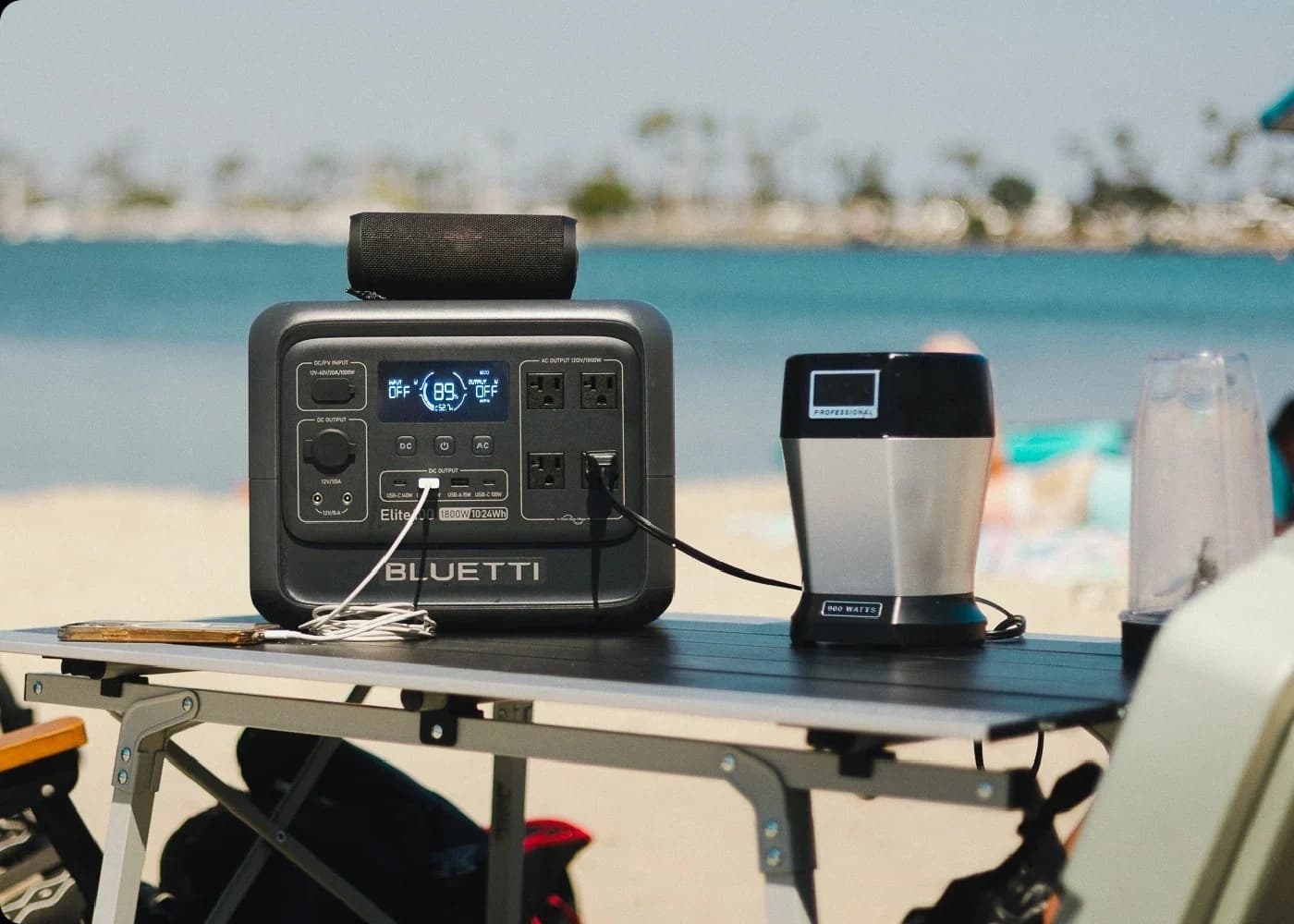
BLUETTI
A 25 lb, 1,024Wh LiFePO4 portable power station with 1,800W of AC output, up to 1,000W of solar input in Turbo mode and a 10 ms UPS switchover.
Check package and model options
- 1,024 Wh capacity
- 1,800 W AC out
- LiFePO4
This is the alternative for a planned stay with a substantial compatible solar setup, subject to the shipping notice above. The standard unit, Bio-based shell option and solar bundles are separate selections on BLUETTI's page. Check the panel actually included; shell material is not a capacity upgrade. For intermittent fridge loads, the manual specifically advises disabling ECO mode rather than letting low-load shutdown interrupt power.
DC versus AC: why the fridge plan changes
Prefer the fridge's supported direct-DC connection when possible, with AC switched off if unused. This avoids leaving an inverter running for a DC appliance, but does not guarantee a particular saving. Each station's conversion losses and idle draw differ.
For an AC example specific to the Elite, its manual gives runtime = capacity × depth of discharge × inverter efficiency ÷ (load + station self-consumption). It states 90% depth of discharge, efficiency over 90% and about 10W self-consumption. Conservatively use 90% efficiency and our 25%-duty fridge. With capacity in Wh and loads in W, estimated hours are 1,024 × 0.9 × 0.9 ÷ (12.5 + 10) ≈ 37, for the fridge alone. It excludes phones and lights, and is not an Anker or EcoFlow prediction. Our direct-DC allowance cannot be reused as an AC guarantee.
Carry the complete kit; plan where it recharges
For packing, allow one pound for leads and a small bag as a chosen placeholder, then weigh your actual kit. These planning totals round upward to whole pounds; they are not weighed kits. Extra batteries and additional adapters need their own allowance.
C300, leads and bag
- Weight calculation, lb
- 9.1 + 1
- Planning total, lb, rounded up
- 11
RIVER, 45W Type-C panel, leads and bag
- Weight calculation, lb
- 10.4 + 3.09 + 1
- Planning total, lb, rounded up
- 15
C1000 Gen 2, leads and bag, no panel
- Weight calculation, lb
- 24.9 + 1
- Planning total, lb, rounded up
- 26
Full comparison table
Swipe to compare. Row labels stay visible.
| Packed configuration | Weight calculation, lb | Planning total, lb, rounded up |
|---|---|---|
| C300, leads and bag | 9.1 + 1 | 11 |
| RIVER, 45W Type-C panel, leads and bag | 10.4 + 3.09 + 1 | 15 |
| C1000 Gen 2, leads and bag, no panel | 24.9 + 1 | 26 |
Scroll horizontally to see every column
| Packed configuration | Weight calculation, lb | Planning total, lb, rounded up |
|---|---|---|
| C300, leads and bag | 9.1 + 1 | 11 |
| RIVER, 45W Type-C panel, leads and bag | 10.4 + 3.09 + 1 | 15 |
| C1000 Gen 2, leads and bag, no panel | 24.9 + 1 | 26 |
The 45W panel page lists 3.09 lb and distinguishes photovoltaic-connector and Type-C versions. The Type-C version's USB-C output is only 15W; its DC output is separate. Confirm the correct station charging lead before ordering. Neither connector shape nor a panel's weather rating establishes station compatibility.
Skip solar when the battery covers the trip. If you need it, use the panel compatibility guide, rather than buying to the station's maximum watts.
A hypothetical panel producing a net 100W for three equivalent full-sun hours adds 100W × 3h = 300Wh; those sunlight and net-output assumptions are yours to verify. Anker's panel FAQ says intensity, orientation and angle change actual output. A sunny forecast is weaker backup than a confirmed charging stop. For vehicle charging, check your exact cable and vehicle limits; a cigarette-lighter lead and a dedicated alternator charger are different purchases.
- Yes: A full starting charge and the correct device leads
- Yes: A confirmed wall stop or enough stored energy for the trip
- Partly: Solar harvest: depends on the site and conditions
- No: A station input ceiling counted as guaranteed panel output
Cold, moisture and storage
Charging and discharging have different temperature limits. C300 and C1000 Gen 2 list charging at 32–104°F; RIVER lists 32–113°F. Follow the exact model's limits and alerts before charging after a cold night. Anker's fast-charge temperature condition is an additional restriction, not permission to charge below the published range.
Keep stations dry and ventilated. BLUETTI's manual prohibits rain and high humidity; EcoFlow says its IP54 claim applies only to the battery pack, not the whole unit. Do not treat a waterproof panel as a waterproof kit or wrap an operating station in a bag that blocks ventilation. After the trip, use the model's storage instructions: the Elite manual specifies 40–60% charge for storage, power off and cables disconnected; C300's manual instead calls for weekly capacity checks and periodic full charging.
How we choose
We compared official US product pages and manuals, checked on November 2, 2026, using capacity, continuous output, useful ports, carrying weight and recharge constraints. These are specification-based recommendations; we have not physically evaluated the stations. Budgets, duty cycles, reserve and packing allowances are explicit planning scenarios. Manufacturer conflicts and stock warnings stay visible. Jackery's 288Wh, 300W Explorer 300 v2 remains an interesting lighter comparison, but its official sold-out notice keeps it off our purchase shortlist; the original Explorer 300 is a different model.
Verdict
Choose C300 for the light phones-and-lights plan or RIVER 3 Plus when a small battery needs more AC headroom. Choose C1000 Gen 2 for the larger car-camping budget; consider Elite 100 V2 when its solar input and delivery fit your plans. For a fridge, settle the consumption and recharge plan before buying the battery.
Frequently asked questions
What size power station do I need for a weekend camping trip?
Use the trip budget rather than the weekend label. Our illustrative phones-and-lights plan needs 120 watt-hours delivered; allowing only 80% of nameplate capacity gives a minimum of 150 watt-hours. Adding laptop charging and a fan raises that minimum to 700 watt-hours. These are chosen usage assumptions, not typical consumption guarantees. Substitute your devices and hours before buying.
Can a 1 kWh power station run a camping fridge for two days?
Possibly, with a suitable DC connection and low enough measured consumption. Our example assumes a 50W compressor running 25% of 48 hours, plus phones and lights: 720 watt-hours delivered, or a nameplate target of 900 watt-hours using our planning allowance. Doubling the compressor duty cycle exceeds a 1,024Wh battery even before losses. Arrange a recharge if your fridge or conditions make the smaller budget unrealistic.
Is Anker C300 the same as C300 DC?
No. This guide's lighter alternative is the C300 with AC outlets, a 288Wh battery and 300W continuous AC output. Anker separately labels C300 DC as DC Only. The AC model includes a wall charging cable, while its car and solar charging leads are separate purchases. Match the complete model name and included charging equipment before comparing bundles.
Do I need solar panels for camping?
Not if a full battery covers your trip and you have a dependable recharge afterward. Solar becomes useful when you stay longer or cannot reach a wall outlet, but a station's solar input ceiling is not the output of the panel you pack. Anker says panel output varies with sunlight intensity, orientation and angle. Treat uncertain solar as an extra opportunity, especially when the fridge budget is already tight.
EcoFlow RIVER 3 Plus
AmazonRelated guides
Best picks · Portable Power Stations
Best Battery Backup for Refrigerators: Picks by Outage Length
Choose a battery backup for your refrigerator by daily energy use, compressor starts and outage length, with clear picks, runtime estimates and kit checks.
Comparison · Portable Power Stations
AFERIY P280 vs Anker SOLIX C2000 Gen 2: Which Backup Kit Fits?
Compare the US AFERIY P280 and Anker C2000 Gen 2 for fridge backup: matching battery kits, runtime estimates, outlet limits, recharge needs and warranty gaps.
Comparison · Portable Power Stations
Anker SOLIX C2000 Gen 2 vs Jackery Explorer 2000 v2: Which to Buy?
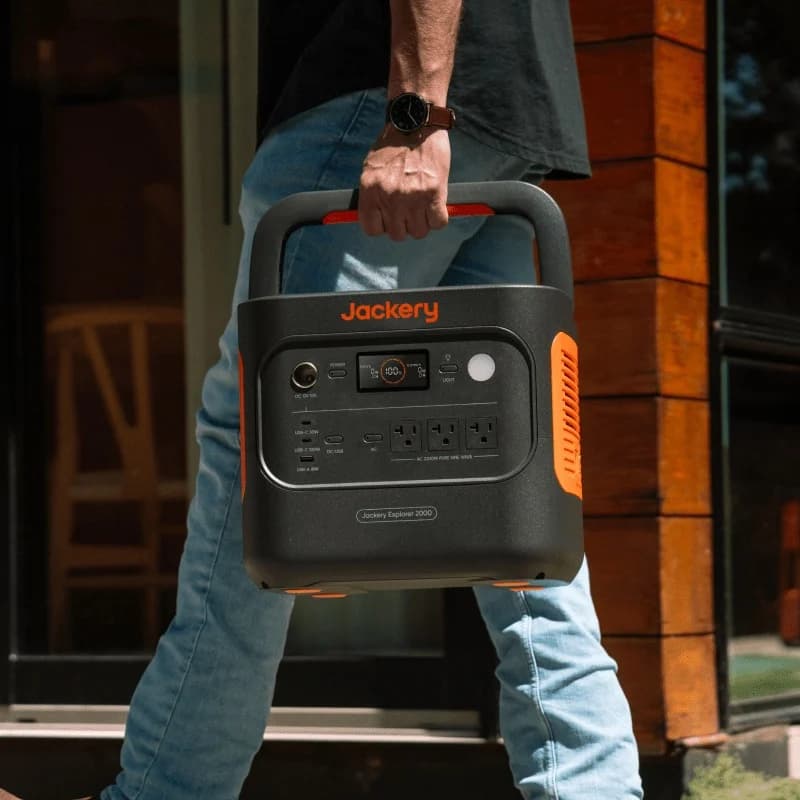
Compare Anker C2000 Gen 2 and Jackery 2000 v2 for fridge backup, carrying, expansion and solar. Get runtime estimates, complete kit checks and buying picks.