

Comparison
AFERIY P280 vs Anker SOLIX C2000 Gen 2
Which Backup Kit Fits?
Compare the US AFERIY P280 and Anker C2000 Gen 2 for fridge backup: matching battery kits, runtime estimates, outlet limits, recharge needs and warranty gaps.
By thisWATT EditorialUpdated November 3, 20269 min read1 pick
Our recommendation: Anker SOLIX C2000 Gen 2
More stored energy with an option to add a battery.
Limit: Expansion stops at one extra battery, for 4,096 Wh total.
On this page · Our picks at a glance
Our picks at a glance
- 1

Choose for: More stored energy with an option to add a battery.
Limit: Expansion stops at one extra battery, for 4,096 Wh total.
For fridge-and-lights backup, our pick is the Anker SOLIX C2000 Gen 2: its 2,048Wh battery, 2,400W continuous output and clearly identified expansion kit make a straightforward starting point. The AFERIY P280 is the conditional alternative for higher combined running loads or growth beyond Anker's 4,096Wh ceiling, with 2,800W output and expansion to 10,240Wh. Both start with the same stored energy; confirm the P280's US order identity, warranty extension and outlet limits before buying.
Quick picks: choose the job, then the kit
Compare specifications and all conditions
Fridge, lights and occasional RV use
- Our choice
- Anker C2000 Gen 2
- Decision that matters
- 2,400W continuous; TT-30R socket; documented matching battery and cable
Higher combined running loads or more eventual storage
- Our choice
- P280, conditionally
- Decision that matters
- 2,800W inverter and up to four expansion batteries; individual socket and startup limits still matter
Longer backup without a larger inverter
- Our choice
- Either station plus its matching battery
- Decision that matters
- Compare complete 4,096Wh orders before comparing their totals at checkout
Unsure whether either size is necessary
- Our choice
- Start with the power-station buying guide
- Decision that matters
- Size your actual load before choosing a brand
Full comparison table
Swipe to compare. Row labels stay visible.
| Your priority | Our choice | Decision that matters |
|---|---|---|
| Fridge, lights and occasional RV use | Anker C2000 Gen 2 | 2,400W continuous; TT-30R socket; documented matching battery and cable |
| Higher combined running loads or more eventual storage | P280, conditionally | 2,800W inverter and up to four expansion batteries; individual socket and startup limits still matter |
| Longer backup without a larger inverter | Either station plus its matching battery | Compare complete 4,096Wh orders before comparing their totals at checkout |
| Unsure whether either size is necessary | Start with the power-station buying guide | Size your actual load before choosing a brand |
Scroll horizontally to see every column
| Your priority | Our choice | Decision that matters |
|---|---|---|
| Fridge, lights and occasional RV use | Anker C2000 Gen 2 | 2,400W continuous; TT-30R socket; documented matching battery and cable |
| Higher combined running loads or more eventual storage | P280, conditionally | 2,800W inverter and up to four expansion batteries; individual socket and startup limits still matter |
| Longer backup without a larger inverter | Either station plus its matching battery | Compare complete 4,096Wh orders before comparing their totals at checkout |
| Unsure whether either size is necessary | Start with the power-station buying guide | Size your actual load before choosing a brand |
Resolve the names and US versions first
Here, “Anker C2000” means SOLIX C2000 Gen 2, with US 120V output. Anker's warranty list identifies C2000 Gen 2 as A1783/85 and F2000 / PowerHouse 767 as A1780; the store's embedded product data gives A17831A1 as the C2000 Gen 2 SKU. Do not assume F2000 is an earlier interchangeable C2000. The official expansion-battery page expressly distinguishes BP2000 Gen 2 from F2000 compatibility.
AFERIY's registration form identifies Haven2800 as AF-P280. We use its US manual, which distinguishes US 110–120V UPS operation from other regional versions. AF-P280-B is the expansion battery; its manual says it must be used with AF-P280. A solar kit, extra-battery kit and station-only order need separate contents checks.
Base stations compared on the same basis
These are manufacturer figures, not measurements by thisWATT. Anker's US specification page, its embedded specification data and AFERIY's US manual supply the comparison.
AFERIY AF-P280, US
- Nominal storage / chemistry
- 2,048Wh / LiFePO4
- Continuous AC output, shared
- 2,800W
- Brief peak output
- Not established in the saved US manual
All specifications
- Outlet information
- Confirm individual receptacle ratings; 2,800W is the combined limit
- Solar ceiling
- 1,200W across two XT90 inputs, 600W each
- Solar electrical window
- 11.5–55V, 20A per input
- Station weight
- 21.6kg
- UPS transfer claim
- Less than 10ms in the feature description
- Cycle statement
- More than 4,000 cycles; manual omits retention endpoint
Anker SOLIX C2000 Gen 2, US
- Nominal storage / chemistry
- 2,048Wh / LFP
- Continuous AC output, shared
- 2,400W
- Brief peak output
- 4,000W; duration not established here
All specifications
- Outlet information
- Five AC outlets including TT-30R; 120V, 20A / 2,400W station limit
- Solar ceiling
- 800W through XT60i
- Solar electrical window
- 11–60V, 17A maximum
- Station weight
- 18.9kg / 41.7lb
- UPS transfer claim
- 10ms
- Cycle statement
- 4,000 cycles to 80% in comparison table; embedded key-features data says 3,000+
Full comparison table
Swipe to compare. Row labels stay visible.
| Specification | AFERIY AF-P280, US | Anker SOLIX C2000 Gen 2, US |
|---|---|---|
| Nominal storage / chemistry | 2,048Wh / LiFePO4 | 2,048Wh / LFP |
| Continuous AC output, shared | 2,800W | 2,400W |
| Brief peak output | Not established in the saved US manual | 4,000W; duration not established here |
| Outlet information | Confirm individual receptacle ratings; 2,800W is the combined limit | Five AC outlets including TT-30R; 120V, 20A / 2,400W station limit |
| Solar ceiling | 1,200W across two XT90 inputs, 600W each | 800W through XT60i |
| Solar electrical window | 11.5–55V, 20A per input | 11–60V, 17A maximum |
| Station weight | 21.6kg | 18.9kg / 41.7lb |
| UPS transfer claim | Less than 10ms in the feature description | 10ms |
| Cycle statement | More than 4,000 cycles; manual omits retention endpoint | 4,000 cycles to 80% in comparison table; embedded key-features data says 3,000+ |
Scroll horizontally to see every column
| Specification | AFERIY AF-P280, US | Anker SOLIX C2000 Gen 2, US |
|---|---|---|
| Nominal storage / chemistry | 2,048Wh / LiFePO4 | 2,048Wh / LFP |
| Continuous AC output, shared | 2,800W | 2,400W |
| Brief peak output | Not established in the saved US manual | 4,000W; duration not established here |
| Outlet information | Confirm individual receptacle ratings; 2,800W is the combined limit | Five AC outlets including TT-30R; 120V, 20A / 2,400W station limit |
| Solar ceiling | 1,200W across two XT90 inputs, 600W each | 800W through XT60i |
| Solar electrical window | 11.5–55V, 20A per input | 11–60V, 17A maximum |
| Station weight | 21.6kg | 18.9kg / 41.7lb |
| UPS transfer claim | Less than 10ms in the feature description | 10ms |
| Cycle statement | More than 4,000 cycles; manual omits retention endpoint | 4,000 cycles to 80% in comparison table; embedded key-features data says 3,000+ |
The TT-30R socket does not give Anker an unrestricted RV supply: its specification still limits that output to 20A and 2,400W. Neither a continuous rating nor an unspecified-duration peak guarantees your compressor will start. Check its starting requirement separately; BLUETTI's manual warns that motors and compressors can demand more power at startup.
Best fit for essential-load backup: Anker C2000 Gen 2
Choose Anker when its continuous limit covers your simultaneous loads and a single expansion battery is enough. Its smaller stated weight matters if you will move the station frequently. Anker also publishes 9W idle consumption, useful context for light loads, although we cannot establish a measured efficiency advantage over P280 from the available documents.
Anker SOLIX
A 2,048Wh LiFePO4 power station with 2,400W of AC output (4,000W peak), a TT-30R RV outlet, 1,800W wall charging, 800W of solar input and expansion to 4kWh with one BP2000 (Gen 2) battery.
Check package and model options
- 2,048 Wh capacity
- 2,400 W AC out
- LiFePO4
For growth, add the BP2000 Expansion Battery (Gen 2). Its US page explicitly supplies the battery-to-host cable and states 4,096Wh combined capacity. Buy the full Gen 2 name, rather than choosing by “BP2000” alone.
Conditional alternative for larger loads and expansion: AFERIY P280
P280's case is its higher combined inverter output and larger expansion ceiling. Its manual allows four extra battery packs, and the AF-P280-B manual identifies the matching 2,048Wh battery and included parallel cable. Each battery adds 16.4kg, so plan where the complete system will sit.
The important restriction is US UPS bypass: appliance power must stay below 1,800W, per the P280 manual. Its 2,800W inverter headline is not the wall-connected allowance. For either station, obtain the US bypass limit before planning continuous wall-connected backup.
P280's manual also warns that a small load can register as zero and trigger automatic shutdown in energy-saving mode. Check the manual's always-on setting before relying on it for an overnight fridge load.
AFERIY's US listing identity on Amazon remains unverified, so this is a conditional buying branch rather than a linked Amazon pick. Check the exact US P280 configuration with AFERIY, including each receptacle's limit and the warranty terms.
Compare complete orders, not battery-family names
Base station
- P280 contents and capacity
- 2,048Wh; station, AC cable, MC4–XT90 cable and manual in packing list
- C2000 Gen 2 contents and capacity
- 2,048Wh; station, 15A AC charging cable and manual
Matching expanded kit
- P280 contents and capacity
- Station + one AF-P280-B + its included parallel cable: 4,096Wh, calculated
- C2000 Gen 2 contents and capacity
- Station + one BP2000 Gen 2 + its included battery-to-host cable: 4,096Wh
Maximum supported storage
- P280 contents and capacity
- Station + four matching batteries and their cables: 10,240Wh
- C2000 Gen 2 contents and capacity
- Station + one matching Gen 2 battery and cable: 4,096Wh
Solar-ready order
- P280 contents and capacity
- Add compatible panels; the base packing list includes an MC4–XT90 cable, not panels
- C2000 Gen 2 contents and capacity
- Add compatible panels and their charging cable; neither is in the base box list
Vehicle-socket charging
- P280 contents and capacity
- Car charging cable is explicitly excluded from the manual's package
- C2000 Gen 2 contents and capacity
- Add a suitable car charging cable; base box list only includes AC charging equipment
Full comparison table
Swipe to compare. Row labels stay visible.
| Order to compare | P280 contents and capacity | C2000 Gen 2 contents and capacity |
|---|---|---|
| Base station | 2,048Wh; station, AC cable, MC4–XT90 cable and manual in packing list | 2,048Wh; station, 15A AC charging cable and manual |
| Matching expanded kit | Station + one AF-P280-B + its included parallel cable: 4,096Wh, calculated | Station + one BP2000 Gen 2 + its included battery-to-host cable: 4,096Wh |
| Maximum supported storage | Station + four matching batteries and their cables: 10,240Wh | Station + one matching Gen 2 battery and cable: 4,096Wh |
| Solar-ready order | Add compatible panels; the base packing list includes an MC4–XT90 cable, not panels | Add compatible panels and their charging cable; neither is in the base box list |
| Vehicle-socket charging | Car charging cable is explicitly excluded from the manual's package | Add a suitable car charging cable; base box list only includes AC charging equipment |
Scroll horizontally to see every column
| Order to compare | P280 contents and capacity | C2000 Gen 2 contents and capacity |
|---|---|---|
| Base station | 2,048Wh; station, AC cable, MC4–XT90 cable and manual in packing list | 2,048Wh; station, 15A AC charging cable and manual |
| Matching expanded kit | Station + one AF-P280-B + its included parallel cable: 4,096Wh, calculated | Station + one BP2000 Gen 2 + its included battery-to-host cable: 4,096Wh |
| Maximum supported storage | Station + four matching batteries and their cables: 10,240Wh | Station + one matching Gen 2 battery and cable: 4,096Wh |
| Solar-ready order | Add compatible panels; the base packing list includes an MC4–XT90 cable, not panels | Add compatible panels and their charging cable; neither is in the base box list |
| Vehicle-socket charging | Car charging cable is explicitly excluded from the manual's package | Add a suitable car charging cable; base box list only includes AC charging equipment |
Both expansion choices add stored energy. Do not treat those batteries as additional standalone AC stations or as permission to exceed the host's output rating. Anker also sells multi-station orders: separate C2000 stations are a different configuration from a station with one expansion battery.
The maximum capacities above are 10,240Wh and 4,096Wh respectively, with extra batteries purchased separately.
Source: AFERIY US battery manuals and Anker's US Gen 2 battery page; base stations each hold 2,048Wh
Same fridge and lights: runtime estimates
For an illustrative job, assume a fridge averaging 100W plus 20W of lights: 120W average, with no charging during use. These are chosen inputs, not appliance specifications. Replace them with your own consumption; our refrigerator watts guide explains sizing.
We borrow the method in BLUETTI's published manual: assume 90% depth of discharge, 90% inverter efficiency and 10W station consumption for both columns. Those describe our shared planning model, not verified P280 or Anker losses; BLUETTI's original assumptions concern its own station. The discharge allowance leaves reserve, while efficiency and station draw account for different losses.
Estimated hours = capacity in Wh × 90% × 90% ÷ (120W + 10W).
Either base station
- Nominal energy
- 2,048Wh
- Rounded runtime estimate for that job
- About thirteen hours
Either matching single-battery expansion kit
- Nominal energy
- 4,096Wh
- Rounded runtime estimate for that job
- About twenty-six hours
P280 with four expansion batteries
- Nominal energy
- 10,240Wh
- Rounded runtime estimate for that job
- About sixty-four hours
Full comparison table
Swipe to compare. Row labels stay visible.
| Configuration | Nominal energy | Rounded runtime estimate for that job |
|---|---|---|
| Either base station | 2,048Wh | About thirteen hours |
| Either matching single-battery expansion kit | 4,096Wh | About twenty-six hours |
| P280 with four expansion batteries | 10,240Wh | About sixty-four hours |
Scroll horizontally to see every column
| Configuration | Nominal energy | Rounded runtime estimate for that job |
|---|---|---|
| Either base station | 2,048Wh | About thirteen hours |
| Either matching single-battery expansion kit | 4,096Wh | About twenty-six hours |
| P280 with four expansion batteries | 10,240Wh | About sixty-four hours |
For the base unit, the arithmetic is 2,048 × 90% × 90% ÷ (120 + 10); substitute the expanded capacity for the other rows. These are estimates, not promises. Temperature, battery age, actual idle consumption and your load change the result. Anker's advertised “up to 32 hours” fridge scenario is not this same fridge-and-lights job, so it is not a fair head-to-head runtime result.
Check simultaneous and starting loads
Compare combined running demand and appliance startup requirements with the station and individual outlet limits.
Measure the energy you need
Use your fridge's average consumption and the hours you want, then allow for reserve and losses.
Complete the recharge plan
Specify the panels or vehicle charger, matching cables and a realistic opportunity to refill.
Wall, solar and driving: what must you add?
Wall charging: P280's US manual specifies up to 1,800W and a full charge in 1.5 hours. Anker specifies 1,800W AC input and 88 minutes to full. Both include an AC cable. These manufacturer claims do not establish a meaningful wall-charging winner.
Solar: P280's dual inputs each accept up to 600W, with a 55V ceiling; Anker specifies 800W total and an 11–60V window. Check the panels' open-circuit voltage, current and connector against the model instructions. A panel bundle below the station's input ceiling cannot be assumed to achieve the maximum advertised recharge rate. Our portable solar-panel guide helps compare the complete array and cables.
Fast recharge: Anker's 58-minute full-charge claim uses AC plus solar at 2,600W, not AC alone. Its 800W alternator charger claim is three hours to full, while ordinary 100W car input is listed at 23 hr. The fast vehicle charger is additional equipment. P280's manual describes vehicle-socket charging up to 120W and excludes the car cable; confirm any faster DC-DC accessory as a separate kit rather than assuming it is included.
Cold charging, warranty and holiday checkout
P280's manual says charging stops below 0°C. Anker specifies charging at 0–40°C, separately from its −20–40°C operating range. A below-freezing discharge rating does not establish permission to charge a frozen battery.
Anker confusingly labels the colder range “Recharging Temperature” in its visible table; its separate “Charging Temperature” row gives the warmer range. Use that charging row when planning winter refills.
AFERIY's fetched P280 kit card advertises seven years extended warranty, while its US manual states 24 months. Its registration form says eligibility and total coverage vary by product, and requests a receipt showing the seller and purchase details. Confirm the extension for your exact order in writing.
Anker's US warranty terms list C2000 Gen 2 and BP2000 Gen 2 within the 60-month group. Coverage requires purchase evidence; unauthorized sellers are excluded, and dealer returns generally go through the dealer. A marketplace listing alone does not prove seller eligibility.
For Black Friday and Cyber Monday, compare station-only with station-only, or matching battery kits with both cables included. Check solar panel quantity and wattage separately. Saved availability notices also need checking: AFERIY's P280 kit card says pre-order for late November, while Anker's page says orders placed on or after November 2 begin shipping November 21. Confirm the selected order's checkout estimate before relying on either for an imminent outage.
How we choose
This comparison uses official US product data, battery manuals, packing lists and warranty material, without physical product testing. Unresolved items include P280's motor-start peak and individual receptacle limits, comparable idle-loss measurements, Anker's US bypass limit and P280's exact seller-specific extension. Anker's conflicting cycle statements are retained above. The P280 purchase branch stays conditional until its US listing and warranty identity are settled.
Verdict
Choose C2000 Gen 2 for essential-load backup when its output and expansion ceiling fit. Consider P280 when its larger inverter or expansion ceiling solves a specific need, after clearing the listed buying conditions. For installed home backup, use a licensed electrician and obtain permits where required; start with our home battery backup guide.
Frequently asked questions
Does Anker C2000 mean the C2000 Gen 2?
Use the full name on the order. This comparison covers the US Anker SOLIX C2000 Gen 2. Anker's warranty list identifies the C2000 Gen 2 as A1783/85 and the F2000, also called PowerHouse 767, as A1780; the store's embedded product data gives SKU A17831A1. A shortened C2000 title does not establish the generation, outlet region or included accessories. Match those details before applying this guide's specifications.
Will the AFERIY P280 run a refrigerator longer than the Anker C2000 Gen 2?
Both base stations have 2,048Wh, so capacity alone gives neither a runtime advantage. Our shared fridge-and-lights planning example estimates about thirteen hours for either base unit, using an assumed 120W average load and explicitly borrowed loss assumptions. Your refrigerator's actual consumption and starting demand decide suitability. Anker publishes 9W idle consumption; a comparable P280 idle figure was not established here.
Which BP2000 battery works with the C2000 Gen 2?
Buy the Anker SOLIX BP2000 Expansion Battery explicitly marked Gen 2. Its official US page says it is designed for the C2000 Gen 2, doubles capacity to 4,096Wh and includes the battery-to-host cable. That page also says it is not compatible with the F2000. Anker's warranty list distinguishes the older BP2000 for F2000 from the Gen 2 battery; the family name alone is insufficient.
Can the P280 supply 2,800W while plugged into the wall?
Do not plan wall-connected UPS operation around its inverter headline. The P280 US manual rates the inverter at 2,800W but says appliance power must remain below 1,800W in US UPS bypass operation. It also describes switching within 10ms after mains failure. Add simultaneous loads and check individual receptacle ratings and appliance startup requirements separately before choosing this configuration.
Does the P280 really have a seven-year warranty?
AFERIY's fetched P280 kit card advertises seven years of extended warranty, while the US manual's warranty card states 24 months. Its registration form says eligible products may qualify for longer coverage after successful registration and that eligibility varies by product. Obtain the extension terms for your exact station and seller in writing, and retain a receipt identifying the seller, product and purchase date.
Anker SOLIX C2000 Gen 2
AmazonRelated guides
Best picks · Portable Power Stations
Best Battery Backup for Refrigerators: Picks by Outage Length
Choose a battery backup for your refrigerator by daily energy use, compressor starts and outage length, with clear picks, runtime estimates and kit checks.
Comparison · Portable Power Stations
Anker SOLIX C2000 Gen 2 vs Jackery Explorer 2000 v2: Which to Buy?
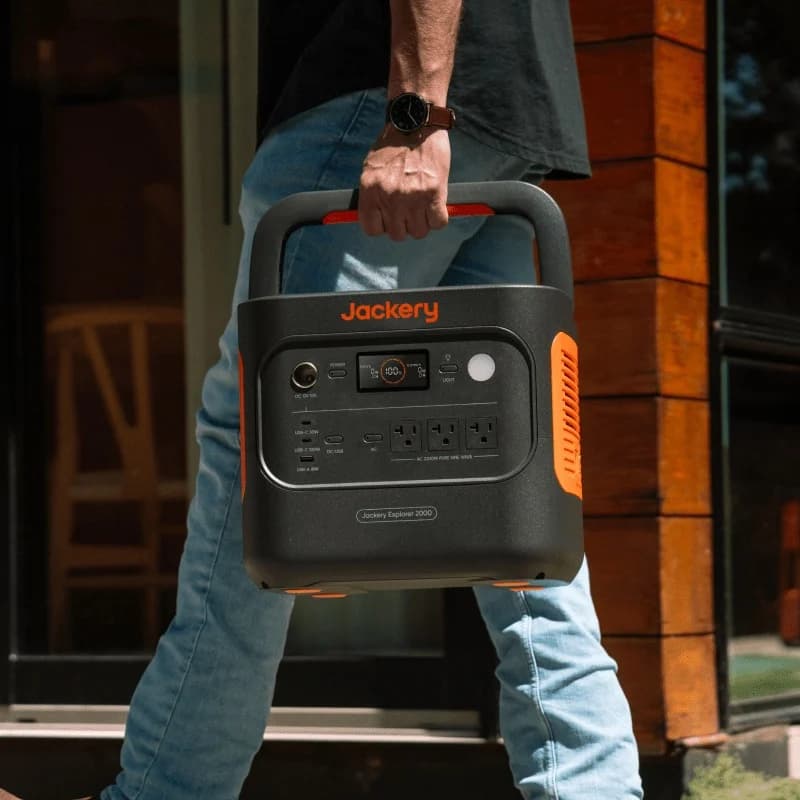
Compare Anker C2000 Gen 2 and Jackery 2000 v2 for fridge backup, carrying, expansion and solar. Get runtime estimates, complete kit checks and buying picks.
Best picks · Portable Power Stations
Best Power Stations for Laptops: Ports, Cables and Runtime
Choose a power station for your laptop by USB-C profiles, shared-port limits and realistic runtime, with clear picks, cable advice and AC charger fallbacks.