

Best picks
Best Portable Power Stations and Solar Generators in 2026
Portable power stations sized by what you need to run, from a 286Wh gift to 4kWh home backup, with output, solar input and UPS figures from makers' specs.
By thisWATT EditorialUpdated November 2, 202615 min read6 picks

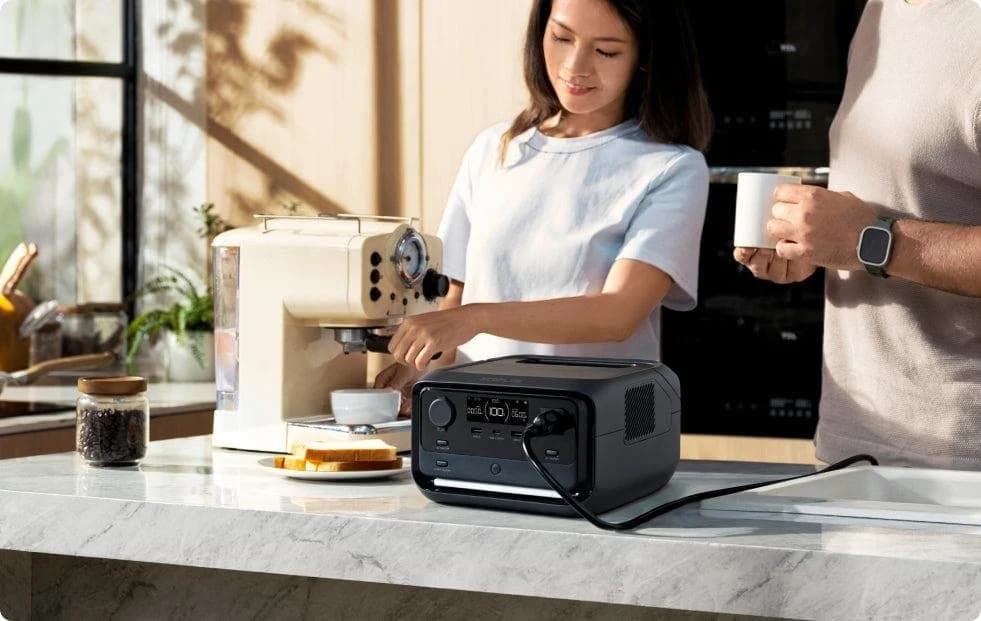
Our picks at a glance
- See on Amazon1
Best overall
EcoFlow DELTA 3 Plus Portable Power Station (1,024Wh)1024 Wh capacity · 1800W AC out · LiFePO4
- See on Amazon2
Best small station and gift
EcoFlow RIVER 3 Plus Portable Power Station (286Wh)286 Wh capacity · 600W AC out · LiFePO4
- See on Amazon3
Best for solar
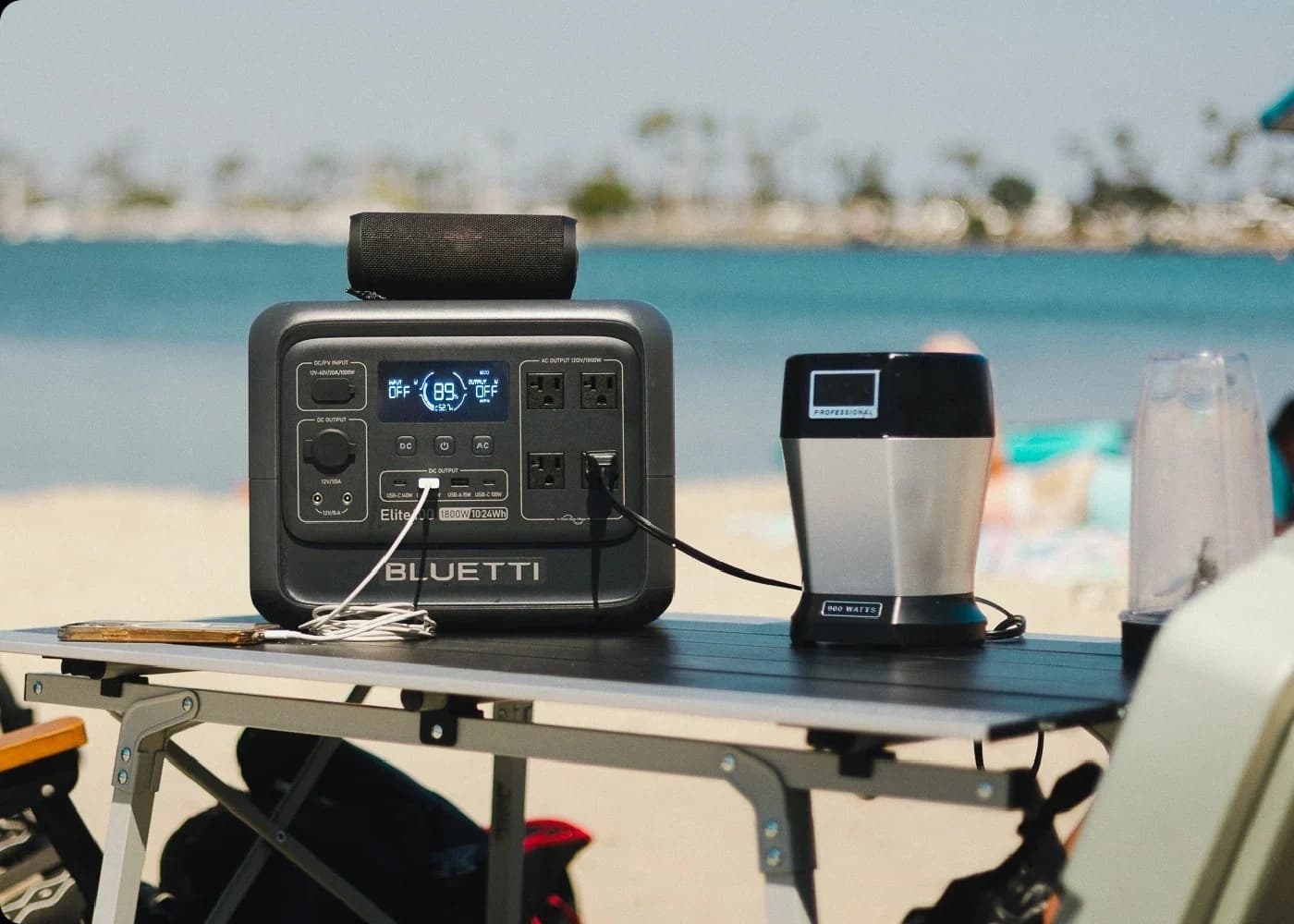
BLUETTI Elite 100 V2 Portable Power Station (1,024Wh)1024 Wh capacity · 1800W AC out · LiFePO4
- See on Amazon4

Best 2 kWh station
Anker SOLIX C2000 Gen 2 Portable Power Station (2,048Wh)2048 Wh capacity · 2400W AC out · LiFePO4
- See on Amazon5
Lightest 2 kWh station
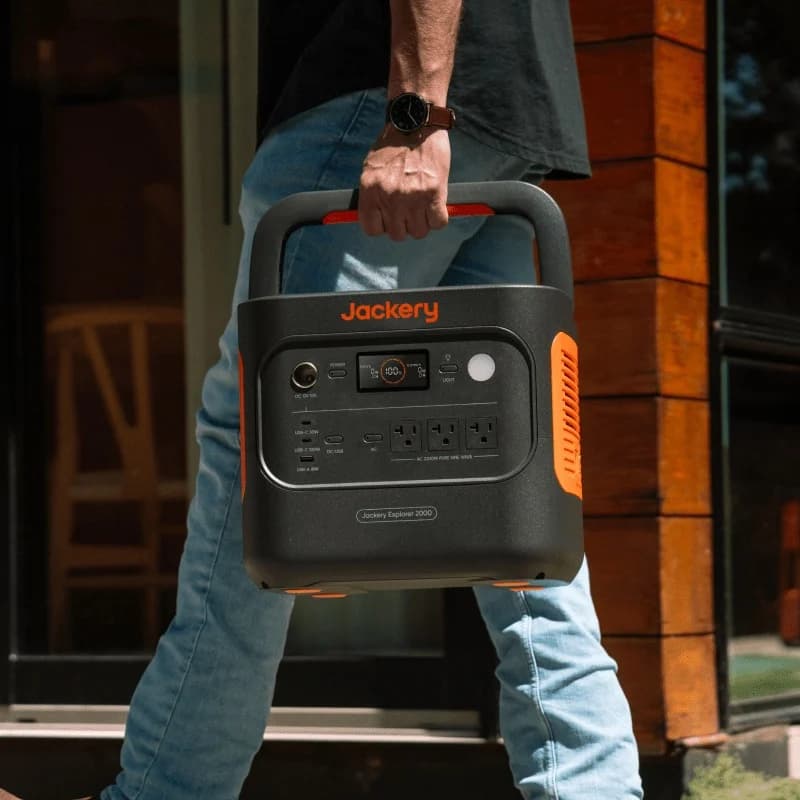
Jackery Explorer 2000 v2 Portable Power Station2042 Wh capacity · 2200W AC out · LiFePO4
- See on Amazon6
Best for home backup
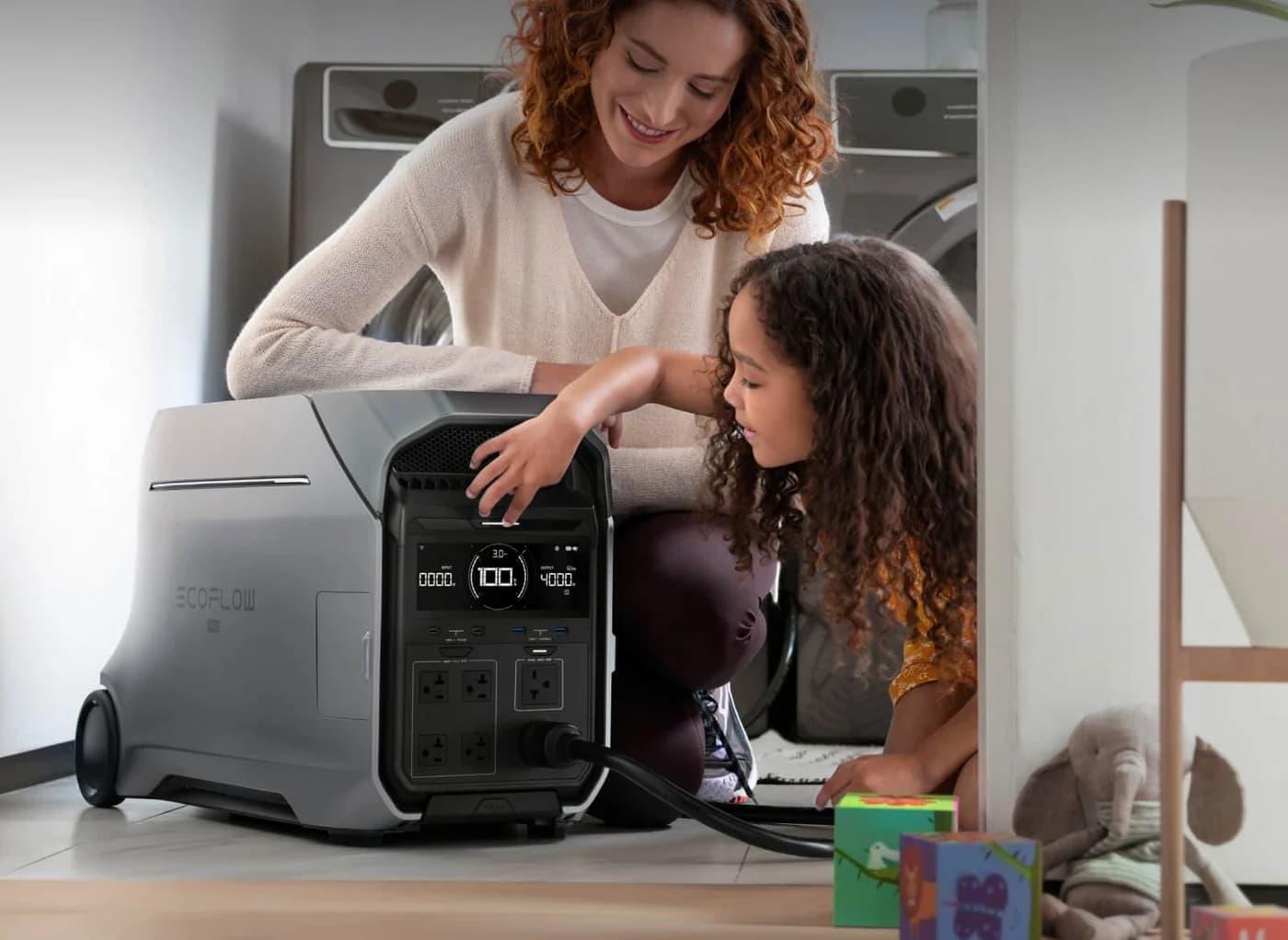
EcoFlow DELTA Pro 3 Portable Power Station (4,096Wh, 120V/240V)4096 Wh capacity · 4000W AC out · LiFePO4
For most people, the best portable power station is a 1 kWh model with long-life LiFePO4 cells, and the EcoFlow DELTA 3 Plus is the most complete one: 1,800W from six outlets, a wall recharge EcoFlow puts at 56 minutes, 1,000W of solar input and the option to grow to about 5kWh. Get the EcoFlow RIVER 3 Plus if you need something small for a desk, a tent or a gift. For a fridge through a long outage, step up to a 2 kWh station like the Anker SOLIX C2000 Gen 2.
Size is the decision that matters most, so this guide is organised by what you need to run. Every capacity, output and charging figure comes from the makers' own spec pages, checked on November 1, 2026, and runtimes are our arithmetic, labelled as estimates. We haven't lab-tested these stations. For a spec-by-spec comparison of the six main 1 kWh models, see EcoFlow vs Jackery vs Anker vs BLUETTI.
Quick picks by size
| Size class | Good for (estimate) | Our picks |
|---|---|---|
| Under 300Wh | Phones, laptops, lights and a router for a few hours; a gift | EcoFlow RIVER 3 Plus (286Wh) |
| About 1kWh | A weekend of camping; a full-size fridge for roughly 10 to 16 hours | EcoFlow DELTA 3 Plus, Anker SOLIX C1000 Gen 2, BLUETTI Elite 100 V2 |
| About 2kWh | A fridge for about a day; RV and cabin power | Anker SOLIX C2000 Gen 2, Jackery Explorer 2000 v2 |
| 4kWh and up | Home backup, including 240V loads | EcoFlow DELTA Pro 3 |
Tap a label to explore. You can also hover or use your keyboard.
Stored energy1,024 Wh · nominal capacity
Capacity is stored energy; usable energy depends on discharge limits and conversion losses.
Sources: 1: The DELTA 3 Plus specification table gives 1,024 Wh capacity., 3: BLUETTI’s estimated-runtime equation includes capacity, depth of discharge, inverter efficiency, load and station self-consumption., 6: The illustrated specification example is the EcoFlow DELTA 3 Plus.Continuous AC output1,800W total · shared by outlets
Add the power of devices running together and compare it with the shared continuous output limit.
Sources: 2: DELTA 3 Plus outlets share 1,800 W AC output in total, rather than that allowance per socket., 6: The illustrated specification example is the EcoFlow DELTA 3 Plus.Brief AC surge3,600W · separate peak specification
Surge is a separate specification from continuous output. Confirm the actual appliance’s starting demand rather than treating this peak as a guarantee.
Sources: 2: DELTA 3 Plus outlets share 1,800 W AC output in total, rather than that allowance per socket., 5: Some motors or compressors may start at two to four times their power; this is a warning, not an exact surge requirement for every fridge., 6: The illustrated specification example is the EcoFlow DELTA 3 Plus.Estimate hoursCapacity, load, losses and station draw
The cited BLUETTI formula includes depth of discharge, inverter efficiency and station self-consumption. Its model-specific assumptions are not measured values for the EcoFlow example.
Sources: 3: BLUETTI’s estimated-runtime equation includes capacity, depth of discharge, inverter efficiency, load and station self-consumption., 4: The assumptions accompanying BLUETTI’s equation specifically describe Elite 100 V2: 90% depth of discharge, inverter efficiency over 90%, and about 10 W self-consumption; they are not measured DELTA 3 Plus values.Check motor startsSome motors may start at 2-4 times their power
BLUETTI warns that some motors or compressors may need this starting burst. Check your actual appliance; the warning is not a fixed multiplier for every fridge.
Sources: 5: Some motors or compressors may start at two to four times their power; this is a warning, not an exact surge requirement for every fridge.Estimate hours = capacity (Wh) × depth of discharge × inverter efficiency ÷ (load (W) + station draw (W)). Use your model’s figures; the cited BLUETTI loss assumptions describe its Elite 100 V2, not this EcoFlow example.
Source notes6 references
The DELTA 3 Plus specification table gives 1,024 Wh capacity.
us.ecoflow.com — source for The DELTA 3 Plus specification table gives 1,024 Wh capacity.Capacity 1024 Wh
DELTA 3 Plus outlets share 1,800 W AC output in total, rather than that allowance per socket.
us.ecoflow.com — source for DELTA 3 Plus outlets share 1,800 W AC output in total, rather than that allowance per socket.AC Output 6 outlets, 1800W total (Surge 3600W)
BLUETTI’s estimated-runtime equation includes capacity, depth of discharge, inverter efficiency, load and station self-consumption.
s4.bluettipower.com — source for BLUETTI’s estimated-runtime equation includes capacity, depth of discharge, inverter efficiency, load and station self-consumption.Operation time = Battery Capacity × DoD × η ÷ (Load + Elite 100 V2's Self-consumption)
The assumptions accompanying BLUETTI’s equation specifically describe Elite 100 V2: 90% depth of discharge, inverter efficiency over 90%, and about 10 W self-consumption; they are not measured DELTA 3 Plus values.
s4.bluettipower.com — source for The assumptions accompanying BLUETTI’s equation specifically describe Elite 100 V2: 90% depth of discharge, inverter efficiency over 90%, and about 10 W self-consumption; they are not measured DELTA 3 Plus values.Note: DoD (Depth of Discharge) is 90%. η (inverter efficiency) is over 90%. The Elite 100 V2 self-consumption is about 10W.
Some motors or compressors may start at two to four times their power; this is a warning, not an exact surge requirement for every fridge.
s4.bluettipower.com — source for Some motors or compressors may start at two to four times their power; this is a warning, not an exact surge requirement for every fridge.Some devices with motors or compressors may start at 2-4 times their rated power, which could easily overload the Elite 100 V2.
The illustrated specification example is the EcoFlow DELTA 3 Plus.
us.ecoflow.com — source for The illustrated specification example is the EcoFlow DELTA 3 Plus.EcoFlow DELTA 3 Plus Portable Power Station
How long will it run? (estimates)
Runtime is capacity ÷ load, minus losses. We use BLUETTI's published formula as the stated assumption: 90% depth of discharge × 90% inverter efficiency, so 81% of the rated watt-hours reach the outlet, plus the station's own draw (about 10W per BLUETTI's 1kWh Elite 100 V2 manual, and about 20W for its larger Apex 300, which we apply to the 4kWh column). Other makers' stations differ, so treat these as rough estimates.
| Steady load | 286Wh | 1,024Wh | 2,048Wh | 4,096Wh |
|---|---|---|---|---|
| 25W | 6.6 h | 23.7 h | 47.4 h | 73.7 h |
| 50W | 3.9 h | 13.8 h | 27.6 h | 47.4 h |
| 100W | 2.1 h | 7.5 h | 15.1 h | 27.6 h |
| 300W | 45 min | 2.7 h | 5.4 h | 10.4 h |
| 1,000W | Over the RIVER 3 Plus's 600W limit | 49 min | 1.6 h | 3.3 h |
A fridge cycles on and off, so use its average draw, not its running watts: our refrigerator watts guide works through that with ENERGY STAR data. To know your own loads, a plug-in watt meter beats guessing.
Best overall: EcoFlow DELTA 3 Plus
The DELTA 3 Plus gets the most right for one box. EcoFlow rates it at 1,024Wh with LFP cells (4,000 cycles to 80%), 1,800W continuous and 3,600W surge from six AC outlets, and an under-10 ms UPS switchover for a router or computer. It refills at 1,500W (0 to 100% in 56 minutes, per EcoFlow), takes up to 500W of solar on each of two 11-60V inputs, and charges at 800W from EcoFlow's Alternator Charger while you drive (sold separately).
EcoFlow
EcoFlow DELTA 3 Plus Portable Power Station (1,024Wh)
A 1,024Wh LiFePO4 portable power station with 1,800W of AC output, 1,500W wall charging, two 500W solar inputs and expansion to about 5kWh with EcoFlow extra batteries.
Comes in 5 versions: see which to buy
- 1024 Wh capacity
- 1800W AC out
- LiFePO4
Expansion is the reason it's the overall pick: EcoFlow lists four extra batteries for it, up to about 5kWh in total, so it can grow into outage duty. The warranty is 5 years. The IP65 rating covers the battery pack only, not the whole unit.
Best small station and gift: EcoFlow RIVER 3 Plus
The RIVER 3 Plus is small enough to live on a desk or travel in a car: 286Wh, 10.4 lb and 9.2 x 9.1 x 5.8 inches, per EcoFlow's spec sheet. It switches to battery in under 10 ms, which makes it a quiet backup for a router or home-office gear, and EcoFlow lists outage alerts plus a data interface for safe automatic shutdown with its PC and NAS software. It refills from the wall in 60 minutes, and a stacked extra battery takes it to as much as 858Wh (with the 572Wh EB600) without cables.
EcoFlow
EcoFlow RIVER 3 Plus Portable Power Station (286Wh)
A 10.4 lb, 286Wh LiFePO4 power station with 600W of AC output, a sub-10 ms UPS switchover, one-hour wall charging and expansion to 858Wh with a stackable extra battery.
Comes in 5 versions: see which to buy
- 286 Wh capacity
- 600W AC out
- LiFePO4
Know its limits: 600W continuous (X-Boost runs heating-type devices up to 1,200W) and 220W of solar input. At 286Wh it's hours, not days, for anything bigger than a router or lights.
Fastest-charging 1 kWh station: Anker SOLIX C1000 Gen 2
If you'll often refill between uses, the C1000 Gen 2 is the quickest on paper: 1,600W with UltraFast Charging switched on in the Anker app, 100% in 49 minutes per Anker (normal charging is 1,200W, and it slows when the cells are below 68°F). It delivers 2,000W continuous and 3,000W surge from five AC outlets, plus two 140W USB-C ports, switches over in 10 ms and has a 5-year warranty.
It doesn't expand. Anker's spec table leaves the battery chemistry blank, though an Anker SOLIX blog article says the C1000 Gen 2 uses LFP cells rated for 4,000 cycles to 80% capacity.
Best for solar: BLUETTI Elite 100 V2
BLUETTI's Elite 100 V2 accepts up to 1,000W of solar on a single input in Turbo mode (12-60V, 20A maximum; 600W in the default Standard mode), and BLUETTI states a full solar charge in 70 minutes. That's a high figure for a 1kWh station, though reaching it takes a panel array working at about 50V or more, because 1,000W at 20A needs 50V. The rest is solid: 1,024Wh of LiFePO4 rated for 4,000+ cycles to 80%, 1,800W continuous (3,600W surge), a 10 ms-or-less switchover, 25 lb and a 5-year warranty.
BLUETTI
BLUETTI Elite 100 V2 Portable Power Station (1,024Wh)
A 25 lb, 1,024Wh LiFePO4 portable power station with 1,800W of AC output, up to 1,000W of solar input in Turbo mode and a 10 ms UPS switchover.
Comes in 7 versions: see which to buy
- 1024 Wh capacity
- 1800W AC out
- LiFePO4
Best 2 kWh station: Anker SOLIX C2000 Gen 2
The C2000 Gen 2 is the 2kWh station with the most room to grow. It holds 2,048Wh of LiFePO4 (4,000 cycles to 80%), delivers 2,400W continuous with a 4,000W peak, and its five AC outlets include a TT-30R, the standard RV plug. It refills at up to 1,800W from the wall, and Anker quotes 100% in 58 minutes with AC and solar together. Solar input is 800W (XT-60i, 11-60V, 17A), switchover is 10 ms, and one BP2000 (Gen 2) battery doubles it to 4,096Wh. Anker also lists its idle draw (9W), which helps with long-runtime math.
Anker SOLIX
Anker SOLIX C2000 Gen 2 Portable Power Station (2,048Wh)
A 2,048Wh LiFePO4 power station with 2,400W of AC output (4,000W peak), a TT-30R RV outlet, 1,800W wall charging, 800W of solar input and expansion to 4kWh with one BP2000 (Gen 2) battery.
Comes in 5 versions: see which to buy
- 2048 Wh capacity
- 2400W AC out
- LiFePO4
It's 120V only and weighs 41.7 lb, and expansion stops at that one extra battery. The warranty is 5 years.
Lightest 2 kWh station: Jackery Explorer 2000 v2
Jackery fits 2,042Wh of LiFePO4 into about 39.5 lb, the lightest 2kWh station here. It's rated 2,200W continuous with a 4,400W surge peak, and Emergency Super Charge (an app setting) refills it in about 1.7 hours, per Jackery. The trade-offs are three AC outlets, 400W of solar across two 8mm ports (11-60V), which is slow for 2kWh, car charging that takes about 24 hours, no expansion, and a rating of 4,000 cycles to 70%. The warranty is 3 years, plus 2 if you buy from jackery.com.
Jackery
Jackery Explorer 2000 v2 Portable Power Station
A 2,042Wh LiFePO4 portable power station with 2,200W of AC output (4,400W surge peak), app-enabled 1.7-hour emergency charging and up to 400W of solar input.
Comes in 4 versions: see which to buy
- 2042 Wh capacity
- 2200W AC out
- LiFePO4
EcoFlow's DELTA 3 Max is the other 2kWh option to know: 2,048Wh, 2,400W continuous with a 4,800W surge, 0-80% in 68 minutes and 500W of solar, per EcoFlow. It isn't expandable (EcoFlow's DELTA 3 Max Plus is the expandable sibling), and its 5-year warranty needs registration in the EcoFlow app (3 years without).
Best for home backup: EcoFlow DELTA Pro 3
Once you need 240V, a portable station becomes a home system. The DELTA Pro 3 holds 4,096Wh, delivers 4,000W continuous and 8,000W surge at 120/240V (including an L14-30R outlet), takes 2,600W of solar over two inputs and expands to 12kWh per unit. EcoFlow lists it as "UL 9540 Certificated", the safety standard for energy storage systems, and rates the cells for 4,000 cycles to 80%. At 113.5 lb it rolls rather than carries, and connecting it to your home's wiring is a job for a licensed electrician. Our home battery backup guide compares it with Anker, Jackery and BLUETTI's systems.
EcoFlow
EcoFlow DELTA Pro 3 Portable Power Station (4,096Wh, 120V/240V)
A 4,096Wh LFP home-backup power station with 4,000W of 120V/240V output (8,000W surge), 2,600W of dual solar input and expansion to 12kWh per unit, listed by EcoFlow as UL 9540 certificated.
Comes in 7 versions: see which to buy
- 4096 Wh capacity
- 4000W AC out
- LiFePO4
Solar generators: how to match panels to a station
A "solar generator" is a power station plus solar panels. The kit only works as advertised when the panels fit the station's solar input on three counts: total watts at or under the input's maximum, an open-circuit voltage (Voc) inside its voltage window, and a connector that fits. Panels wired in series add their voltages, so two panels can push past a window that one panel fits.
Tap a label to explore. You can also hover or use your keyboard.
Scroll across to see every column
Bars start at zero and share a scale within each column.
Read these as separate inputs and model options. Check the array’s voltage, current, power and cable before connecting; EcoFlow’s DC input window is not independently verified here as a panel Voc limit.
Source notes9 references
Each DELTA 3 Plus solar input has an 11–60 V DC input window and a 500 W maximum.
us.ecoflow.com — source for Each DELTA 3 Plus solar input has an 11–60 V DC input window and a 500 W maximum.2 ports, DC Charge Input, 11V-60V 500W Max*2
EcoFlow describes a combined 1,000 W solar input implemented as two 500 W MPPT paths.
us.ecoflow.com — source for EcoFlow describes a combined 1,000 W solar input implemented as two 500 W MPPT paths.Solar Input with 1000W MPPT, Full Charge in 70 Minutes ² EcoFlow DELTA 3 Plus with 500W MPPT × 2
Elite 100 V2 warns against panels with open-circuit voltage above 60 V and specifies a 12–60 V solar input range.
s4.bluettipower.com — source for Elite 100 V2 warns against panels with open-circuit voltage above 60 V and specifies a 12–60 V solar input range.Do not use solar panels with open circuit voltage higher than 60V. Solar input voltage range for the unit is 12V-60V.
The Elite 100 V2 connection requirements explicitly identify the 12–60 V value as panel Voc.
s4.bluettipower.com — source for The Elite 100 V2 connection requirements explicitly identify the 12–60 V value as panel Voc.Voc: 12V-60V Current: 20A Max. Power: 1,000W Max.
The solar charging cable in the Elite 100 V2 accessory list is MC4 to XT60.
s4.bluettipower.com — source for The solar charging cable in the Elite 100 V2 accessory list is MC4 to XT60.Lead-acid Battery Charger* Solar Charging Cable Car Charging Cable Cig lighter plug to Clamps MC4 to XT60 Cig lighter plug to XT60-F
Elite 100 V2 defaults to Standard charging mode.
s4.bluettipower.com — source for Elite 100 V2 defaults to Standard charging mode.By default, the unit charges in Standard mode.
In the Elite 100 V2 charging-mode table, Standard has a 600 W maximum in the Solar Input column.
s4.bluettipower.com — source for In the Elite 100 V2 charging-mode table, Standard has a 600 W maximum in the Solar Input column.Standard 600W Max. 600W Max. 600W Max. 2 hrs Battery-friendly
In that table, Turbo has a 1,000 W solar maximum, distinct from its 1,200 W AC and combined-input ceilings.
s4.bluettipower.com — source for In that table, Turbo has a 1,000 W solar maximum, distinct from its 1,200 W AC and combined-input ceilings.Turbo 1,200W Max. 1,000W Max. 1,200W Max. 80% in 45 mins Quick recharge
The BLUETTI manual identifies the illustrated station as Elite 100 V2.
s4.bluettipower.com — source for The BLUETTI manual identifies the illustrated station as Elite 100 V2.Elite 100 V2 Overview
| Station | Max solar input | Voltage window (maker's figure) |
|---|---|---|
| EcoFlow RIVER 3 Plus | 220W | Not listed |
| EcoFlow DELTA 3 Plus | 1,000W (2 x 500W) | 11-60V per input |
| Anker SOLIX C1000 Gen 2 | 600W | 11-60V |
| BLUETTI Elite 100 V2 | 1,000W (Turbo mode; 600W by default) | 12-60V, 20A max |
| Anker SOLIX C2000 Gen 2 | 800W | 11-60V, 17A max |
| Jackery Explorer 2000 v2 | 400W | 11-60V |
| EcoFlow DELTA 3 Max | 500W | Not listed |
| EcoFlow DELTA Pro 3 | 2,600W | 30-150V (1,600W) and 11-60V (1,000W) |
Expect less than the panels' rated watts in real sun. Goal Zero's user guide answers owners who see around 75% of their panels' rating by saying that weather, temperature and cable length all cut output, and that anything below the full rating is normal. Where a voltage window isn't listed, ask the maker or buy the maker's own matched panel.
The specs that change the outcome
- Yes: Continuous watts above everything you'll run at once
- Yes: Surge headroom for motors and compressors (BLUETTI says they may start at 2-4x their rated power)
- Yes: A stated cycle rating, ideally to 80% capacity
- Partly: UPS switchover in milliseconds: the maker's figure, and your device's power supply decides the rest
- Partly: Expansion, if you might need more capacity later
- No: Solar watts you can't reach because the panels' voltage doesn't fit the window
120V vs 240V. Of the stations here, only the DELTA Pro 3 lists 240V output. If you need a well pump, dryer or central AC that's wired for 240V, you're shopping for home backup.
Safety listing. UL 2743 is the standard for portable power packs; Goal Zero, for example, says its Yeti 1000 is tested to meet it. A station wired into a house as a stationary battery is a different case, covered in the home backup guide.
Power station or gas generator. A battery station has no engine, fuel or exhaust, and it recharges from the wall, the sun or a car. A gas generator runs as long as you refuel it, but Ready.gov says generators and fuel must always be used outdoors, at least 20 feet from windows, doors and attached garages.
How we choose
Every pick is the current model from a major brand, chosen on the makers' own spec pages and manuals: capacity, continuous and surge output, recharge rates, solar input and voltage window, switchover time, cycle rating, expansion and warranty. Where a maker's page contradicts itself, we use its spec table and say so. We checked each model against the US Consumer Product Safety Commission's recall database on November 1, 2026 and found no recall for any of them. We haven't lab-tested these stations, so runtimes are arithmetic labelled as estimates, never promises. We earn a commission on qualifying purchases through our links; it never decides a pick (disclosure).
Verdict
Buy the EcoFlow DELTA 3 Plus if you want one station for camping and outages with room to grow. The EcoFlow RIVER 3 Plus is the small one to give or keep by the router. Choose the Anker SOLIX C1000 Gen 2 for the fastest refills, the BLUETTI Elite 100 V2 for solar, and the Anker SOLIX C2000 Gen 2 or the lighter Jackery Explorer 2000 v2 when 1kWh isn't enough. If you need 240V or a whole-house connection, start with the EcoFlow DELTA Pro 3 and our home backup guide.
Frequently asked questions
What size portable power station do I need?
Add up the watts of what you'll run, multiply by the hours you need, then allow for losses. Using BLUETTI's published formula (90% depth of discharge, 90% inverter efficiency, about 10W for the station itself), a 1,024Wh station runs a steady 100W load for about 7.5 hours and a 2,048Wh station about 15 hours. Check that the station's continuous watts also cover everything running at once.
LiFePO4 vs lithium-ion: which is better for a power station?
LiFePO4 (lithium iron phosphate, or LFP) is itself a type of lithium-ion battery, and every station in this guide uses it, by its maker's own statement (Anker's in a blog article rather than its spec table). Compare the cycle rating rather than the label: these makers state 3,000 to 4,000 cycles, and the capacity left at the end (80% for most, 70% for Jackery) tells you how demanding the rating is.
What is a solar generator?
It's a portable power station sold with solar panels, not a separate kind of machine. A kit is only a good match when the panels' voltage, current and connector fit the station's solar input. Check the panels' open-circuit voltage against the station's input window before you buy a bundle.
Is a power station better than a gas generator in an outage?
They solve different problems. A power station has no engine, fuel or exhaust and recharges from the wall, solar or a car, but its stored energy runs out. A fuel generator keeps going while you refuel it, but Ready.gov says generators and fuel must always be used outdoors, at least 20 feet from windows, doors and attached garages. For whole-house backup, see our home battery backup guide.
Can a portable power station run an RV?
Smaller loads, yes, and some stations are built for it. The Anker SOLIX C2000 Gen 2 has a TT-30R outlet, the standard 30A RV plug, within its 2,400W limit, and Anker sells an 800W alternator charger that refills it while you drive (100% in 3 hours, per Anker). Check anything you plan to run, especially air conditioning, against its 2,400W continuous limit and 2,048Wh capacity.
Related guides
Appliance Wattage Chart: TVs, Microwaves and Backup Power
Find appliance running and starting watts, understand TV and microwave power labels, and choose a battery with enough output and energy for your outage plan.
Updated November 2, 2026Read
How Many Watts Does a Refrigerator Use? (And What Can Run It in an Outage)
A typical ENERGY STAR fridge averages about 30-75 watts over a day but surges at start-up. The math from official data, and the power stations that can run one.
Updated November 2, 2026Read
EcoFlow vs Jackery vs Anker SOLIX vs BLUETTI: 1 kWh Power Stations Compared
Six 1 kWh power stations compared on output, recharge time, solar input, expansion and UPS switchover: EcoFlow, Jackery, Anker SOLIX, BLUETTI, Goal Zero and DJI.
Updated November 2, 2026Read