

Best picks
Best Battery Backup for Refrigerators
Picks by Outage Length
Choose a battery backup for your refrigerator by daily energy use, compressor starts and outage length, with clear picks, runtime estimates and kit checks.
By thisWATT EditorialUpdated November 3, 20268 min read4 picks
Our recommendation: Anker SOLIX C2000 Gen 2
More stored energy with an option to add a battery.
Limit: Expansion stops at one extra battery, for 4,096 Wh total.
On this page · Our picks at a glance
Our picks at a glance
- 1
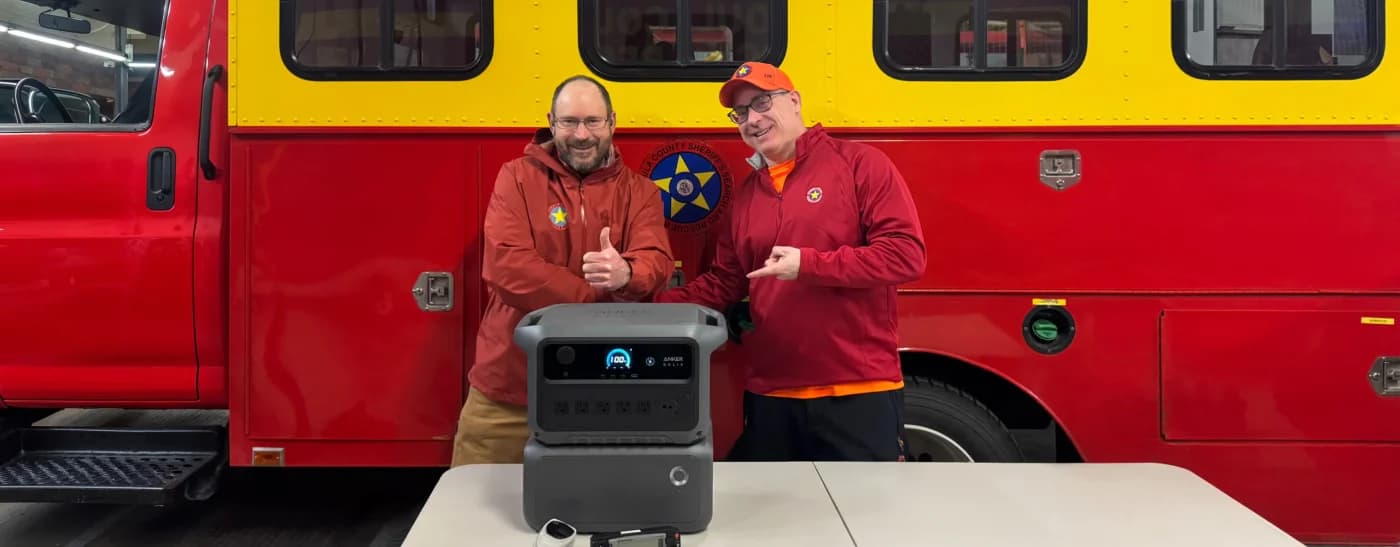
Choose for: More stored energy with an option to add a battery.
Limit: Expansion stops at one extra battery, for 4,096 Wh total.
- 2

Choose for: 1,024 Wh of storage and 1,800 W continuous AC output in one expandable station.
Limit: The IP65 rating covers the battery pack only; the complete station is not weatherproof.
- 3
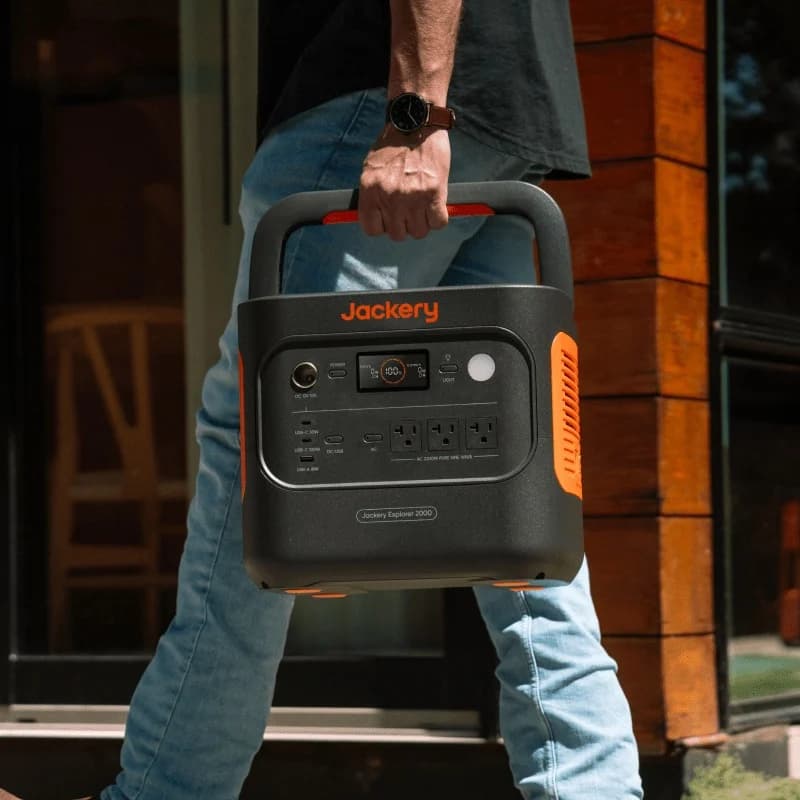
Choose for: 2,042 Wh and 2,200 W continuous output at about 39.5 lb.
Limit: Not expandable; solar input tops out at 400 W and there are three AC outlets.
Show all 4 picks
- 4
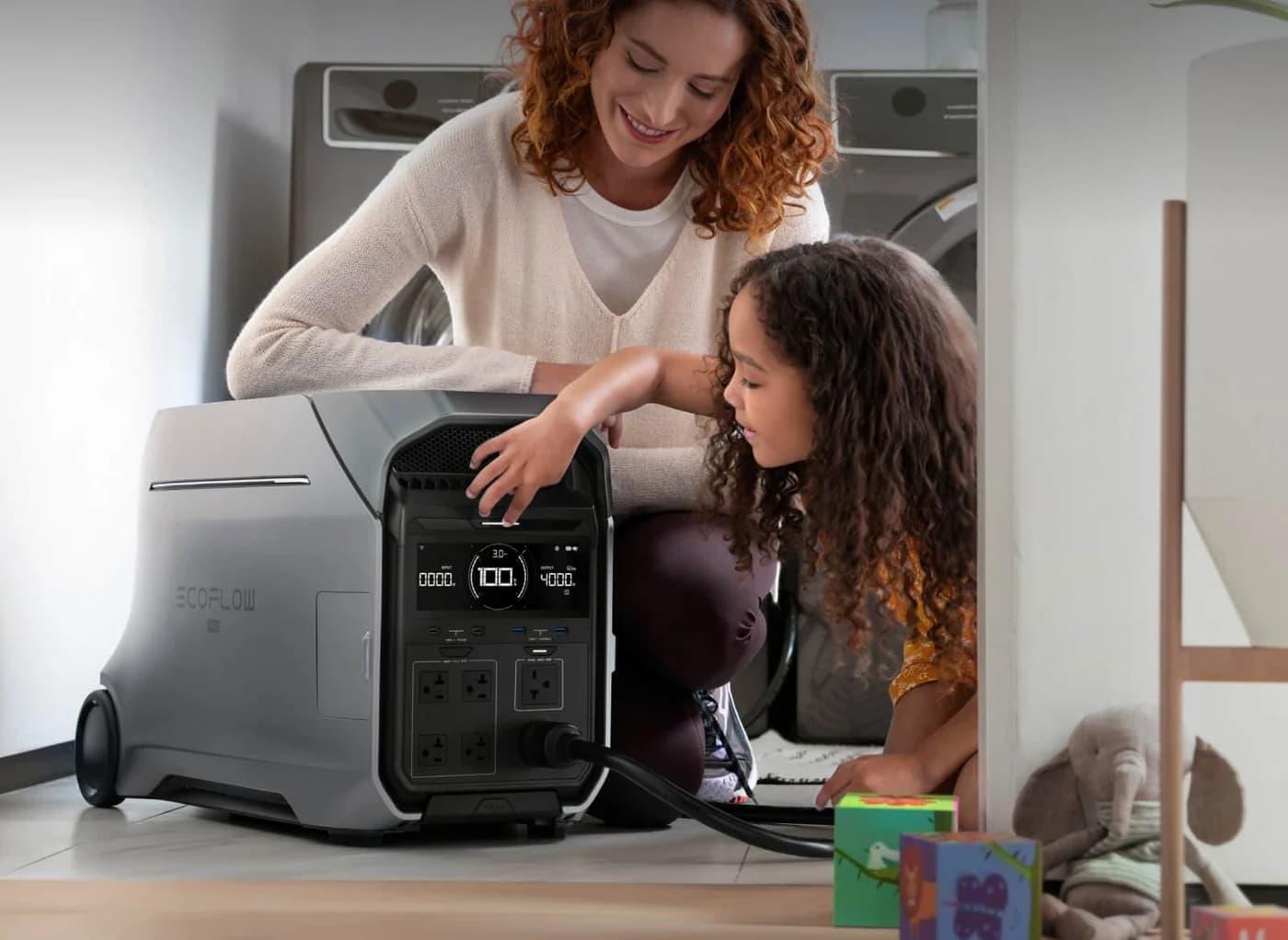
Choose for: Expandable storage with a choice of appliance or installed circuit backup.
Limit: It cannot pair with DELTA Pro Ultra; circuit backup requires compatible connection hardware and an electrician.
The Anker SOLIX C2000 Gen 2 is our starting pick for a refrigerator using about 1,000Wh per day through a 24-hour outage, provided it passes the compressor-start check. Choose the EcoFlow DELTA 3 Plus for 12-hour overnight backup at that load, or the DELTA Pro 3 for a fridge plus freezer using 2,400Wh per day. These are sizing scenarios with losses and idle consumption included below; use your own measured consumption to choose.
Quick picks by daily energy and outage length
The loads below are examples, not claims about typical refrigerators. Recommendations assume a full battery, no recharging and successful compressor starts; the runtime calculation follows the picks.
Compare specifications and all conditions
One fridge: 1,000Wh
- Outage to cover
- 12 hours
- Start here
- DELTA 3 Plus
- Decision boundary
- Our 16-hour estimate supports overnight coverage.
One fridge: 1,000Wh
- Outage to cover
- 24 hours
- Start here
- C2000 Gen 2; Explorer 2000 v2 for less carrying weight
- Decision boundary
- Estimated hours: 32 for Anker, 27 for Jackery.
One fridge: 1,500Wh
- Outage to cover
- 24 hours
- Start here
- DELTA Pro 3 or expanded C2000 Gen 2
- Decision boundary
- Both unexpanded 2kWh picks fall short in our model.
Fridge plus freezer: 2,400Wh combined
- Outage to cover
- 24 hours
- Start here
- DELTA Pro 3
- Decision boundary
- The 27-hour estimate leaves little reserve; size up for uncertainty.
One fridge: 1,000Wh
- Outage to cover
- 48 hours
- Start here
- Expanded C2000 Gen 2 or DELTA Pro 3 after checking idle consumption
- Decision boundary
- The Pro 3's 53-hour estimate needs an idle check; arrange a refill for more margin.
Full comparison table
Swipe to compare. Row labels stay visible.
| Your measured daily load | Outage to cover | Start here | Decision boundary |
|---|---|---|---|
| One fridge: 1,000Wh | 12 hours | DELTA 3 Plus | Our 16-hour estimate supports overnight coverage. |
| One fridge: 1,000Wh | 24 hours | C2000 Gen 2; Explorer 2000 v2 for less carrying weight | Estimated hours: 32 for Anker, 27 for Jackery. |
| One fridge: 1,500Wh | 24 hours | DELTA Pro 3 or expanded C2000 Gen 2 | Both unexpanded 2kWh picks fall short in our model. |
| Fridge plus freezer: 2,400Wh combined | 24 hours | DELTA Pro 3 | The 27-hour estimate leaves little reserve; size up for uncertainty. |
| One fridge: 1,000Wh | 48 hours | Expanded C2000 Gen 2 or DELTA Pro 3 after checking idle consumption | The Pro 3's 53-hour estimate needs an idle check; arrange a refill for more margin. |
Scroll horizontally to see every column
| Your measured daily load | Outage to cover | Start here | Decision boundary |
|---|---|---|---|
| One fridge: 1,000Wh | 12 hours | DELTA 3 Plus | Our 16-hour estimate supports overnight coverage. |
| One fridge: 1,000Wh | 24 hours | C2000 Gen 2; Explorer 2000 v2 for less carrying weight | Estimated hours: 32 for Anker, 27 for Jackery. |
| One fridge: 1,500Wh | 24 hours | DELTA Pro 3 or expanded C2000 Gen 2 | Both unexpanded 2kWh picks fall short in our model. |
| Fridge plus freezer: 2,400Wh combined | 24 hours | DELTA Pro 3 | The 27-hour estimate leaves little reserve; size up for uncertainty. |
| One fridge: 1,000Wh | 48 hours | Expanded C2000 Gen 2 or DELTA Pro 3 after checking idle consumption | The Pro 3's 53-hour estimate needs an idle check; arrange a refill for more margin. |
Compare the exact US stations
These are manufacturer figures, not measurements by thisWATT. Solar figures are input ceilings, not expected production. See Anker's specifications, EcoFlow's DELTA 3 Plus manual, Jackery's US manual and EcoFlow's DELTA Pro 3 manual.
Anker SOLIX C2000 Gen 2
- Capacity (Wh)
- 2,048
- Rated / surge AC (W)
- 2,400 / 4,000
- Maximum solar (W)
- 800
All specifications
- Weight (lb)
- 41.7
- Battery expansion
- BP2000 Gen 2 brings total to 4,096Wh
EcoFlow DELTA 3 Plus
- Capacity (Wh)
- 1,024
- Rated / surge AC (W)
- 1,800 / 3,600
- Maximum solar (W)
- 1,000 across two inputs
All specifications
- Weight (lb)
- 27.6
- Battery expansion
- Compatible EcoFlow extra batteries
Jackery Explorer 2000 v2
- Capacity (Wh)
- 2,042
- Rated / surge AC (W)
- 2,200 / 4,400
- Maximum solar (W)
- 400
All specifications
- Weight (lb)
- 39.5
- Battery expansion
- Battery packs unsupported
EcoFlow DELTA Pro 3
- Capacity (Wh)
- 4,096
- Rated / surge AC (W)
- 4,000 / 8,000
- Maximum solar (W)
- 2,600 across two inputs
All specifications
- Weight (lb)
- 113.54
- Battery expansion
- Supports up to two extra batteries
Full comparison table
Swipe to compare. Row labels stay visible.
| Station | Capacity (Wh) | Rated / surge AC (W) | Maximum solar (W) | Weight (lb) | Battery expansion |
|---|---|---|---|---|---|
| Anker SOLIX C2000 Gen 2 | 2,048 | 2,400 / 4,000 | 800 | 41.7 | BP2000 Gen 2 brings total to 4,096Wh |
| EcoFlow DELTA 3 Plus | 1,024 | 1,800 / 3,600 | 1,000 across two inputs | 27.6 | Compatible EcoFlow extra batteries |
| Jackery Explorer 2000 v2 | 2,042 | 2,200 / 4,400 | 400 | 39.5 | Battery packs unsupported |
| EcoFlow DELTA Pro 3 | 4,096 | 4,000 / 8,000 | 2,600 across two inputs | 113.54 | Supports up to two extra batteries |
Scroll horizontally to see every column
| Station | Capacity (Wh) | Rated / surge AC (W) | Maximum solar (W) | Weight (lb) | Battery expansion |
|---|---|---|---|---|---|
| Anker SOLIX C2000 Gen 2 | 2,048 | 2,400 / 4,000 | 800 | 41.7 | BP2000 Gen 2 brings total to 4,096Wh |
| EcoFlow DELTA 3 Plus | 1,024 | 1,800 / 3,600 | 1,000 across two inputs | 27.6 | Compatible EcoFlow extra batteries |
| Jackery Explorer 2000 v2 | 2,042 | 2,200 / 4,400 | 400 | 39.5 | Battery packs unsupported |
| EcoFlow DELTA Pro 3 | 4,096 | 4,000 / 8,000 | 2,600 across two inputs | 113.54 | Supports up to two extra batteries |
Best for day-long backup: Anker SOLIX C2000 Gen 2
The C2000 Gen 2 pairs 2,048Wh with a manufacturer-published 9W idle consumption, a useful planning input for a cycling refrigerator. Its 800W solar ceiling also gives more charging headroom than the Jackery's 400W. Choose it for the day-long, lower-energy fridge scenario; our higher-energy example needs additional storage.
Anker SOLIX
A 2,048Wh LiFePO4 power station with 2,400W of AC output (4,000W peak), a TT-30R RV outlet, 1,800W wall charging, 800W of solar input and expansion to 4kWh with one BP2000 (Gen 2) battery.
Check package and model options
- 2,048 Wh capacity
- 2,400 W AC out
- LiFePO4
The compatible BP2000 Expansion Battery Gen 2 adds 2,048Wh for 4,096Wh total. Anker includes the battery-to-host cable with that accessory; the battery cannot run appliances separately. Match Gen 2 explicitly: Anker says this battery is incompatible with the F2000.
Delivery check: Anker's page, checked November 2, 2026, says orders placed on or after November 2 begin shipping November 21. Confirm dispatch before choosing it for an approaching outage.
Best for overnight backup: EcoFlow DELTA 3 Plus
The 1,024Wh DELTA 3 Plus makes sense when overnight coverage is the actual goal. At 27.6 lb it is the lightest station here, but its capacity is roughly half either day-long pick. Its 1,800W rated output and 3,600W surge still need to match your compressor.
EcoFlow
A 1,024Wh LiFePO4 portable power station with 1,800W of AC output, 1,500W wall charging, two 500W solar inputs and expansion to about 5kWh with EcoFlow extra batteries.
Check package and model options
- 1,024 Wh capacity
- 1,800 W AC out
- LiFePO4
EcoFlow quotes a full wall recharge in 56 minutes with 1,500W input. The Plus model has two solar inputs rated at 500W each; the non-Plus DELTA 3 has a 500W solar ceiling. Check the full name when comparing packages. Choose more battery capacity if a missed recharge would leave the fridge without power.
Best for carrying: Jackery Explorer 2000 v2
Choose the Explorer 2000 v2 when moving the station matters: Jackery lists about 39.5 lb, compared with Anker's 41.7 lb, for nearly the same nominal capacity. Its 2,200W rated output and 4,400W surge are separate from its 2,042Wh storage.
Jackery
A 2,042Wh LiFePO4 portable power station with 2,200W of AC output (4,400W surge peak), app-enabled 1.7-hour emergency charging and up to 400W of solar input.
Check package and model options
- 2,042 Wh capacity
- 2,200 W AC out
- LiFePO4
Jackery's model-specific support table confirms JE-2000D, says battery packs are unsupported, and lists 18W standby consumption. That is a published figure, not a directly comparable efficiency test against Anker. The 400W solar ceiling and fixed storage favor buyers whose outage plan already fits the station.
Best for a fridge plus freezer: EcoFlow DELTA Pro 3
Its 4,096Wh capacity makes the Pro 3 the single-box choice here for our combined-load example. The US manual specifies 4,000W rated output and 8,000W surge. Check a compressor starting while the other appliance runs, plus possible simultaneous starts; a large peak number alone does not establish compatibility.
EcoFlow
A 4,096Wh LFP home-backup power station with 4,000W of 120V/240V output (8,000W surge), 2,600W of dual solar input and expansion to 12kWh per unit, listed by EcoFlow as UL 9540 certificated.
Check package and model options
- 4,096 Wh capacity
- 4,000 W AC out
- LiFePO4
At 113.54 lb, this is a wheeled backup unit. Its US manual says the high- and low-voltage AC banks cannot operate simultaneously, so confirm your refrigerator's output arrangement before adding a 240V load. For a house connection, use a licensed electrician and obtain permits where required; our home battery backup guide covers system selection.
Size the battery: starts, running watts and daily energy
Starting power decides whether the compressor starts. BLUETTI's manual warning says some motors and compressors start at 2–4 times rated power; that is a warning, not a universal refrigerator multiplier. Ask the appliance and station makers about starting demand and surge duration when these are unknown. EcoFlow describes X-Boost as better suited to heating devices and warns about low voltage: don't substitute its boosted-appliance figure for compressor-start capability.
Running watts must fit the station's continuous rating, including other connected devices. Daily watt-hours size the battery. Refrigerators cycle, so multiplying a momentary running-watts reading by the entire outage overstates a cycling load; use accumulated energy. The refrigerator measurement guide covers the full measurement workflow and energy-label fallback.
The P3 Kill A Watt P4400 displays watts and cumulative kWh. Stay within its 15A and 125V maximums; use energy readings for sizing, not as proof of startup compatibility. For a representative full day, multiply recorded kWh by 1,000 to get Wh. Measure the freezer separately and add its daily energy.
Confirm compressor starts
Compare the appliance's starting demand with the station's supported surge and duration.
Check simultaneous running loads
Include the freezer and anything else sharing AC output.
Size stored energy
Use measured daily watt-hours and the outage duration, allowing for losses and station consumption.
Plan the next recharge
Identify an available charging source before relying on a smaller battery.
Runtime estimates with losses and idle consumption
We adapt BLUETTI's published runtime equation: estimated hours = capacity × 90% × 90% ÷ (daily Wh ÷ 24 + station consumption in W). The two percentages allow for discharge limits and inverter losses. They are planning assumptions borrowed from BLUETTI's example, not verified efficiencies for these picks.
Use Anker's published 9W idle and Jackery's published 18W standby as illustrative inputs. Their measurement conditions may differ. For the EcoFlows, 10W and 20W are our assumed allowances, not manufacturer specifications. All figures below round down to whole hours and assume no charging.
DELTA 3 Plus
- Estimated hours at 1,000Wh/day
- 16
- Station consumption used (W)
- 10 assumed
- At 1,500Wh/day
- 11
- At 2,400Wh/day combined
- 7
C2000 Gen 2
- Estimated hours at 1,000Wh/day
- 32
- Station consumption used (W)
- 9 published
- At 1,500Wh/day
- 23
- At 2,400Wh/day combined
- 15
Explorer 2000 v2
- Estimated hours at 1,000Wh/day
- 27
- Station consumption used (W)
- 18 published
- At 1,500Wh/day
- 20
- At 2,400Wh/day combined
- 14
DELTA Pro 3
- Estimated hours at 1,000Wh/day
- 53
- Station consumption used (W)
- 20 assumed
- At 1,500Wh/day
- 40
- At 2,400Wh/day combined
- 27
Full comparison table
Swipe to compare. Row labels stay visible.
| Station | Station consumption used (W) | Estimated hours at 1,000Wh/day | At 1,500Wh/day | At 2,400Wh/day combined |
|---|---|---|---|---|
| DELTA 3 Plus | 10 assumed | 16 | 11 | 7 |
| C2000 Gen 2 | 9 published | 32 | 23 | 15 |
| Explorer 2000 v2 | 18 published | 27 | 20 | 14 |
| DELTA Pro 3 | 20 assumed | 53 | 40 | 27 |
Scroll horizontally to see every column
| Station | Station consumption used (W) | Estimated hours at 1,000Wh/day | At 1,500Wh/day | At 2,400Wh/day combined |
|---|---|---|---|---|
| DELTA 3 Plus | 10 assumed | 16 | 11 | 7 |
| C2000 Gen 2 | 9 published | 32 | 23 | 15 |
| Explorer 2000 v2 | 18 published | 27 | 20 | 14 |
| DELTA Pro 3 | 20 assumed | 53 | 40 | 27 |
For example, 2,048 × 90% × 90% ÷ (1,000 ÷ 24 + 9) gives about 32 estimated hours, rounded down. Doubling our assumed Pro 3 idle allowance cuts its low-load estimate by about a quarter. Check your setup before planning two days; partial charge, reduced battery capacity and charge-limit settings further constrain the reserve.
Recharging: make the second day possible
Anker lists 88 minutes to full on AC, versus 58 minutes with AC plus solar. Its ordinary car-input figures are 100W and a 23-hour recharge, so don't assume a car socket provides a quick refill. These are manufacturer figures; powering a fridge during charging changes the energy available for refilling.
For solar, an illustrative 400W × 4 equivalent full-output hours = 1,600Wh before charging losses. That is arithmetic, not a sunlight forecast. Compare the day's harvest with refrigerator energy and station consumption, and plan another source when sunlight is inadequate. Check panel voltage, current, connector and cable against the receiving input; see our solar-panel compatibility guide.
Keep the output on through an outage
EcoFlow's manuals tell refrigerator users to set AC timeout to never. Jackery's manual says its default Energy Saving Mode can switch outputs off after 12 hours at low loads, with an AC threshold of 25W; disable that mode for this use. Jackery also lists 1,500W during UPS/bypass operation, versus 2,200W on battery. Check pass-through limits separately from inverter ratings.
- Yes: Configure the refrigerator's output to stay enabled through compressor-off periods
- Yes: Confirm normal compressor starts and automatic transfer before relying on the setup
- Partly: Check output recovery after the battery runs down and charging resumes
- Partly: Confirm standby and restart behavior for the exact station and firmware
- No: Treat a transfer-time specification as proof that every refrigerator will restart correctly
Black Friday and Cyber Monday: compare complete packages
Match the US model, generation, battery count and dispatch date before comparing offers. Use this checklist for holiday promotions or any purchase:
Station only
- What to verify
- Exact station, included AC charging cable, reachable fridge connection
- What it solves
- Stored energy for the outage you sized
C2000 Gen 2 plus BP2000 Gen 2
- What to verify
- Both units and the battery-to-host cable; 4,096Wh total
- What it solves
- Longer backup without depending on sunlight
Station plus solar
- What to verify
- Exact panel model and quantity, compatible input specifications, charging cable and adapters
- What it solves
- Recharging when usable sunlight is available
Full comparison table
Swipe to compare. Row labels stay visible.
| Package | What to verify | What it solves |
|---|---|---|
| Station only | Exact station, included AC charging cable, reachable fridge connection | Stored energy for the outage you sized |
| C2000 Gen 2 plus BP2000 Gen 2 | Both units and the battery-to-host cable; 4,096Wh total | Longer backup without depending on sunlight |
| Station plus solar | Exact panel model and quantity, compatible input specifications, charging cable and adapters | Recharging when usable sunlight is available |
Scroll horizontally to see every column
| Package | What to verify | What it solves |
|---|---|---|
| Station only | Exact station, included AC charging cable, reachable fridge connection | Stored energy for the outage you sized |
| C2000 Gen 2 plus BP2000 Gen 2 | Both units and the battery-to-host cable; 4,096Wh total | Longer backup without depending on sunlight |
| Station plus solar | Exact panel model and quantity, compatible input specifications, charging cable and adapters | Recharging when usable sunlight is available |
A panel bundle adds a charging source; an expansion-battery bundle adds stored energy. An extra battery alone cannot replace the station. Check seller identity and applicable warranty and return terms for the exact package; a promotional label does not establish suitability.
How we choose
We compare official US specifications and manuals for capacity, rated and surge output, charging options, idle consumption, expansion and output behavior. Every runtime is a calculation with stated assumptions; this is document research without physical product testing. We reuse the site's existing station records and distinguish standalone stations from accessory kits. Manufacturer fridge-runtime claims do not decide the ranking because your daily energy and compressor determine fit.
Verdict
Start with C2000 Gen 2 for the lower-energy, day-long fridge scenario, DELTA 3 Plus for overnight coverage, and Explorer 2000 v2 when carrying weight matters. Choose DELTA Pro 3 or compatible Anker expansion as the energy requirement grows. Buy only after the starting-load check, daily-energy calculation and recharge plan all support the same choice.
Frequently asked questions
What size battery backup do I need for a refrigerator for 24 hours?
Start with daily energy consumption and compressor-start requirements. For an example refrigerator using 1,000Wh per day, our loss-and-idle model supports choosing a 2kWh station such as the Anker SOLIX C2000 Gen 2. At 1,500Wh per day, the same station falls short of 24 hours in that model. Choose more storage or a dependable recharge opportunity, and check startup compatibility separately.
Can one power station run a refrigerator and a freezer?
Yes, if its outputs support both appliances and their starting demands. Add their daily watt-hours and check one compressor starting while the other appliance runs, as well as possible overlapping starts. Our 2,400Wh-per-day combined example points to the 4,096Wh EcoFlow DELTA Pro 3. Its estimated runtime leaves limited reserve beyond a day, so longer outages need expansion or recharging.
Can I leave a refrigerator connected to a power station all the time?
Check the model's pass-through limits, automatic transfer behavior and output settings first. EcoFlow tells refrigerator users to set AC timeout to never. Jackery's Explorer 2000 v2 manual describes a low-load Energy Saving Mode that can shut outputs off, and a lower output limit during bypass operation. Confirm normal compressor restarts and recovery after an outage before relying on an unattended setup.
Anker SOLIX C2000 Gen 2
AmazonRelated guides
Comparison · Portable Power Stations
AFERIY P280 vs Anker SOLIX C2000 Gen 2: Which Backup Kit Fits?
Compare the US AFERIY P280 and Anker C2000 Gen 2 for fridge backup: matching battery kits, runtime estimates, outlet limits, recharge needs and warranty gaps.
Comparison · Portable Power Stations
Anker SOLIX C2000 Gen 2 vs Jackery Explorer 2000 v2: Which to Buy?
Compare Anker C2000 Gen 2 and Jackery 2000 v2 for fridge backup, carrying, expansion and solar. Get runtime estimates, complete kit checks and buying picks.
Best picks · Portable Power Stations
Best Power Stations for Laptops: Ports, Cables and Runtime
Choose a power station for your laptop by USB-C profiles, shared-port limits and realistic runtime, with clear picks, cable advice and AC charger fallbacks.