

Comparison
OUPES MEGA 2 Pro vs EcoFlow DELTA 3 Max
Which Backup Kit?
Compare the exact US OUPES MEGA 2 Pro and EcoFlow DELTA 3 Max: essential-load runtimes, expansion batteries, required cables, solar limits and buying traps.
By thisWATT EditorialUpdated November 3, 20269 min read2 picks
On this page · Our picks at a glance
Our picks at a glance
- 1

Choose for: More stored energy with an option to add a battery.
Limit: Expansion stops at one extra battery, for 4,096 Wh total.
- 2
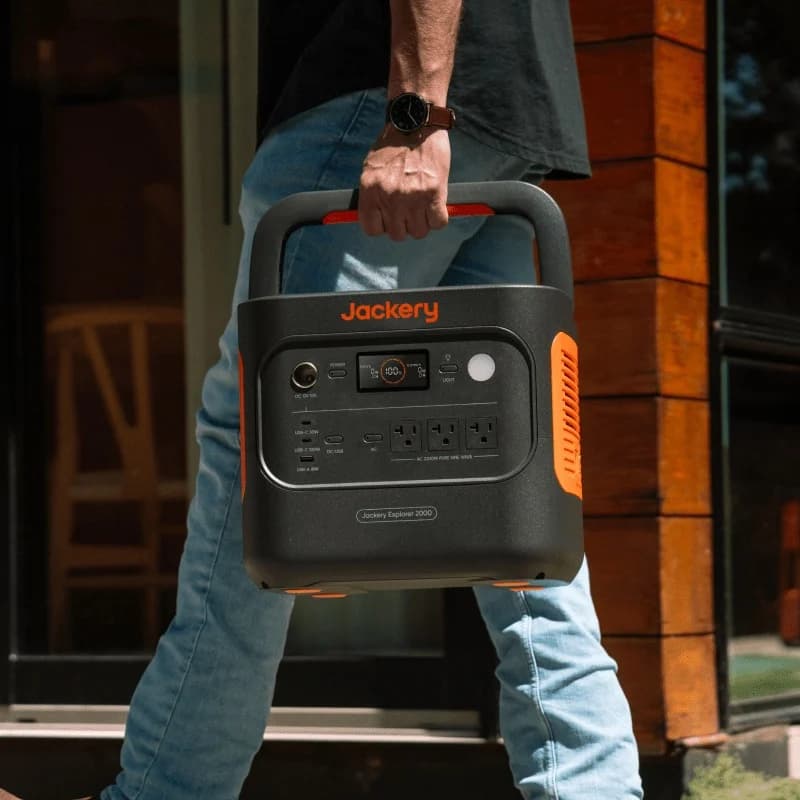
Choose for: 2,042 Wh and 2,200 W continuous output at about 39.5 lb.
Limit: Not expandable; solar input tops out at 400 W and there are three AC outlets.
Between the compared models, choose the EcoFlow DELTA 3 Max for a standalone essential-load backup plan that fits its 2,048Wh capacity and 2,400W continuous AC output. Choose the OUPES MEGA 2 Pro with a B2 battery for longer backup through supported expansion, provided you can obtain the complete kit. Both base stations store 2,048Wh, so the Pro's slightly higher output does not buy extra hours by itself. OUPES specifications, EcoFlow specifications.
For alternatives serving the same essential-load backup job, also consider the Anker SOLIX C2000 Gen 2 and Jackery Explorer 2000 v2 in the product cards below. The named OUPES and EcoFlow models remain the comparison's subject; these alternatives have their own output, expansion and recharge limits.
Quick picks
Compare specifications and all conditions
Essential appliances, no battery expansion planned
- Pick
- DELTA 3 Max
- Deciding condition
- Size the load against 2,400W and the runtime below
Longer runtime with room to grow
- Pick
- MEGA 2 Pro + B2
- Deciding condition
- Confirm stock of both station and battery; B2 is the supported battery
Expandable EcoFlow with more running power
- Pick
- DELTA 3 Max Plus
- Deciding condition
- Separate model with 3,000W output; same initial 2,048Wh
Also consider for similar base capacity with expansion
- Pick
- Anker SOLIX C2000 Gen 2
- Deciding condition
- 2,048Wh and 2,400W AC; one BP2000 (Gen 2) battery expands capacity to 4,096Wh
Also consider for standalone plug-in essentials
- Pick
- Jackery Explorer 2000 v2
- Deciding condition
- 2,042Wh and 2,200W rated AC; solar input is capped at 400W
Full comparison table
Swipe to compare. Row labels stay visible.
| Your requirement | Pick | Deciding condition |
|---|---|---|
| Essential appliances, no battery expansion planned | DELTA 3 Max | Size the load against 2,400W and the runtime below |
| Longer runtime with room to grow | MEGA 2 Pro + B2 | Confirm stock of both station and battery; B2 is the supported battery |
| Expandable EcoFlow with more running power | DELTA 3 Max Plus | Separate model with 3,000W output; same initial 2,048Wh |
| Also consider for similar base capacity with expansion | Anker SOLIX C2000 Gen 2 | 2,048Wh and 2,400W AC; one BP2000 (Gen 2) battery expands capacity to 4,096Wh |
| Also consider for standalone plug-in essentials | Jackery Explorer 2000 v2 | 2,042Wh and 2,200W rated AC; solar input is capped at 400W |
Scroll horizontally to see every column
| Your requirement | Pick | Deciding condition |
|---|---|---|
| Essential appliances, no battery expansion planned | DELTA 3 Max | Size the load against 2,400W and the runtime below |
| Longer runtime with room to grow | MEGA 2 Pro + B2 | Confirm stock of both station and battery; B2 is the supported battery |
| Expandable EcoFlow with more running power | DELTA 3 Max Plus | Separate model with 3,000W output; same initial 2,048Wh |
| Also consider for similar base capacity with expansion | Anker SOLIX C2000 Gen 2 | 2,048Wh and 2,400W AC; one BP2000 (Gen 2) battery expands capacity to 4,096Wh |
| Also consider for standalone plug-in essentials | Jackery Explorer 2000 v2 | 2,042Wh and 2,200W rated AC; solar input is capped at 400W |
Also consider: Anker SOLIX C2000 Gen 2. Its 2,048Wh LiFePO4 battery and 2,400W AC output match the DELTA 3 Max's nominal capacity and continuous output, while supporting expansion to 4,096Wh with one BP2000 (Gen 2) battery. Its 800W solar-input ceiling applies to this station. Confirm the matching battery and connection requirements before planning an expanded kit.
Anker SOLIX
A 2,048Wh LiFePO4 power station with 2,400W of AC output (4,000W peak), a TT-30R RV outlet, 1,800W wall charging, 800W of solar input and expansion to 4kWh with one BP2000 (Gen 2) battery.
Check package and model options
- 2,048 Wh capacity
- 2,400 W AC out
- LiFePO4
Also consider: Jackery Explorer 2000 v2. Its 2,042Wh LiFePO4 battery suits the same essential-load task, with 2,200W rated AC output and up to 400W solar input. Its output is lower than either compared model's, so check running and starting demand against the Jackery's own limits. The comparison and runtime tables below describe the named OUPES and EcoFlow models.
Jackery
A 2,042Wh LiFePO4 portable power station with 2,200W of AC output (4,400W surge peak), app-enabled 1.7-hour emergency charging and up to 400W of solar input.
Check package and model options
- 2,042 Wh capacity
- 2,200 W AC out
- LiFePO4
Compare the exact US stations
Manufacturer figures for stations alone; official specifications and manuals are linked in the model sections below.
MEGA 2 Pro
- Built-in capacity / chemistry
- 2,048Wh / LiFePO4
- Continuous AC output, shared total
- 2,500W
- Peak / surge, separate from continuous
- 3,800W
All specifications
- US AC outlets
- Four NEMA 5-20R + one TT-30R, 120V
- Maximum station solar input
- 1,000W
- Maximum wall charging
- 1,800W
- Extra batteries
- Up to four B2 batteries
- Automatic switchover
- ≤20ms, per manual
- Approximate station weight
- 22.1kg
DELTA 3 Max
- Built-in capacity / chemistry
- 2,048Wh / LiFePO4
- Continuous AC output, shared total
- 2,400W
- Peak / surge, separate from continuous
- 4,800W
All specifications
- US AC outlets
- Four 120V outlets, 20A maximum per port
- Maximum station solar input
- 500W
- Maximum wall charging
- 1,800W
- Extra batteries
- No extra-battery port
- Automatic switchover
- <10ms
- Approximate station weight
- 20.3kg
DELTA 3 Max Plus
- Built-in capacity / chemistry
- 2,048Wh / LiFePO4
- Continuous AC output, shared total
- 3,000W
- Peak / surge, separate from continuous
- 6,000W
All specifications
- US AC outlets
- Four 120V outlets, 20A maximum per port
- Maximum station solar input
- 1,000W combined
- Maximum wall charging
- 1,800W
- Extra batteries
- One port; two batteries require expansion adapter
- Automatic switchover
- <10ms
- Approximate station weight
- 22.1kg
Full comparison table
Swipe to compare. Row labels stay visible.
| Specification | MEGA 2 Pro | DELTA 3 Max | DELTA 3 Max Plus |
|---|---|---|---|
| Built-in capacity / chemistry | 2,048Wh / LiFePO4 | 2,048Wh / LiFePO4 | 2,048Wh / LiFePO4 |
| Continuous AC output, shared total | 2,500W | 2,400W | 3,000W |
| Peak / surge, separate from continuous | 3,800W | 4,800W | 6,000W |
| US AC outlets | Four NEMA 5-20R + one TT-30R, 120V | Four 120V outlets, 20A maximum per port | Four 120V outlets, 20A maximum per port |
| Maximum station solar input | 1,000W | 500W | 1,000W combined |
| Maximum wall charging | 1,800W | 1,800W | 1,800W |
| Extra batteries | Up to four B2 batteries | No extra-battery port | One port; two batteries require expansion adapter |
| Automatic switchover | ≤20ms, per manual | <10ms | <10ms |
| Approximate station weight | 22.1kg | 20.3kg | 22.1kg |
Scroll horizontally to see every column
| Specification | MEGA 2 Pro | DELTA 3 Max | DELTA 3 Max Plus |
|---|---|---|---|
| Built-in capacity / chemistry | 2,048Wh / LiFePO4 | 2,048Wh / LiFePO4 | 2,048Wh / LiFePO4 |
| Continuous AC output, shared total | 2,500W | 2,400W | 3,000W |
| Peak / surge, separate from continuous | 3,800W | 4,800W | 6,000W |
| US AC outlets | Four NEMA 5-20R + one TT-30R, 120V | Four 120V outlets, 20A maximum per port | Four 120V outlets, 20A maximum per port |
| Maximum station solar input | 1,000W | 500W | 1,000W combined |
| Maximum wall charging | 1,800W | 1,800W | 1,800W |
| Extra batteries | Up to four B2 batteries | No extra-battery port | One port; two batteries require expansion adapter |
| Automatic switchover | ≤20ms, per manual | <10ms | <10ms |
| Approximate station weight | 22.1kg | 20.3kg | 22.1kg |
MEGA 2, MEGA 2 Pro, Max and Max Plus are different purchases
OUPES's US Pro manual names MEGA 2 Pro, version OPS-PPS-C2048H-V1.2, and specifies the US AC output. Its original MEGA 2 manual instead lists 2,100W solar input and 5,400W surge. The Pro specifies 1,000W solar and 3,800W peak, with 3,600W Boost listed separately. A review or bundle titled only “MEGA 2” cannot establish Pro specifications.
Similarly, DELTA 3 Max Plus adds expansion and higher output to DELTA 3 Max; the word “Plus” matters. OUPES's Pro page also displays specifications for B2 and a solar panel below the station's own table. The B2's 2,100W solar input belongs to the accessory, not the Pro's station input.
EcoFlow DELTA 3 Max: best standalone option
Pick Max when your load and outage-length calculation already fit its base capacity. You avoid assembling an expansion system, but its 500W solar ceiling and absence of a battery port set limits on future growth. Buying an extra EcoFlow battery later does not turn this model into Max Plus. Max specifications and compatibility note.
For a fridge, check the AC timeout setting: EcoFlow's Max manual warns that intermittent appliances can trigger automatic AC shutoff and recommends “never” when continuous availability is required.
OUPES MEGA 2 Pro: expandable alternative when available
The useful upgrade is Pro + B2, not the small difference in continuous watts. OUPES explicitly supports B2 Extra Batteries, 2,048Wh each, and excludes G5. One B2 gives 4,096Wh nominal capacity, calculated by addition, while retaining the Pro's 2,500W inverter. Up to four B2 units produce the advertised 10.24kWh system. Official battery compatibility.
The TT-30R socket is useful for compatible RV equipment, but its connector rating does not raise the station's shared output. For home backup, choose the exact station, batteries and recharge equipment together. Check the MEGA 2 Pro configuration with OUPES.
EcoFlow DELTA 3 Max Plus: choose it for expansion or higher output
Max Plus supplies 3,000W continuously and supports extra batteries, but starts with the same stored energy as Max. A matching DELTA 3 Max Plus Smart Extra Battery adds 2,048Wh, producing 4,096Wh nominal by addition. It is a battery accessory requiring the station, not another complete power station. Station specifications, matching battery.
Check the exact Max Plus bundle; the site's DELTA 3 model guide explains the wider family.
Essential-load runtime on identical assumptions
For an illustrative fridge, network and lights plan averaging 200W, use estimated hours = nominal Wh × 80% ÷ average AC watts. The 80% is our chosen allowance for conversion losses and reserve, not measured efficiency for either station; actual idle consumption and appliance cycling can change the result. At base capacity, 2,048Wh × 80% ÷ 200W gives about eight hours; adding a supported 2,048Wh battery approximately doubles that estimate.
100W
- Compared OUPES / EcoFlow base stations: 2,048Wh
- 16
- Pro + one B2, or Max Plus + matching battery: 4,096Wh
- 32
200W
- Compared OUPES / EcoFlow base stations: 2,048Wh
- 8
- Pro + one B2, or Max Plus + matching battery: 4,096Wh
- 16
500W
- Compared OUPES / EcoFlow base stations: 2,048Wh
- 3
- Pro + one B2, or Max Plus + matching battery: 4,096Wh
- 6
Full comparison table
Swipe to compare. Row labels stay visible.
| Assumed average AC load | Compared OUPES / EcoFlow base stations: 2,048Wh | Pro + one B2, or Max Plus + matching battery: 4,096Wh |
|---|---|---|
| 100W | 16 | 32 |
| 200W | 8 | 16 |
| 500W | 3 | 6 |
Scroll horizontally to see every column
| Assumed average AC load | Compared OUPES / EcoFlow base stations: 2,048Wh | Pro + one B2, or Max Plus + matching battery: 4,096Wh |
|---|---|---|
| 100W | 16 | 32 |
| 200W | 8 | 16 |
| 500W | 3 | 6 |
Table values are estimated hours, rounded down, using the same allowance and no incoming charging. They are planning examples, not appliance-specific promises. If the estimate barely covers your outage target, choose more storage or reduce the load. Start with your appliance's energy use and starting demand; the portable power station guide covers broader sizing choices.
Continuous watts and motor startup must pass separately. Neither a peak figure nor Boost mode guarantees that a particular compressor starts. EcoFlow's manual says X-Boost can reduce voltage and is unavailable during AC charging; size essential loads to rated output instead. Max manual.
The battery-and-cable shopping list
Max standalone
- Required components and included cables
- Station; supplied AC charging cable. For solar, add suitable panels and an EcoFlow Solar to XT60i Charging Cable
Pro standalone
- Required components and included cables
- Station; supplied AC cable and cigarette-lighter-to-Anderson cable. Solar adapter cables are separate
Pro + one B2
- Required components and included cables
- Above station kit + one B2 + its included Battery Expansion Cable; use the extra-battery connection, not an ordinary Anderson charging lead
Max Plus + matching battery
- Required components and included cables
- Station and AC cable + one DELTA 3 Max Plus Smart Extra Battery + Smart Extra Battery Cable, identified as an extra-battery box accessory
Full comparison table
Swipe to compare. Row labels stay visible.
| Configuration | Required components and included cables |
|---|---|
| Max standalone | Station; supplied AC charging cable. For solar, add suitable panels and an EcoFlow Solar to XT60i Charging Cable |
| Pro standalone | Station; supplied AC cable and cigarette-lighter-to-Anderson cable. Solar adapter cables are separate |
| Pro + one B2 | Above station kit + one B2 + its included Battery Expansion Cable; use the extra-battery connection, not an ordinary Anderson charging lead |
| Max Plus + matching battery | Station and AC cable + one DELTA 3 Max Plus Smart Extra Battery + Smart Extra Battery Cable, identified as an extra-battery box accessory |
Scroll horizontally to see every column
| Configuration | Required components and included cables |
|---|---|
| Max standalone | Station; supplied AC charging cable. For solar, add suitable panels and an EcoFlow Solar to XT60i Charging Cable |
| Pro standalone | Station; supplied AC cable and cigarette-lighter-to-Anderson cable. Solar adapter cables are separate |
| Pro + one B2 | Above station kit + one B2 + its included Battery Expansion Cable; use the extra-battery connection, not an ordinary Anderson charging lead |
| Max Plus + matching battery | Station and AC cable + one DELTA 3 Max Plus Smart Extra Battery + Smart Extra Battery Cable, identified as an extra-battery box accessory |
Sources: Pro box contents, Pro solar instructions, B2 box contents, Max manual, Max Plus cable compatibility.
For the OUPES ceiling, the shopping list becomes one Pro, four B2 batteries and four included expansion cables. EcoFlow's roughly 10kWh Max Plus configuration instead needs two DELTA Pro 3 Smart Extra Batteries and the Extra Battery Expansion Adapter, plus the appropriate battery cables. Its station page says the adapter is released in the body but “released soon” in footnotes; get a complete, deliverable cable-and-adapter list before ordering that larger system. EcoFlow configuration footnotes, adapter listing.
Source: Manufacturer capacities above; expanded totals are addition, not measured usable energy
Recharge, bypass and winter limits
Wall charging: EcoFlow advertises 0–80% in 68 minutes for Max and 64 minutes for Max Plus. OUPES's 52-minute full-charge headline uses AC plus solar, up to 2,800W combined, rather than wall charging alone. Max Plus's 43-minute headline uses a Smart Generator. Compare like charging methods and endpoints. Max charging, Max Plus charging, Pro charging.
Solar: Pro specifies 12–80V input, 18–80V MPPT and 30A maximum; its manual requires panel open-circuit voltage below 80V. Max specifies 11–60V, 13A and 500W; its manual requires total panel Voc within 60V and Isc within 13A. Max Plus has two solar ports and 1,000W combined, with 60V Voc / 18A Isc limits in its manual; confirm current allocation between inputs before specifying an array. A matching plug alone does not establish compatibility. Pro manual, Max manual, Max Plus manual.
Bypass: Max's US manual limits bypass AC output to 13A total, below its battery-powered output rating. OUPES's Pro manual lists 2,500W bypass, but the product FAQ limits AC charging input plus all outputs to 2,400W. These statements describe different limits and leave usable simultaneous charging/load headroom unclear. Plan within the lower combined limit and obtain OUPES's confirmation for a demanding always-connected setup.
Winter: EcoFlow specifies charging at 0–45°C and discharging at −10–45°C. The Pro manual gives a 0–40°C working range, without separate permission for freezing-weather discharge. Choose a dry location within the applicable operating limits; a discharge rating below freezing does not authorize charging below freezing.
Confirm the exact model
Match the US outlet version and its manual
Check running and starting demand
Use rated output and confirm appliance startup
Size energy for the outage
Apply the runtime assumptions and leave reserve
Check the refill path
Match solar limits, bypass restrictions and operating temperature
For backup through household circuits, use a licensed electrician and obtain permits where required; have the electrician verify station and transfer equipment compatibility. The US AC ratings here do not establish 240V appliance support. See the home battery backup guide. EcoFlow installation requirements.
Black Friday and Cyber Monday: check the whole order
Compare station-only, battery and solar bundles as separate shopping lists. Confirm the model suffix, included battery count, expansion cable, solar adapter, seller, delivery status and return terms before checking the current purchase price.
OUPES states five years plus one after approved registration; its policy restricts coverage to qualifying purchases and makes returns depend on the purchase channel. EcoFlow's station pages state three years plus two with app registration. The Max Plus battery page contradicts itself between three plus two and five years basic, so confirm accessory coverage separately. Keep the receipt and registration confirmation. OUPES registration, OUPES policy, EcoFlow battery warranty wording.
How we choose
We compare official US specifications, manuals, compatibility lists and warranty terms, without physical product testing. Runtime figures are calculations. Source conflicts and unavailable components remain visible.
Verdict
Between the compared models, choose DELTA 3 Max when the standalone runtime fits. Choose MEGA 2 Pro + B2 when you need expansion and can secure the complete kit. Choose DELTA 3 Max Plus for expandable EcoFlow backup or higher continuous output. Decide from your essential load, outage duration and available recharge path; the model suffix and required accessories matter more than the largest number in a headline.
For alternatives, also consider Anker SOLIX C2000 Gen 2 for the same nominal base capacity as the compared models with supported battery expansion, or Jackery Explorer 2000 v2 for standalone essentials when its lower AC output and solar-input ceiling fit the plan. Use each alternative's own specifications when sizing the complete order.
Frequently asked questions
Is OUPES MEGA 2 Pro the same as MEGA 2?
No. OUPES publishes separate US manuals. Both have 2,048Wh capacity and 2,500W continuous AC output, but the Pro manual specifies 1,000W solar input and 3,800W peak power. The original MEGA 2 manual specifies 2,100W solar input and 5,400W surge. Check the Pro name, US outlets and matching manual before buying a bundle.
Can the EcoFlow DELTA 3 Max take an extra battery?
The standard DELTA 3 Max has no extra-battery expansion port. DELTA 3 Max Plus is the expandable sibling: it starts with the same 2,048Wh capacity, adds a battery port and raises continuous output to 3,000W. Its matching Smart Extra Battery adds 2,048Wh. Connecting two extra batteries requires EcoFlow's Extra Battery Expansion Adapter.
How long will either station run a fridge and other essentials?
For an illustrative combined average AC load of 200W, the base-capacity calculation is 2,048Wh × 80% ÷ 200W, or about eight hours. The 80% allowance is our planning assumption for losses and reserve. A supported battery doubling nominal capacity approximately doubles this estimate under the same assumptions. Actual appliance cycling, station consumption, temperature and starting demand can change the result.
Related guides
Comparison · Portable Power Stations
Anker SOLIX C2000 Gen 2 vs Jackery Explorer 2000 v2: Which to Buy?
Compare Anker C2000 Gen 2 and Jackery 2000 v2 for fridge backup, carrying, expansion and solar. Get runtime estimates, complete kit checks and buying picks.
Comparison · Portable Power Stations
Anker SOLIX C300X vs BLUETTI Elite 30 V2: Which Small Station?
Choose C300X or Elite 30 V2 for laptops, lights and small AC loads: compare USB-C sharing, runtime estimates, solar cables, model aliases and gift return traps.
Comparison · Portable Power Stations
AFERIY P280 vs Anker SOLIX C2000 Gen 2: Which Backup Kit Fits?
Compare the US AFERIY P280 and Anker C2000 Gen 2 for fridge backup: matching battery kits, runtime estimates, outlet limits, recharge needs and warranty gaps.