

Explainer
How Many Watts Does a Space Heater Use? Battery Runtime Before You Buy
Find space heater watts, evening energy use and battery runtime estimates. Compare power stations, heating settings and connection rules before you buy.
By thisWATT EditorialUpdated November 3, 20268 min read2 picks
On this page · Quick picks: decide whether to buy at all
A typical US plug-in space heater uses 1,500W on high; Honeywell's HCE317, for example, uses 750W on low. Four hours at a continuous 1,500W consumes 6kWh, so a battery rated at 1–4kWh will not cover that evening without recharging. If you also want backup for smaller essential devices, the Anker SOLIX C2000 Gen 2 is our starting pick; heater use must first satisfy the heater maker's connection requirements.
Quick picks: decide whether to buy at all
- For four hours of continuous full-power heat: stop before buying. Our estimate requires just over seven kilowatt-hours of nominal battery capacity before adding a reserve.
- For brief loads and lighter backup: Anker SOLIX C1000 Gen 2. Its estimated full-power heater runtime is about 35 minutes.
- For mixed backup: Anker SOLIX C2000 Gen 2. The same calculation gives about 1 hour 10 minutes; choose it for a broader load plan.
- For a larger backup system: EcoFlow DELTA Pro 3. About 2 hours 20 minutes in that scenario still falls short of the evening.
These are energy comparisons, not heater compatibility approvals. All runtimes below assume a full charge, no recharge and an illustrative 85% usable-energy allowance from Anker's planning formula.
How many watts does your heater actually use?
Read the nameplate and the instructions for the exact model and region. Honeywell's examples show why neither “space heater” nor “low” identifies one load:
HCE100 HeatBud personal heater
- Stated low setting
- 170W
- Stated high or maximum setting
- 250W
HCE317 ceramic tower
- Stated low setting
- 750W
- Stated high or maximum setting
- 1,500W
Other HCE300-series models in the shared manual
- Stated low setting
- 900W
- Stated high or maximum setting
- 1,500W
HZ-789 oil-filled radiator
- Stated low setting
- Check its selected mode
- Stated high or maximum setting
- 1,500W maximum
Full comparison table
Swipe to compare. Row labels stay visible.
| Heater example | Stated low setting | Stated high or maximum setting |
|---|---|---|
| HCE100 HeatBud personal heater | 170W | 250W |
| HCE317 ceramic tower | 750W | 1,500W |
| Other HCE300-series models in the shared manual | 900W | 1,500W |
| HZ-789 oil-filled radiator | Check its selected mode | 1,500W maximum |
Scroll horizontally to see every column
| Heater example | Stated low setting | Stated high or maximum setting |
|---|---|---|
| HCE100 HeatBud personal heater | 170W | 250W |
| HCE317 ceramic tower | 750W | 1,500W |
| Other HCE300-series models in the shared manual | 900W | 1,500W |
| HZ-789 oil-filled radiator | Check its selected mode | 1,500W maximum |
Sources: Honeywell's HeatBud manual, tower specifications, shared tower manual above and radiator manual. These are model examples, not a market-wide wattage range. A personal heater's smaller rating is not evidence it can replace the room heater you already use.
The HCE317 figures, already stated above, are useful anchors:
- 1,500WHCE317 high heat, per Honeywell
- 750WHCE317 low heat, per Honeywell
Watts, thermostat cycling and the evening energy budget
Watts are power now; watt-hours are energy over time. The US Energy Information Administration defines a watt-hour as one watt used for one hour. Calculate energy (Wh) = heater watts × heating hours, and divide by 1,000 for kWh.
Honeywell describes continuous heating and a thermostat mode that cycles on and off. Duty cycle here means the fraction of the period spent heating. The following four-hour scenarios are our arithmetic, not predictions of how often your heater will cycle; they ignore fan and standby consumption between heating periods.
1,500W high, continuously
- Assumed heating duty
- 100%
- Average heating load
- 1,500W
- Energy at the heater (kWh)
- 6
1,500W high, on half the time
- Assumed heating duty
- 50%
- Average heating load
- 750W
- Energy at the heater (kWh)
- 3
750W low, continuously
- Assumed heating duty
- 100%
- Average heating load
- 750W
- Energy at the heater (kWh)
- 3
Full comparison table
Swipe to compare. Row labels stay visible.
| Four-hour scenario | Assumed heating duty | Average heating load | Energy at the heater (kWh) |
|---|---|---|---|
| 1,500W high, continuously | 100% | 1,500W | 6 |
| 1,500W high, on half the time | 50% | 750W | 3 |
| 750W low, continuously | 100% | 750W | 3 |
Scroll horizontally to see every column
| Four-hour scenario | Assumed heating duty | Average heating load | Energy at the heater (kWh) |
|---|---|---|---|
| 1,500W high, continuously | 100% | 1,500W | 6 |
| 1,500W high, on half the time | 50% | 750W | 3 |
| 750W low, continuously | 100% | 750W | 3 |
For example, 1,500W × 50% × 4 hours = 3,000Wh. The half-time scenario still needs the full 1,500W whenever heating switches on. Do not size the inverter to its 750W average, or assume the thermostat will achieve that duty cycle in a cold room. If cycling is unknown, budget continuous operation.
For electricity use, the continuous high setting consumes one and a half kilowatt-hours per hour. Multiply kWh by your own utility rate to estimate operating cost. Battery shopping adds another step: divide the appliance's energy requirement by the usable-energy fraction.
Power-station comparison and estimated heater runtime
Use estimated hours = nominal battery Wh × 0.85 ÷ load W. Anker publishes that generic 85% planning allowance for inverter and system losses; it is not measured efficiency for these three models. We apply it consistently, with no other loads, no solar input and no separately modelled idle draw. Cold, battery wear, reserve settings and cycling can change the result.
For the small station, 1,024Wh × 0.85 ÷ 1,500W is about 35 minutes. Rounded estimates for each standalone US station are:
Anker SOLIX C1000 Gen 2
- Nominal battery
- 1,024Wh
- Continuous AC output
- 2,000W
- Steady 1,500W load
- About 35 minutes
All specifications
- Steady 750W load
- About 1 hour 10 minutes
Anker SOLIX C2000 Gen 2
- Nominal battery
- 2,048Wh
- Continuous AC output
- 2,400W
- Steady 1,500W load
- About 1 hour 10 minutes
All specifications
- Steady 750W load
- About 2 hours 20 minutes
EcoFlow DELTA Pro 3
- Nominal battery
- 4,096Wh
- Continuous AC output
- 4,000W total
- Steady 1,500W load
- About 2 hours 20 minutes
All specifications
- Steady 750W load
- About 4 hours 40 minutes
Full comparison table
Swipe to compare. Row labels stay visible.
| Station | Nominal battery | Continuous AC output | Steady 1,500W load | Steady 750W load |
|---|---|---|---|---|
| Anker SOLIX C1000 Gen 2 | 1,024Wh | 2,000W | About 35 minutes | About 1 hour 10 minutes |
| Anker SOLIX C2000 Gen 2 | 2,048Wh | 2,400W | About 1 hour 10 minutes | About 2 hours 20 minutes |
| EcoFlow DELTA Pro 3 | 4,096Wh | 4,000W total | About 2 hours 20 minutes | About 4 hours 40 minutes |
Scroll horizontally to see every column
| Station | Nominal battery | Continuous AC output | Steady 1,500W load | Steady 750W load |
|---|---|---|---|---|
| Anker SOLIX C1000 Gen 2 | 1,024Wh | 2,000W | About 35 minutes | About 1 hour 10 minutes |
| Anker SOLIX C2000 Gen 2 | 2,048Wh | 2,400W | About 1 hour 10 minutes | About 2 hours 20 minutes |
| EcoFlow DELTA Pro 3 | 4,096Wh | 4,000W total | About 2 hours 20 minutes | About 4 hours 40 minutes |
Battery and output figures come from Anker's C1000 page, C2000 page and EcoFlow's US manual. The chart isolates the stored-energy difference:
Source: Official specifications linked above; capacity is not usable AC energy.
Four hours of continuous high heat needs 6,000 watt-hours ÷ 0.85, or just over seven kilowatt-hours of nominal capacity. Even the half-time scenario requires 3,000Wh ÷ 0.85, about 3.6kWh when rounded up, before reserve or other loads. Run your own figures through the runtime calculator.
Brief loads and lighter backup: Anker SOLIX C1000 Gen 2
Choose this for a short load window or a smaller-device backup plan. Anker specifies 1,024Wh and 2,000W continuous output: the inverter has enough rated power for the example load, but the energy budget gives only about 35 minutes at full heat under our assumptions.
Know the generation: Gen 2 does not accept an expansion battery. Anker's comparison lists the original C1000 at 1,056Wh and 1,800W with expansion support. Buying Gen 2 with a panel adds charging equipment, not expandable storage.
Mixed backup starting point: Anker SOLIX C2000 Gen 2
The C2000 Gen 2 pairs 2,048Wh with 2,400W continuous output. It is our starting choice when the plan includes essential devices as well as occasional high loads; do the combined energy budget before choosing it. Its estimated full-heat runtime is about 1 hour 10 minutes.

Anker SOLIX
A 2,048Wh LiFePO4 power station with 2,400W of AC output (4,000W peak), a TT-30R RV outlet, 1,800W wall charging, 800W of solar input and expansion to 4kWh with one BP2000 (Gen 2) battery.
Check package and model options
- 2,048 Wh capacity
- 2,400 W AC out
- LiFePO4
Anker documents a pairing with the BP2000 Expansion Battery (Gen 2) for 4,096Wh combined. Under the same assumptions, that configuration has the same nominal energy and estimated heater runtimes as the standalone DELTA Pro 3 shown above; it does not acquire the EcoFlow's higher inverter rating.
The BP2000 Gen 2 accessory includes a battery-to-host cable. Its page explicitly says it is not compatible with the F2000. Check the Gen 2 suffix: an extra battery, a second complete station and a solar kit are different purchases.
Broader home-backup plans: EcoFlow DELTA Pro 3
Choose the DELTA Pro 3 when you also have a larger backup plan requiring its 4,096Wh, 4,000W total output or US 120V/240V outlets. Its estimated 2 hours 20 minutes at full heat still does not cover the four-hour continuous scenario. Compare whole-system needs in our home battery backup guide.
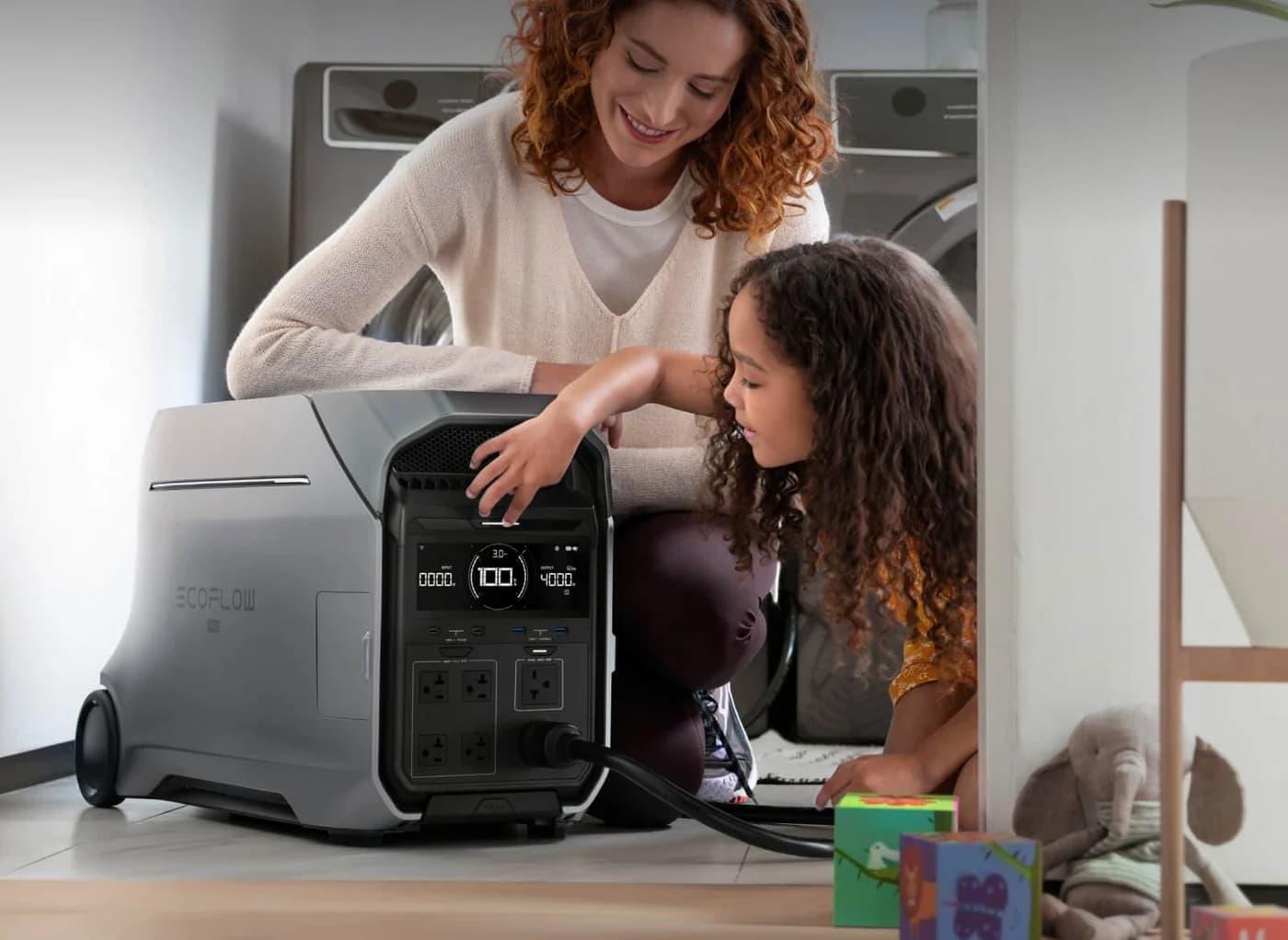
EcoFlow
A 4,096Wh LFP home-backup power station with 4,000W of 120V/240V output (8,000W surge), 2,600W of dual solar input and expansion to 12kWh per unit, listed by EcoFlow as UL 9540 certificated.
Check package and model options
- 4,096 Wh capacity
- 4,000 W AC out
- LiFePO4
EcoFlow's manual supports additional batteries, but the table covers the base station only. A panel bundle does not add battery capacity. Any connection to home wiring needs a licensed electrician and a permit where required; this guide provides no installation procedure.
Output limits, winter use and the purchase checklist
Add simultaneous loads. A hypothetical 1,500W heater plus a 1,000W kettle needs two and a half kilowatts while both operate. That exceeds either Anker's continuous rating. Multiple sockets do not multiply a station's total output allowance. EcoFlow separately specifies 4,000W rated and 8,000W surge; surge does not add stored watt-hours. Its X-Boost mode can involve low voltage, so do not use boost marketing as proof of full-power heater performance or manufacturer approval.
Separate charging from discharging limits. Anker lists C1000 Gen 2 discharge at −4°F to 104°F and charging at 32°F to 104°F; EcoFlow lists DELTA Pro 3 discharge at 14°F to 113°F and charging at 32°F to 113°F. C2000 Gen 2's table confusingly labels one row “Recharging Temperature” at −4°F to 104°F while its separate “Charging Temperature” row says 32°F to 104°F. Do not treat the colder row as permission to charge below freezing; ask Anker to clarify that label. EcoFlow also instructs keeping the station away from heat sources and leaving its ventilation unobstructed.
Before a Black Friday purchase, work through this order:
Confirm the heater
Read its exact wattage, selected mode and permitted connection method.
Check running output
Add devices that can operate together; check individual outlet limits as well as the total.
Budget the evening
Convert watts and heating time to Wh, then account for losses and a reserve.
Identify the package
Match generation, US outlet region, expansion-battery model, panels and included cables.
A panel's nameplate watts are not guaranteed winter input, and solar produces no energy at night. Compare complete packages in portable solar kits with batteries, but buy only when the storage and recharge plan meet your load. For lower-energy backup needs, start with our portable power station guide.
How we choose
We researched official manufacturer pages and manuals, government energy definitions and heater-safety guidance. Product figures are the makers' specifications; runtime figures are disclosed calculations, not lab results. We reused the site's existing station records and separately documented the optional expansion battery. Our picks reflect the energy budget and model differences, with the heater's own connection instructions taking priority over station marketing.
Verdict
Buy for the whole backup plan. The C2000 Gen 2 is the starting choice for mixed loads, the C1000 Gen 2 suits a shorter energy budget, and the DELTA Pro 3 supports a larger system. If your sole goal is an evening of continuous room heat, reject a package that fails the energy calculation or the heater's connection requirements, even when its inverter watts look sufficient.
Our picks at a glance
- 1
Choose for: More stored energy with an option to add a battery.
Limit: Expansion stops at one extra battery, for 4,096 Wh total.
- 2
Choose for: Expandable storage with a choice of appliance or installed circuit backup.
Limit: It cannot pair with DELTA Pro Ultra; circuit backup requires compatible connection hardware and an electrician.
Frequently asked questions
How many amps does a 1,500W space heater use?
At 120V, 1,500W divided by 120V equals 12.5A, matching Honeywell's HCE300-series manual. That manual also warns against sharing the heater's circuit with other operating appliances. Treat this as an appliance rating, not permission to add loads to an unknown circuit; follow the heater's instructions and have outlet concerns checked by a qualified electrician.
Can a 1,000W power station run a 1,500W heater?
A 1,000W continuous inverter cannot supply a steady 1,500W at rated voltage. A confirmed lower heater setting may fit its output limit, but peak or boost advertising alone does not establish compatibility. Also distinguish a 1,000W inverter from a 1,000Wh battery: watts limit the running load, while watt-hours determine the energy available for runtime. Follow the heater's connection requirements.
Does turning down the thermostat reduce a space heater's wattage?
Not necessarily. Honeywell's HCE300-series manual describes thermostat operation that cycles heating on and off; the selected heat level still matters during each on period. A lower temperature setting can reduce the time spent heating without reducing the required on-cycle inverter output. Selecting the HCE317's low heat mode instead changes its stated continuous setting from 1,500W to 750W.
Do oil-filled heaters use fewer watts than ceramic heaters?
The heating type alone does not establish lower electrical demand. Honeywell rates its HZ-789 oil-filled radiator at 1,500W maximum, and its HCE317 ceramic tower also has a 1,500W high setting. Compare the exact model's settings and time spent heating. Do not substitute a thermostat temperature, room-size claim or heating-technology label for the electrical rating.
Can solar panels keep a battery-powered heater running all night?
Solar panels do not generate power after sunset, so stored battery energy must cover that period. Anker's runtime guidance also warns that clouds, shade and seasonal conditions change daytime input. Budget the load and recharge separately rather than assuming a panel bundle makes runtime unlimited. Space heaters should be turned off before sleeping, according to the Texas Department of Insurance.
Related guides
Comparison · Portable Power Stations
Anker SOLIX C2000 Gen 2 vs Jackery Explorer 2000 v2: Which to Buy?
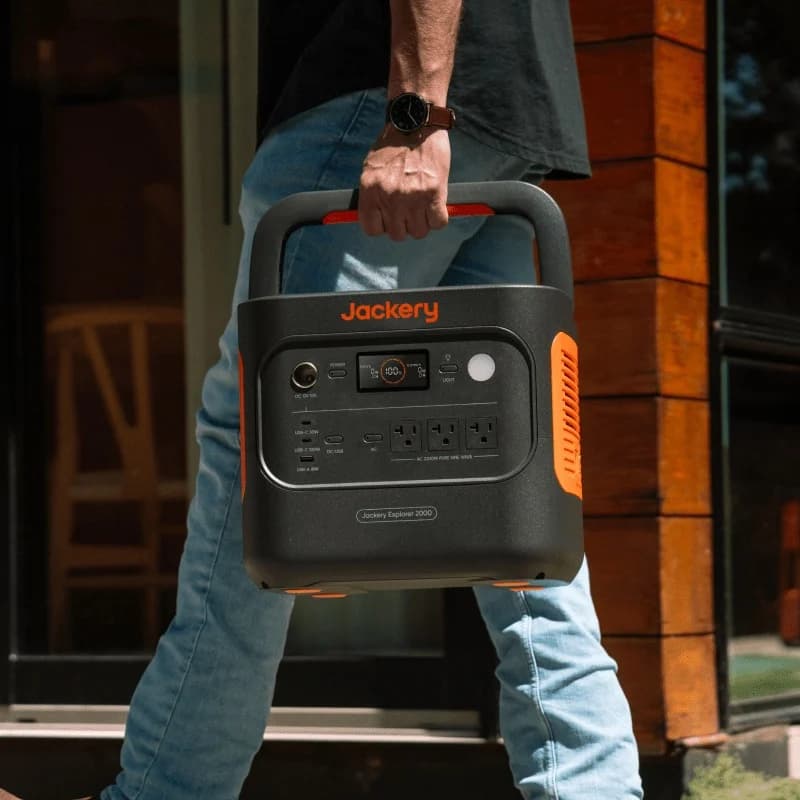
Compare Anker C2000 Gen 2 and Jackery 2000 v2 for fridge backup, carrying, expansion and solar. Get runtime estimates, complete kit checks and buying picks.
Comparison · Portable Power Stations
Anker SOLIX C300X vs BLUETTI Elite 30 V2: Which Small Station?
Choose C300X or Elite 30 V2 for laptops, lights and small AC loads: compare USB-C sharing, runtime estimates, solar cables, model aliases and gift return traps.
Comparison · Portable Power Stations
AFERIY P280 vs Anker SOLIX C2000 Gen 2: Which Backup Kit Fits?
Compare the US AFERIY P280 and Anker C2000 Gen 2 for fridge backup: matching battery kits, runtime estimates, outlet limits, recharge needs and warranty gaps.