

Comparison
Goal Zero Yeti 1000 vs 1000X
Identify Yours Before Upgrading
Identify your Goal Zero Yeti, compare the sixth-generation 1000 with the 1000X, and check charging cables, solar limits, recalls and reasons to keep or upgrade.
By thisWATT EditorialUpdated November 3, 20269 min read
On this page · Quick picks: upgrade, keep or buy more capacity
For a new purchase, the sixth-generation Goal Zero Yeti 1000 is our upgrade pick for frequent use and faster wall charging; keep a healthy 1000X when its output and runtime already meet your needs. The upgrade changes charging, battery cycle ratings and accessory fit much more than stored energy. Both station pages showed sold out on November 2, 2026, so confirm availability before making plans around either one (new Yeti, 1000X).
Quick picks: upgrade, keep or buy more capacity
Compare specifications and all conditions
Buying for frequent cycling or short charging stops
- Our pick
- Sixth-generation Yeti 1000, subject to availability
- What decides it
- LiFePO4, faster built-in AC charging and higher continuous output
Already own a healthy 1000X
- Our pick
- Keep it if it meets your load and duration targets
- What decides it
- Similar nominal energy; check the condition of your actual battery
Need substantially longer outages covered
- Our pick
- Start with a larger-capacity station
- What decides it
- Compare energy requirements in our power-station guide
Full comparison table
Swipe to compare. Row labels stay visible.
| Your situation | Our pick | What decides it |
|---|---|---|
| Buying for frequent cycling or short charging stops | Sixth-generation Yeti 1000, subject to availability | LiFePO4, faster built-in AC charging and higher continuous output |
| Already own a healthy 1000X | Keep it if it meets your load and duration targets | Similar nominal energy; check the condition of your actual battery |
| Need substantially longer outages covered | Start with a larger-capacity station | Compare energy requirements in our power-station guide |
Scroll horizontally to see every column
| Your situation | Our pick | What decides it |
|---|---|---|
| Buying for frequent cycling or short charging stops | Sixth-generation Yeti 1000, subject to availability | LiFePO4, faster built-in AC charging and higher continuous output |
| Already own a healthy 1000X | Keep it if it meets your load and duration targets | Similar nominal energy; check the condition of your actual battery |
| Need substantially longer outages covered | Start with a larger-capacity station | Compare energy requirements in our power-station guide |
Read the label: 1000, 1000X, Core or Lithium?
This guide compares US AC versions: Yeti 1000, sixth generation, SKU 37200, and Yeti 1000X, SKU 36200. The 1000 Core manual specifies NMC with a 1,200W inverter; the 1000 Lithium manual describes an NMC 1,045Wh battery. Neither is the new LiFePO4 station. Use the complete name and electrical label, not a seller's shortened “Yeti 1000” title (current manual, Core manual, Lithium manual).
Yeti 1000 / 37200
Sixth generation and LiFePO4: follow the new-model column below.
Yeti 1000X / 36200
Follow the X column and its own manual.
Yeti 1000 Core
Use the Core manual; do not substitute X inverter or charging ratings.
Yeti 1000 Lithium
Use the Lithium manual; do not assume the newer charging limits apply.
A solar-panel bundle does not establish the station's generation. Check the station label, included panel, charger and outlet region separately.
Sixth-generation Yeti 1000 vs 1000X: specifications
These are manufacturer ratings from the sixth-generation manual, 1000X manual and linked product pages. Conflicting figures are identified rather than blended.
Yeti 1000, sixth generation
- Cell chemistry
- LiFePO4
- Continuous / surge AC
- 2,000W / 3,600W
- Battery energy
- 998.4Wh on product page; 998Wh in manual
All specifications
- Cycle rating
- 4,000 to 80% capacity, at 25°C
- AC outlets
- Four
- USB-C
- 140W, 60W, two 30W outputs
- Wall charging
- Built-in; 1,000W high setting
- Maker's full wall-charge estimate
- 1.1 hours in manual; page also says 1.2 hours
- HPP solar input
- 600W; 12.3–60V, up to 20A
- 8mm solar input
- 300W; 13.2–30V, up to 10A
- Combined solar ceiling
- 900W across independent inputs
- 12V HPP output
- 405W, 13.5V, 30A continuous
- Station weight
- 35.3 lb
- Standard new-product warranty
- Five years
Yeti 1000X
- Cell chemistry
- Li-ion NMC
- Continuous / surge AC
- 1,500W / 3,000W in manual; page also lists 3,500W surge
- Battery energy
- 983Wh in manual; 997Wh on product page
All specifications
- Cycle rating
- 500 to 80%, at 25°C, full charge/discharge, 1C discharge
- AC outlets
- Two
- USB-C
- 60W input/output and 18W output
- Wall charging
- Included external 120W supply; optional 600W supply
- Maker's full wall-charge estimate
- 9 hours included; 2 hours with optional 600W supply
- HPP solar input
- 600W; 14–50V, up to 50A
- 8mm solar input
- 150W; 14–50V, up to 10A
- Combined solar ceiling
- 600W total; input priority applies
- 12V HPP output
- 180W, 12V, up to 15A, regulated
- Station weight
- 31.68 lb
- Standard new-product warranty
- Two years
Full comparison table
Swipe to compare. Row labels stay visible.
| Specification | Yeti 1000, sixth generation | Yeti 1000X |
|---|---|---|
| Battery energy | 998.4Wh on product page; 998Wh in manual | 983Wh in manual; 997Wh on product page |
| Cell chemistry | LiFePO4 | Li-ion NMC |
| Cycle rating | 4,000 to 80% capacity, at 25°C | 500 to 80%, at 25°C, full charge/discharge, 1C discharge |
| Continuous / surge AC | 2,000W / 3,600W | 1,500W / 3,000W in manual; page also lists 3,500W surge |
| AC outlets | Four | Two |
| USB-C | 140W, 60W, two 30W outputs | 60W input/output and 18W output |
| Wall charging | Built-in; 1,000W high setting | Included external 120W supply; optional 600W supply |
| Maker's full wall-charge estimate | 1.1 hours in manual; page also says 1.2 hours | 9 hours included; 2 hours with optional 600W supply |
| HPP solar input | 600W; 12.3–60V, up to 20A | 600W; 14–50V, up to 50A |
| 8mm solar input | 300W; 13.2–30V, up to 10A | 150W; 14–50V, up to 10A |
| Combined solar ceiling | 900W across independent inputs | 600W total; input priority applies |
| 12V HPP output | 405W, 13.5V, 30A continuous | 180W, 12V, up to 15A, regulated |
| Station weight | 35.3 lb | 31.68 lb |
| Standard new-product warranty | Five years | Two years |
Scroll horizontally to see every column
| Specification | Yeti 1000, sixth generation | Yeti 1000X |
|---|---|---|
| Battery energy | 998.4Wh on product page; 998Wh in manual | 983Wh in manual; 997Wh on product page |
| Cell chemistry | LiFePO4 | Li-ion NMC |
| Cycle rating | 4,000 to 80% capacity, at 25°C | 500 to 80%, at 25°C, full charge/discharge, 1C discharge |
| Continuous / surge AC | 2,000W / 3,600W | 1,500W / 3,000W in manual; page also lists 3,500W surge |
| AC outlets | Four | Two |
| USB-C | 140W, 60W, two 30W outputs | 60W input/output and 18W output |
| Wall charging | Built-in; 1,000W high setting | Included external 120W supply; optional 600W supply |
| Maker's full wall-charge estimate | 1.1 hours in manual; page also says 1.2 hours | 9 hours included; 2 hours with optional 600W supply |
| HPP solar input | 600W; 12.3–60V, up to 20A | 600W; 14–50V, up to 50A |
| 8mm solar input | 300W; 13.2–30V, up to 10A | 150W; 14–50V, up to 10A |
| Combined solar ceiling | 900W across independent inputs | 600W total; input priority applies |
| 12V HPP output | 405W, 13.5V, 30A continuous | 180W, 12V, up to 15A, regulated |
| Station weight | 35.3 lb | 31.68 lb |
| Standard new-product warranty | Five years | Two years |
Source: Goal Zero's model-specific manuals, linked above
The cycle figures share an 80% remaining-capacity threshold. They describe capacity retention under the stated conditions, not guaranteed service years. For the chemistry terminology, see LiFePO4 vs other lithium-ion power stations.
Upgrade pick: sixth-generation Yeti 1000
Choose it when the old station's continuous output is insufficient, or frequent refills make charging speed important. Its built-in charger removes the separate charging block, and the manual specifies 500W low-speed charging by default; move the input-limit switch to High for the 1,000W setting. The manual estimates 2.2 hours on Low and 1.1 hours on High; the page instead gives 2.4 and 1.2 hours.
It also adds stronger USB-C charging for devices, but the new manual lists those ports as outputs. Do not buy a USB-C wall charger expecting it to refill this station just because the 1000X accepts USB-C input.
The carrying trade-off is real: compare 35.3 lb with the X's 31.68 lb, then include the cables and panels you plan to move. The new manual says its IPX4 rating covers minor splashes, advises against live loads in rain, and says charging must be sheltered. Plan a dry operating location.
Check the sixth-generation Yeti 1000 at Goal Zero.
Keep pick: a healthy Yeti 1000X
Keep it when it powers your actual equipment for long enough and fits your charging routine. Its 1,500W continuous rating remains the limit; the larger surge number is not a continuous allowance. Before replacing the station for slow charging alone, compare its included 120W supply with Goal Zero's documented optional 600W supply: the stated full-charge estimate changes from 9 hours to 2 hours. Confirm the exact approved supply before ordering.
Judge the battery by whether it completes your normal workload. The 500-cycle rating does not say it becomes unusable at that count. Ask a used seller for the model label, charger details and a demonstrated runtime with a stated load. Goal Zero's warranty is limited to the original buyer and is not transferable; a used station does not acquire a fresh warranty through resale (warranty terms).
Read the Yeti 1000X manual before replacing or expanding an existing setup.
Charging cables and accessories: what carries over?
The new manual explicitly retains legacy HPP and 8mm solar panels and cables, subject to input ratings, and explicitly excludes previous expansion modules and Tank batteries. Connector shape alone is insufficient. Its HPP input accepts a different voltage window from its 8mm input; a panel suitable for HPP is not automatically suitable for 8mm. For panel selection, use our portable solar compatibility guide.
Legacy HPP / 8mm solar equipment
- Yeti 1000X
- Check the X input ratings above
- Sixth-generation Yeti 1000
- Explicitly retained by new manual; check the new input ratings
Car cable 98079
- Yeti 1000X
- Explicitly named in X manual
- Sixth-generation Yeti 1000
- Approval not established here; choose the documented new cable
Car cable 98740
- Yeti 1000X
- Explicitly excluded by cable page
- Sixth-generation Yeti 1000
- Explicitly approved by cable page
External X AC power supply
- Yeti 1000X
- Use the approved X supply
- Sixth-generation Yeti 1000
- Use the included AC cable and built-in charger
USB-C power supply
- Yeti 1000X
- Up to 60W input via the PD port
- Sixth-generation Yeti 1000
- No USB-C input specified in the manual
Legacy Link / Tank expansion
- Yeti 1000X
- Documented, but recall checks are essential
- Sixth-generation Yeti 1000
- Explicitly incompatible
Full comparison table
Swipe to compare. Row labels stay visible.
| Item you own or need | Yeti 1000X | Sixth-generation Yeti 1000 |
|---|---|---|
| Legacy HPP / 8mm solar equipment | Check the X input ratings above | Explicitly retained by new manual; check the new input ratings |
| Car cable 98079 | Explicitly named in X manual | Approval not established here; choose the documented new cable |
| Car cable 98740 | Explicitly excluded by cable page | Explicitly approved by cable page |
| External X AC power supply | Use the approved X supply | Use the included AC cable and built-in charger |
| USB-C power supply | Up to 60W input via the PD port | No USB-C input specified in the manual |
| Legacy Link / Tank expansion | Documented, but recall checks are essential | Explicitly incompatible |
Scroll horizontally to see every column
| Item you own or need | Yeti 1000X | Sixth-generation Yeti 1000 |
|---|---|---|
| Legacy HPP / 8mm solar equipment | Check the X input ratings above | Explicitly retained by new manual; check the new input ratings |
| Car cable 98079 | Explicitly named in X manual | Approval not established here; choose the documented new cable |
| Car cable 98740 | Explicitly excluded by cable page | Explicitly approved by cable page |
| External X AC power supply | Use the approved X supply | Use the included AC cable and built-in charger |
| USB-C power supply | Up to 60W input via the PD port | No USB-C input specified in the manual |
| Legacy Link / Tank expansion | Documented, but recall checks are essential | Explicitly incompatible |
The X manual says its inputs have a priority order and generally cannot be added together; it specifically excludes combining solar and AC. The new manual says HPP, 8mm and AC operate independently and can be combined. Do not add the X's port maxima to invent a higher input ceiling.
For car charging, match 98079 to the X and 98740 to the new station. The latter page says 10A in the box description but 15A in its rating, and calls the 8mm end both female and male. Confirm those details with Goal Zero; the page explicitly says it is not compatible with Yeti X. Both cable pages showed sold out on the check date.
The HPP-to-8mm adapter, 98054 is for solar panels. Goal Zero names Nomad 200 and Boulder 200 Briefcase, prohibits Ranger 300 Briefcase, and caps the adapter at 14A. Both compared stations' 8mm inputs cap current at 10A: follow the lower station limit and its voltage window. This adapter is not evidence of car-cable interchangeability.
Equal-load runtime estimates
Use capacity (Wh) × assumed usable fraction ÷ steady load (W). For a transparent planning example, we assume 80% usable energy for conversion losses and reserve; this is our assumption, not Goal Zero's measured efficiency or the cycle-rating threshold. The X manual explains that AC conversion loses energy.
Using the new page's 998.4Wh and X manual's 983Wh, the calculation at 100W is 998.4 × 80% ÷ 100 ≈ 8 hours, versus 983 × 80% ÷ 100 ≈ 8 hours. Multiply calculated hours by 60 for minutes; minute estimates use five-minute rounding or enclosing ranges.
100W
- Duration unit
- Hours
- New Yeti estimate
- About 8
- 1000X estimate
- About 8
500W
- Duration unit
- Minutes
- New Yeti estimate
- About 95
- 1000X estimate
- About 95
1,000W
- Duration unit
- Minutes
- New Yeti estimate
- About 45–50
- 1000X estimate
- About 45–50
Full comparison table
Swipe to compare. Row labels stay visible.
| Assumed steady load | Duration unit | New Yeti estimate | 1000X estimate |
|---|---|---|---|
| 100W | Hours | About 8 | About 8 |
| 500W | Minutes | About 95 | About 95 |
| 1,000W | Minutes | About 45–50 | About 45–50 |
Scroll horizontally to see every column
| Assumed steady load | Duration unit | New Yeti estimate | 1000X estimate |
|---|---|---|---|
| 100W | Hours | About 8 | About 8 |
| 500W | Minutes | About 95 | About 95 |
| 1,000W | Minutes | About 45–50 | About 45–50 |
These rounded estimates assume a full, healthy battery and omit model-specific idle draw. Temperature, battery condition, settings and conversion losses change the result. For refrigerator planning, use your average load rather than unrelated maker runtime charts. The generation change alone is not a substantial energy upgrade; use the watt calculator to plan more capacity.
Recall, firmware and purchase checks
Checked November 2, 2026: Goal Zero's notices and the CPSC recall feed did not identify either compared station as a recalled power station. That observation does not clear every accessory in a used kit.
Yeti 3000X
- Official action
- August 20, 2026 recall: stop use and install the prescribed firmware repair; this notice names the 3000X
Link modules 98200 / 98210 and listed EC8 cables
- Official action
- Stop use and obtain the replacement kit described in Goal Zero's notice
Solar Series Combiner 98715
- Official action
- Stop use and follow CPSC's refund remedy
Yeti 25A Fast Charge supply 98080
- Official action
- Stop use and contact Goal Zero for the recall repair
Full comparison table
Swipe to compare. Row labels stay visible.
| Check the exact item | Official action |
|---|---|
| Yeti 3000X | August 20, 2026 recall: stop use and install the prescribed firmware repair; this notice names the 3000X |
| Link modules 98200 / 98210 and listed EC8 cables | Stop use and obtain the replacement kit described in Goal Zero's notice |
| Solar Series Combiner 98715 | Stop use and follow CPSC's refund remedy |
| Yeti 25A Fast Charge supply 98080 | Stop use and contact Goal Zero for the recall repair |
Scroll horizontally to see every column
| Check the exact item | Official action |
|---|---|
| Yeti 3000X | August 20, 2026 recall: stop use and install the prescribed firmware repair; this notice names the 3000X |
| Link modules 98200 / 98210 and listed EC8 cables | Stop use and obtain the replacement kit described in Goal Zero's notice |
| Solar Series Combiner 98715 | Stop use and follow CPSC's refund remedy |
| Yeti 25A Fast Charge supply 98080 | Stop use and contact Goal Zero for the recall repair |
Use the 3000X firmware notice, Link/EC8 recall page and combiner recall record to match the item. Recheck them before buying old equipment. For the new Yeti, the manual recommends installing prompted firmware updates through the Goal Zero Power App; the app is optional for basic station use.
Before purchase, confirm stock, the complete US model, included charger, accessory SKUs and an authorized seller with purchase documentation. Goal Zero's warranty page lists the standard new-product terms above and excludes unauthorized resellers. Home wiring connections require a licensed electrician and permits where required; see our home battery backup guide.
How we choose
This is a document-based comparison, without physical product testing. We use model-specific manuals for port behavior, identify conflicting product-page figures, and label our runtime arithmetic as estimates. For the X, the manual's 983Wh / 3,000W surge conflicts with the page's 997Wh / 3,500W surge; this is unresolved, not proof of a documented battery variant.
The new page's title says 988Wh, its table says 998.4Wh, and its manual rounds to 998Wh. The page also gives 2 hours and 3 hours for maximum-solar recharging, so we do not use that time to rank it. The table uses capacity and port specifications with those discrepancies visible. All purchase links here go to Goal Zero; Amazon identifiers for these draft recommendations await owner confirmation. For alternatives available to compare across brands, see our 1 kWh comparison.
Verdict
Upgrade for output, refilling speed and the cycle rating; keep the 1000X for a job it still completes. Match the label first, inventory the cables second, and check recall remedies before reusing legacy equipment. If your problem is insufficient stored energy, choose more capacity rather than expecting a similarly sized new Yeti to transform runtime.
Frequently asked questions
Is the Goal Zero Yeti 1000 the same as the 1000X?
No. This comparison's Yeti 1000 is the sixth-generation LiFePO4 model, SKU 37200, with 2,000W continuous AC output. The Yeti 1000X is SKU 36200, an NMC model with 1,500W continuous output. Yeti 1000 Core and Yeti 1000 Lithium are separate older models, so match the complete label before choosing a manual or accessory.
Is the Yeti 1000X a LiFePO4 power station?
No. Its official manual specifies Li-ion NMC and 500 cycles to 80% capacity under its stated test conditions. The sixth-generation Yeti 1000 uses LiFePO4 and is rated for 4,000 cycles to 80%. Those are capacity-retention ratings, not dates when a battery stops working or guarantees of a particular number of years.
Can I use the same car charging cable for both Yetis?
Choose by cable SKU, not by the round connector. The 1000X manual names car cable 98079. Goal Zero explicitly approves cable 98740 for the sixth-generation Yeti 1000 and explicitly excludes the Yeti X line. The newer cable's page also disagrees about connector gender and current, so have Goal Zero confirm the exact cable before ordering.
Can I move Yeti Link and Tank batteries to the new Yeti 1000?
No. The sixth-generation manual explicitly excludes the expansion modules and external Tank batteries used by earlier Yetis. The 1000X product page documents Link/Tank expansion, but recalled Link modules and EC8 cables need the official remedy before use. Keeping an existing expanded setup and buying a new standalone station are different decisions.
Will the new Yeti 1000 run a refrigerator longer?
Do not expect a large runtime gain from the generation change alone. The new station's technical table gives 998.4Wh; the 1000X manual gives 983Wh and its product page gives 997Wh. Use your refrigerator's average demand and allow for losses. At an assumed steady 100W and an explicitly assumed 80% usable energy, either station estimates to about 8 hours.
Related guides
Best picks · Portable Power Stations
Best Battery Backup for Refrigerators: Picks by Outage Length

Choose a battery backup for your refrigerator by daily energy use, compressor starts and outage length, with clear picks, runtime estimates and kit checks.
Comparison · Portable Power Stations
AFERIY P280 vs Anker SOLIX C2000 Gen 2: Which Backup Kit Fits?
Compare the US AFERIY P280 and Anker C2000 Gen 2 for fridge backup: matching battery kits, runtime estimates, outlet limits, recharge needs and warranty gaps.
Comparison · Portable Power Stations
Anker SOLIX C2000 Gen 2 vs Jackery Explorer 2000 v2: Which to Buy?
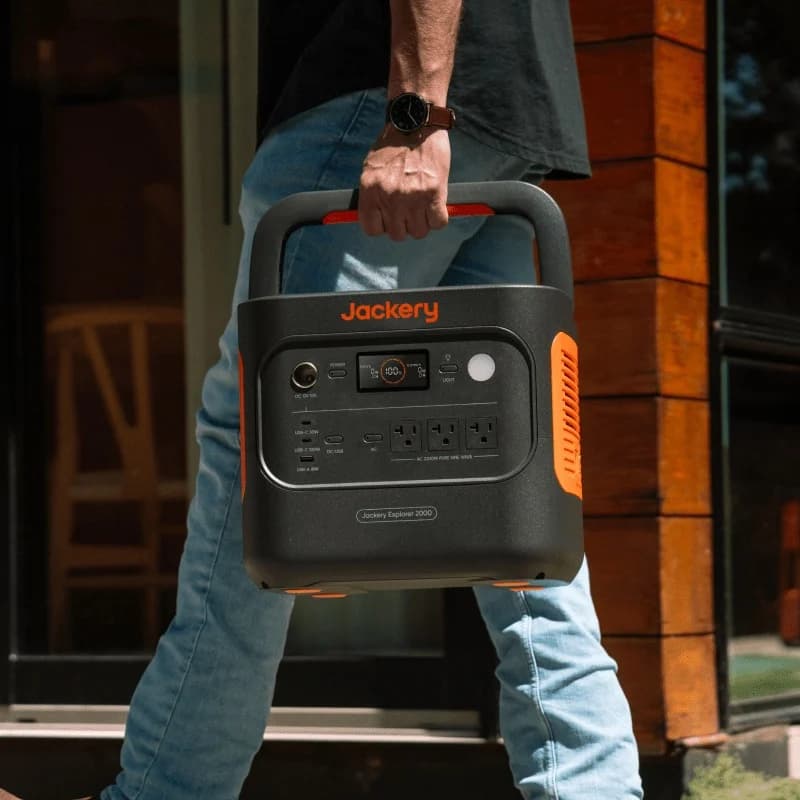
Compare Anker C2000 Gen 2 and Jackery 2000 v2 for fridge backup, carrying, expansion and solar. Get runtime estimates, complete kit checks and buying picks.