

Comparison
BLUETTI AC70 vs EcoFlow RIVER 3 Plus
Capacity or Carry Weight?
Choose the AC70 for more energy and output, or RIVER 3 Plus for less to carry. Compare equal-load runtime estimates, EB600 expansion, solar limits and cables.
By thisWATT EditorialUpdated November 3, 20268 min read1 pick
Our recommendation: EcoFlow RIVER 3 Plus
A smaller station with optional stacked battery expansion.
Limit: The stated 858 Wh total requires the separate 572 Wh EB600 battery.
On this page · Our picks at a glance
Our picks at a glance
- 1
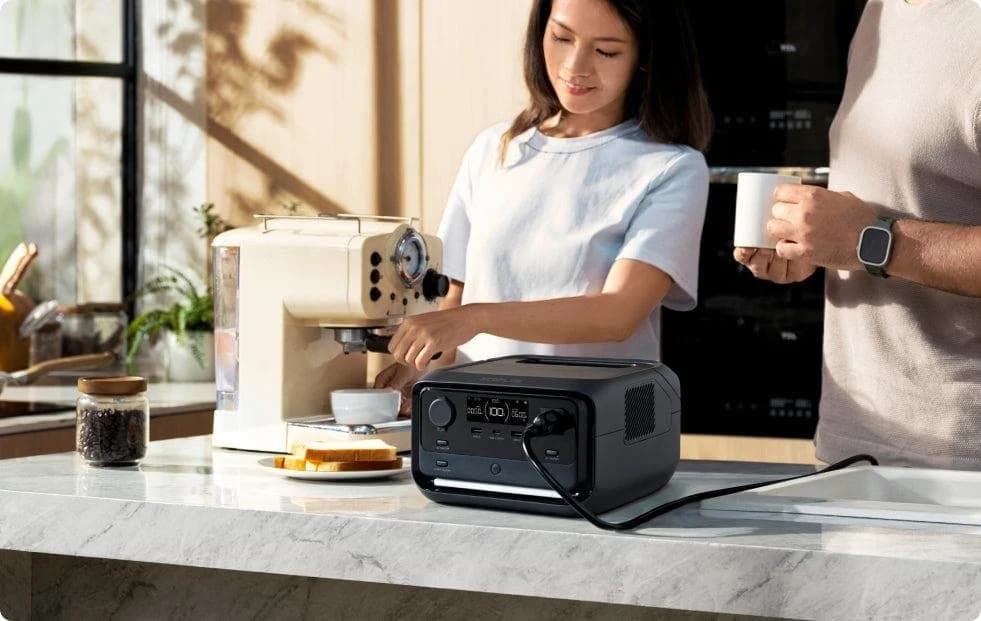
Choose for: A smaller station with optional stacked battery expansion.
Limit: The stated 858 Wh total requires the separate 572 Wh EB600 battery.
Choose the BLUETTI AC70 for more energy and higher running loads in one unit: it has 768Wh and 1,000W continuous AC output. Choose the EcoFlow RIVER 3 Plus when carrying matters most: its 286Wh base station weighs 10.4 lb, versus the AC70's 22.5 lb. Adding an EB600 brings EcoFlow to 858Wh, but the complete setup weighs slightly more than AC70 and still has a 600W AC ceiling.
Quick picks: decide what you will carry and run
- AC70: our pick for more energy in a single box, or an ordinary running load above the RIVER's continuous limit. Confirm stock before ordering.
- Bare RIVER 3 Plus: our pick for a lighter gift, frequent carrying and short desk outages. Buy it for the smaller battery you actually need.
- RIVER 3 Plus + EB600: worth considering if you already own the station and need longer runtime. For a new purchase, compare the complete setup's weight and output with AC70.
Comparison table: bare stations and the complete expansion setup
BLUETTI AC70, US
- Nominal battery capacity
- 768Wh
- Cell chemistry
- LiFePO4
- Continuous AC output, shared across outlets
- 1,000W
All specifications
- Station and battery weight, excluding accessories
- 22.5 lb
- US AC outlets
- 2 × 120V
- USB-C output
- Two ports, up to 100W each
- Station solar input maximum
- 500W
- Stated UPS transfer
- ≤20 ms
RIVER 3 Plus, US, bare
- Nominal battery capacity
- 286Wh
- Cell chemistry
- LiFePO4
- Continuous AC output, shared across outlets
- 600W
All specifications
- Station and battery weight, excluding accessories
- 10.4 lb
- US AC outlets
- 3 × 120V
- USB-C output
- One port, up to 100W
- Station solar input maximum
- 220W
- Stated UPS transfer
- <10 ms
RIVER 3 Plus + EB600
- Nominal battery capacity
- 858Wh
- Cell chemistry
- LiFePO4
- Continuous AC output, shared across outlets
- 600W
All specifications
- Station and battery weight, excluding accessories
- About twenty-three pounds, calculated
- US AC outlets
- Same station outlets
- USB-C output
- Station's 100W port plus battery's 140W port
- Station solar input maximum
- 220W through the station
- Stated UPS transfer
- Same station; confirm with your equipment
Full comparison table
Swipe to compare. Row labels stay visible.
| Specification | BLUETTI AC70, US | RIVER 3 Plus, US, bare | RIVER 3 Plus + EB600 |
|---|---|---|---|
| Nominal battery capacity | 768Wh | 286Wh | 858Wh |
| Station and battery weight, excluding accessories | 22.5 lb | 10.4 lb | About twenty-three pounds, calculated |
| Continuous AC output, shared across outlets | 1,000W | 600W | 600W |
| US AC outlets | 2 × 120V | 3 × 120V | Same station outlets |
| USB-C output | Two ports, up to 100W each | One port, up to 100W | Station's 100W port plus battery's 140W port |
| Station solar input maximum | 500W | 220W | 220W through the station |
| Stated UPS transfer | ≤20 ms | <10 ms | Same station; confirm with your equipment |
| Cell chemistry | LiFePO4 | LiFePO4 | LiFePO4 |
Scroll horizontally to see every column
| Specification | BLUETTI AC70, US | RIVER 3 Plus, US, bare | RIVER 3 Plus + EB600 |
|---|---|---|---|
| Nominal battery capacity | 768Wh | 286Wh | 858Wh |
| Station and battery weight, excluding accessories | 22.5 lb | 10.4 lb | About twenty-three pounds, calculated |
| Continuous AC output, shared across outlets | 1,000W | 600W | 600W |
| US AC outlets | 2 × 120V | 3 × 120V | Same station outlets |
| USB-C output | Two ports, up to 100W each | One port, up to 100W | Station's 100W port plus battery's 140W port |
| Station solar input maximum | 500W | 220W | 220W through the station |
| Stated UPS transfer | ≤20 ms | <10 ms | Same station; confirm with your equipment |
| Cell chemistry | LiFePO4 | LiFePO4 | LiFePO4 |
Sources: AC70 specifications, RIVER US specifications, RIVER manual and extra-battery specifications. The combined weight is our addition: 10.4 lb + 12.8 lb, or twenty-three point two pounds. Neither weight total includes panels, charging cables or a carrying case.
That puts the expanded RIVER slightly above AC70 on both capacity and carrying weight, while AC70 keeps the higher continuous output. The bare RIVER occupies a different position: much easier to carry, with substantially less stored energy.
Source: Official BLUETTI and EcoFlow specifications linked above; nominal capacity is not delivered AC energy.
More energy and higher output: BLUETTI AC70
AC70 is the better fit when you want the larger base battery without managing an extra module. Its two AC outlets share 1,000W; its two USB-C ports each list a 100W maximum. BLUETTI specifies LiFePO4 cells rated for 3,000+ cycles to 80% original capacity. Those figures come from its US product specifications.
For a hypothetical steady 800W appliance, AC70 has room within its continuous rating; neither RIVER configuration does. That does not confirm motor starting: BLUETTI's manual warns that some motors and compressors start at several times their running power. Check the actual appliance's starting requirement before choosing a station for a refrigerator.
Match the name carefully. AC70P is a separate 864Wh model, according to its own manual; its specifications do not belong in this AC70 comparison. BLUETTI also offers AC70 solar kits and an AC70+B80 kit. The B80 setup uses a cable and Power Bank Mode; our AC70 figures cover the bare station.
Check AC70 specifications and availability at BLUETTI.
Less to carry: EcoFlow RIVER 3 Plus
The bare RIVER's attraction is its 10.4 lb weight, rather than equal runtime to AC70. Its 286Wh battery and 600W continuous AC limit make it our choice for lighter travel and modest desk loads. It has three AC outlets and one 100W USB-C port, per EcoFlow.
EcoFlow
A 10.4 lb, 286Wh LiFePO4 power station with 600W of AC output, a sub-10 ms UPS switchover, one-hour wall charging and expansion to 858Wh with a stackable extra battery.
Check package and model options
- 286 Wh capacity
- 600 W AC out
- LiFePO4
For computer backup, EcoFlow states under-10 ms transfer and provides PC/NAS communication support. That favors it on paper against AC70's ≤20 ms figure, but a transfer specification does not guarantee your equipment stays on. Verify your setup before relying on it. Our RIVER model guide handles the wider family and expansion instructions.
Longer runtime for an existing RIVER: add the EB600
The supported match here is RIVER 3 Plus + EB600, not an extra battery by itself. EcoFlow specifies 572Wh and 12.8 lb for EB600. Added to the base station, that makes 286 + 572 = 858Wh, with the combined weight shown above. The battery page confirms compatibility and a clipped, wire-free Pogo Pin connection.
The extra module adds a 140W USB-C input/output port that can also work independently. It supplies no standalone AC outlet: AC appliances still need the station, whose continuous AC output remains 600W. More watt-hours extend runtime; they do not make an ordinary 800W AC load fit.
Do not borrow the smaller battery's weight. EB300 is 286Wh and 7.7 lb, while EB600 is 572Wh and 12.8 lb. EcoFlow calls the larger-capacity bundle RIVER 3 Max Plus; check that the selected package actually contains EB600. For a fresh purchase, the expanded system no longer has the bare RIVER's weight advantage.
Check the EB600 option and availability at EcoFlow.
Equal-load runtime estimates: useful arithmetic, with limits
These estimates compare the same stated load, with the complete carrying weight alongside it. The methods differ: AC70 uses BLUETTI's published arithmetic; EcoFlow's figures are its own appliance-runtime claims. They provide sizing context, rather than a controlled comparison.
AC70
- Weight excluding accessories
- 22.5 lb
- At a stated 40W AC load
- About 10.7 hours; manual calculation
- At a stated 100W AC load
- About five hours; our calculation
RIVER 3 Plus, bare
- Weight excluding accessories
- 10.4 lb
- At a stated 40W AC load
- Up to 5.2 hours; maker's NAS example
- At a stated 100W AC load
- Up to 2.2 hours; maker's console example
RIVER 3 Plus + EB600
- Weight excluding accessories
- About twenty-three pounds
- At a stated 40W AC load
- Up to 15.6 hours; maker's NAS example
- At a stated 100W AC load
- Up to 6.6 hours; maker's console example
Full comparison table
Swipe to compare. Row labels stay visible.
| Complete configuration | Weight excluding accessories | At a stated 40W AC load | At a stated 100W AC load |
|---|---|---|---|
| AC70 | 22.5 lb | About 10.7 hours; manual calculation | About five hours; our calculation |
| RIVER 3 Plus, bare | 10.4 lb | Up to 5.2 hours; maker's NAS example | Up to 2.2 hours; maker's console example |
| RIVER 3 Plus + EB600 | About twenty-three pounds | Up to 15.6 hours; maker's NAS example | Up to 6.6 hours; maker's console example |
Scroll horizontally to see every column
| Complete configuration | Weight excluding accessories | At a stated 40W AC load | At a stated 100W AC load |
|---|---|---|---|
| AC70 | 22.5 lb | About 10.7 hours; manual calculation | About five hours; our calculation |
| RIVER 3 Plus, bare | 10.4 lb | Up to 5.2 hours; maker's NAS example | Up to 2.2 hours; maker's console example |
| RIVER 3 Plus + EB600 | About twenty-three pounds | Up to 15.6 hours; maker's NAS example | Up to 6.6 hours; maker's console example |
EcoFlow's US series page identifies the station-plus-EB600 configuration and gives the NAS and console examples. Its appliance claims are not our measurements or guarantees. Differences in appliances and conditions can change the result even at the same named wattage.
BLUETTI supplies the small-load calculation in AC70's manual, Appendix 1: 90% depth of discharge, typically over 85% inverter efficiency, and approximately 15W station consumption. Using its example assumptions at 100W gives 768Wh × 90% × 85% ÷ (100W + 15W) ≈ five hours. The manual's 40W example gives 768Wh × 90% × 85% ÷ (40W + 15W) ≈ 10.7 hours. Both are estimates; leave reserve for temperature, battery condition and changing loads.
Do not assign AC70's 15W overhead to EcoFlow: we have no matching idle-consumption figure in these sources. EcoFlow's advertised router duration uses a 3W router, so it cannot stand in for your combined router, modem and other network equipment. For an intermittent refrigerator, use its energy consumption over time and verify starting power separately. Our power-station sizing guide helps when these capacities are too small.
Continuous watts, surge and boost are different limits
Both stations cover hypothetical 100W and 500W running loads; only AC70 covers 800W within its normal continuous AC rating. Add everything running at once, and check startup demand separately.
Power Lifting is not 2,000W continuous output. AC70's manual permits selected resistive loads labelled up to 2,000W, while saying actual operating power remains 1,000W. Its product table separately lists 1,500W surge. EcoFlow lists 1,200W surge and 1,200W X-Boost, alongside its 600W continuous rating. Its manual excludes voltage-protected precision devices from X-Boost and says X-Boost is unavailable in bypass mode. Size normal loads against continuous watts rather than either boost headline.
Recharging and solar: compare the same endpoints
EcoFlow lists the bare RIVER's full wall charge at 60 minutes, with 380W AC input. Its manual raises the connected station-and-battery AC input limit to 650W; the bare station's recharge time should not be assigned to the expanded system.
AC70's manual gives 80% in 45 minutes in Turbo mode and a full charge in about 1.5 hours. Its official material conflicts on input power: the manual and page's opening bullet say 850W, while the product specifications say 950W. Solar timing also conflicts: feature copy says 2 hours, versus 2.8–3.3 hours in the specification table. We would not promise a precise full solar recharge from those claims.
The input limits are clearer: AC70 accepts 500W maximum, 12–58V panel Voc and 10A maximum; RIVER accepts 220W maximum, 11–55V and 13A. EcoFlow's manual additionally instructs keeping panel output voltage below 55V. Match the panel and cable to the exact station manual; connector fit alone is insufficient. Our portable solar panel guide explains the buying checks.
Gift checklist: the items and settings that matter
AC70's standard packing list includes wall, car and solar charging cables; a panel is an additional purchase. RIVER's manual lists a wall cable and USB-B to USB-A UPS communication cable, but excludes the solar panel and solar-to-XT60i charging cable; its car cable is a separate purchase. Give the recipient their device's charging cable as well.
Confirm warranty terms for the selected seller. AC70's page advertises a five-year warranty, while its linked manual describes different terms by purchase channel and an extension through registration; do not assume the headline applies unconditionally.
For a router, disable AC70's default ECO mode: its manual warns that low loads can turn output off. For intermittent appliances, EcoFlow recommends setting AC timeout to never. These settings matter as much as the battery size when preparing backup power.
Choose the complete configuration
Confirm the recipient can comfortably lift the station and any extra battery.
Match the charging accessories
Check the selected box contents; add the required panel cable or car cable for the intended charging method.
Prepare the backup settings
Review low-load shutoff settings and verify the recipient's actual equipment before relying on backup.
Winter charging: both stations require at least 32°F / 0°C for charging. AC70 permits charging up to 104°F / 40°C, and RIVER up to 113°F / 45°C. AC70's discharge minimum is -4°F, versus RIVER's 14°F. Those discharge limits do not authorize recharging a frozen station; bring it within its charging range first.
How we choose
This comparison uses official US product pages and manufacturer manuals, read with their model and regional headings. We compare complete battery configurations, ordinary continuous AC output and explicitly labelled runtime arithmetic. We have not physically tested these products. We disclose conflicting manufacturer claims and current stock limitations, and keep AC70P and smaller extra batteries out of the main comparison figures.
Verdict
Choose AC70, once availability is confirmed, for the larger base battery and higher continuous output in one unit. Choose bare RIVER 3 Plus for the lighter carry and short desk backup. Add EB600 chiefly when you already own the RIVER and need more energy while staying within its AC limit; the complete setup weighs slightly more than AC70.
Frequently asked questions
Is the BLUETTI AC70 better than the EcoFlow RIVER 3 Plus?
Choose AC70 for more stored energy and higher continuous output: 768Wh and 1,000W versus the bare RIVER 3 Plus's 286Wh and 600W. Choose the RIVER for its lighter 10.4 lb carry and faster stated UPS transfer. These are different base-capacity classes; compare your load, carrying limit and required hours before deciding.
How long will the BLUETTI AC70 run a 100W load?
About five hours using BLUETTI's small-load formula: 768Wh × 90% depth of discharge × 85% inverter efficiency ÷ (100W + 15W station consumption). Those are the manual's assumptions, not our measurements. Actual runtime varies with temperature, battery condition and the appliance. Leave reserve rather than treating the estimate as a guaranteed finish time.
Does an EB600 make the RIVER 3 Plus as powerful as the AC70?
It adds energy, rather than a larger AC inverter. The 572Wh EB600 takes a 286Wh RIVER 3 Plus to 858Wh, while its continuous AC limit remains 600W. The battery itself weighs 12.8 lb; add that to the station's 10.4 lb before comparing carrying weight. An EB600 alone is not an AC power station.
Is the AC70 a 2,000W power station?
Its normal continuous AC rating is 1,000W. Power Lifting mode supports selected resistive appliances labelled up to 2,000W, but BLUETTI's manual says actual operating power remains 1,000W. That mode does not establish compatibility with an equally rated motor or compressor. Check both the running load and starting requirement of the actual appliance.
Can either station charge below freezing?
Neither maker permits charging below 32°F / 0°C in the specifications used here. AC70's discharge range extends to -4°F, while RIVER 3 Plus's extends to 14°F; those discharge limits do not authorize charging at those temperatures. Bring the station within its specified charging range before connecting wall or solar input.
EcoFlow RIVER 3 Plus
AmazonRelated guides
Comparison · Portable Power Stations
Anker SOLIX C2000 Gen 2 vs Jackery Explorer 2000 v2: Which to Buy?
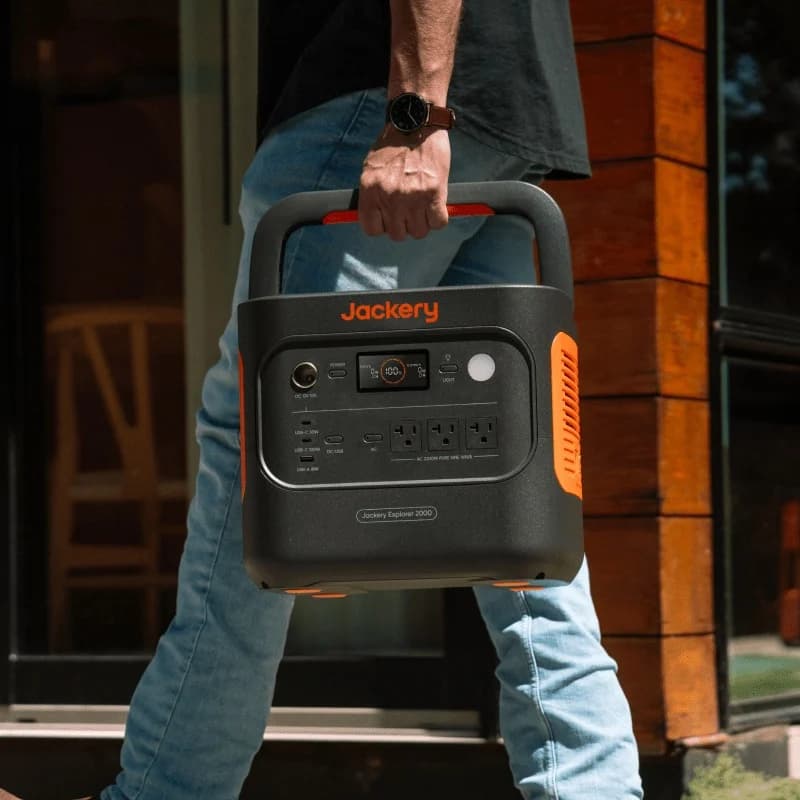
Compare Anker C2000 Gen 2 and Jackery 2000 v2 for fridge backup, carrying, expansion and solar. Get runtime estimates, complete kit checks and buying picks.
Comparison · Portable Power Stations
Anker SOLIX C300X vs BLUETTI Elite 30 V2: Which Small Station?
Choose C300X or Elite 30 V2 for laptops, lights and small AC loads: compare USB-C sharing, runtime estimates, solar cables, model aliases and gift return traps.
Comparison · Portable Power Stations
AFERIY P280 vs Anker SOLIX C2000 Gen 2: Which Backup Kit Fits?

Compare the US AFERIY P280 and Anker C2000 Gen 2 for fridge backup: matching battery kits, runtime estimates, outlet limits, recharge needs and warranty gaps.