

Comparison
Anker SOLIX F2000 vs C2000 Gen 2
Keep, Replace or Expand?
Compare Anker SOLIX F2000 and C2000 Gen 2: US specs, battery and cable compatibility, equal-load runtime estimates, and when to keep, replace or expand.
By thisWATT EditorialUpdated November 3, 20268 min read1 pick
Our recommendation: Anker SOLIX C2000 Gen 2
More stored energy with an option to add a battery.
Limit: Expansion stops at one extra battery, for 4,096 Wh total.
On this page · Our picks at a glance
Our picks at a glance
- 1
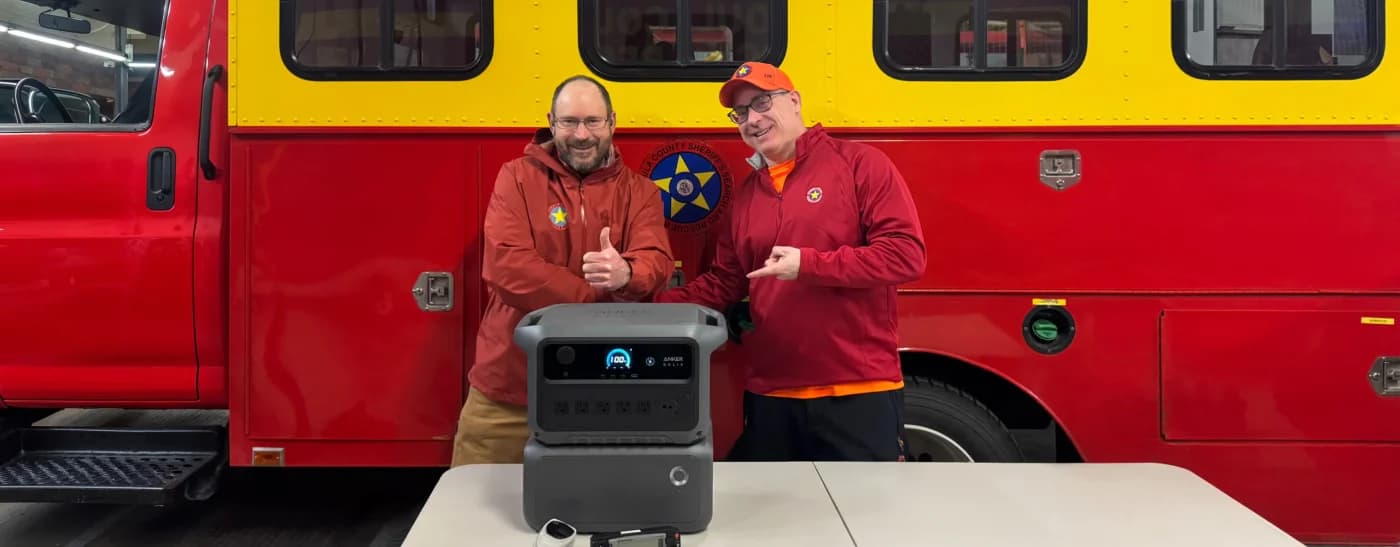
Choose for: More stored energy with an option to add a battery.
Limit: Expansion stops at one extra battery, for 4,096 Wh total.
Buy the Anker SOLIX C2000 Gen 2 for a new outage or RV setup: it matches the F2000 / PowerHouse 767's 2,048Wh capacity and 2,400W continuous output in a lighter case. Keep a healthy F2000 if its wheels, existing accessories and actual runtime already suit your job. If you need more stored energy, buy the matching expansion battery rather than expecting a generation change to double runtime.
Quick picks: choose by the job
Compare specifications and all conditions
Buying a new station
- Our pick
- C2000 Gen 2
- Why
- Lighter to lift; faster wall charging
Already own a satisfactory F2000
- Our pick
- Keep F2000
- Why
- Retain its wheeled case and existing battery setup
F2000 runs out before your outage ends
- Our pick
- Original BP2000 / Anker 760
- Why
- Adds storage to the station you own
C2000 Gen 2 needs longer runtime
- Our pick
- BP2000 Expansion Battery (Gen 2)
- Why
- The generation-specific battery Anker specifies
Full comparison table
Swipe to compare. Row labels stay visible.
| Your situation | Our pick | Why |
|---|---|---|
| Buying a new station | C2000 Gen 2 | Lighter to lift; faster wall charging |
| Already own a satisfactory F2000 | Keep F2000 | Retain its wheeled case and existing battery setup |
| F2000 runs out before your outage ends | Original BP2000 / Anker 760 | Adds storage to the station you own |
| C2000 Gen 2 needs longer runtime | BP2000 Expansion Battery (Gen 2) | The generation-specific battery Anker specifies |
Scroll horizontally to see every column
| Your situation | Our pick | Why |
|---|---|---|
| Buying a new station | C2000 Gen 2 | Lighter to lift; faster wall charging |
| Already own a satisfactory F2000 | Keep F2000 | Retain its wheeled case and existing battery setup |
| F2000 runs out before your outage ends | Original BP2000 / Anker 760 | Adds storage to the station you own |
| C2000 Gen 2 needs longer runtime | BP2000 Expansion Battery (Gen 2) | The generation-specific battery Anker specifies |
The US stations compared
These are manufacturer figures from Anker's F2000 manual, C2000 Gen 2 specifications and its generation comparison. Peak power is a separate, brief rating.
F2000 / PowerHouse 767, US
- Base capacity; chemistry
- 2,048Wh; LiFePO4
- Continuous AC output
- 2,400W
- Peak, per Anker's comparison
- 3,600W
All specifications
- With matching BP2000 battery
- 4,096Wh
- Weight
- 67.2 lb
- Moving it
- Wheels and retractable handle
- Output region
- 120V, 60Hz; TT-30R present
- Maximum wall charging
- 1,440W
- Maximum solar input
- 1,000W
- USB-C
- Three ports, 100W maximum each
- UPS transfer
- 20 ms
- Cycles to 80%, per Anker's comparison
- 3,000
C2000 Gen 2, US
- Base capacity; chemistry
- 2,048Wh; LiFePO4
- Continuous AC output
- 2,400W
- Peak, per Anker's comparison
- 4,000W
All specifications
- With matching BP2000 battery
- 4,096Wh
- Weight
- 41.7 lb
- Moving it
- Lower lifting weight
- Output region
- 120V, 60Hz; TT-30R present
- Maximum wall charging
- 1,800W
- Maximum solar input
- 800W
- USB-C
- Two 140W ports and one 15W port
- UPS transfer
- 10 ms
- Cycles to 80%, per Anker's comparison
- 4,000
Full comparison table
Swipe to compare. Row labels stay visible.
| Specification | F2000 / PowerHouse 767, US | C2000 Gen 2, US |
|---|---|---|
| Base capacity; chemistry | 2,048Wh; LiFePO4 | 2,048Wh; LiFePO4 |
| Continuous AC output | 2,400W | 2,400W |
| Peak, per Anker's comparison | 3,600W | 4,000W |
| With matching BP2000 battery | 4,096Wh | 4,096Wh |
| Weight | 67.2 lb | 41.7 lb |
| Moving it | Wheels and retractable handle | Lower lifting weight |
| Output region | 120V, 60Hz; TT-30R present | 120V, 60Hz; TT-30R present |
| Maximum wall charging | 1,440W | 1,800W |
| Maximum solar input | 1,000W | 800W |
| USB-C | Three ports, 100W maximum each | Two 140W ports and one 15W port |
| UPS transfer | 20 ms | 10 ms |
| Cycles to 80%, per Anker's comparison | 3,000 | 4,000 |
Scroll horizontally to see every column
| Specification | F2000 / PowerHouse 767, US | C2000 Gen 2, US |
|---|---|---|
| Base capacity; chemistry | 2,048Wh; LiFePO4 | 2,048Wh; LiFePO4 |
| Continuous AC output | 2,400W | 2,400W |
| Peak, per Anker's comparison | 3,600W | 4,000W |
| With matching BP2000 battery | 4,096Wh | 4,096Wh |
| Weight | 67.2 lb | 41.7 lb |
| Moving it | Wheels and retractable handle | Lower lifting weight |
| Output region | 120V, 60Hz; TT-30R present | 120V, 60Hz; TT-30R present |
| Maximum wall charging | 1,440W | 1,800W |
| Maximum solar input | 1,000W | 800W |
| USB-C | Three ports, 100W maximum each | Two 140W ports and one 15W port |
| UPS transfer | 20 ms | 10 ms |
| Cycles to 80%, per Anker's comparison | 3,000 | 4,000 |
Source: Anker's US F2000 manual and C2000 Gen 2 comparison, linked above
Both stations share their AC output across connected loads. Their TT-30 connector is useful for an RV, but it does not turn either into an unrestricted campground hookup. Neither US specification lists 240V output; for that requirement, start with our home battery backup guide. The UK F2000 instead lists 230V output, 2,300W AC power and 2,200W AC charging: do not transfer those ratings to a US listing.
Best new purchase: C2000 Gen 2
Choose C2000 Gen 2 when lifting the station into a vehicle matters more than rolling it across the campsite. Its higher-power USB-C ports also suit buyers comparing laptop charging. The principal reasons to replace an F2000 are portability and recharging convenience, rather than more nominal storage or continuous AC power.
Anker SOLIX
A 2,048Wh LiFePO4 power station with 2,400W of AC output (4,000W peak), a TT-30R RV outlet, 1,800W wall charging, 800W of solar input and expansion to 4kWh with one BP2000 (Gen 2) battery.
Check package and model options
- 2,048 Wh capacity
- 2,400 W AC out
- LiFePO4
Best reason to keep the F2000: wheels and an existing setup
The F2000's pull handle and wheels remain useful when you can roll it to its working position. Keeping it is our recommendation if it still runs your actual loads long enough and you already own its compatible battery.
Availability check: on November 2, 2026, Anker's US F2000 store address returned a C2000 Gen 2 listing. The separate F2000 information page still documents the older station. That returned listing also said orders placed on or after November 2 would begin shipping November 21; check current dispatch if backup is urgent. That is not confirmation of new F2000 stock; check the actual product identity before ordering a legacy listing.
Expand an F2000: original BP2000 / Anker 760
The original BP2000, also described as the Anker 760 expansion battery, adds 2,048Wh and includes its battery-to-host cable. Anker lists it at 45.6 lb. Consider whether you can manage the extra box before choosing expansion over replacing the station.
Its current page title mentions F2000 and F2600, while its FAQ says only F2000. F2000 compatibility is explicit in both the battery page and the station manual; this guide makes no F2600 recommendation.
Expand C2000 Gen 2: BP2000 Expansion Battery (Gen 2)
Choose the BP2000 Gen 2 for C2000 Gen 2. Anker lists 2,048Wh, 15.3kg and an included battery-to-host cable. Its page explicitly excludes F2000. Neither expansion battery replaces a complete power station: the original battery's FAQ requires a host for charging and discharging, and the Gen 2 package is sold specifically for C2000 Gen 2 expansion.
Which battery and cable belong in your kit?
Use these exact maker names and US store SKUs when checking a bundle. The SKUs distinguish the packages; they are not Amazon identifiers.
F2000 / 767
- Battery to order
- Original BP2000 / 760, A1780111-85
- Cable listed in that battery package
- Original battery-to-host cable
- Resulting nominal storage
- 4,096Wh
C2000 Gen 2, A17831A1
- Battery to order
- BP2000 Gen 2, A17831A1-85
- Cable listed in that battery package
- Gen 2 battery-to-host cable
- Resulting nominal storage
- 4,096Wh
Full comparison table
Swipe to compare. Row labels stay visible.
| Host you own | Battery to order | Cable listed in that battery package | Resulting nominal storage |
|---|---|---|---|
| F2000 / 767 | Original BP2000 / 760, A1780111-85 | Original battery-to-host cable | 4,096Wh |
| C2000 Gen 2, A17831A1 | BP2000 Gen 2, A17831A1-85 | Gen 2 battery-to-host cable | 4,096Wh |
Scroll horizontally to see every column
| Host you own | Battery to order | Cable listed in that battery package | Resulting nominal storage |
|---|---|---|---|
| F2000 / 767 | Original BP2000 / 760, A1780111-85 | Original battery-to-host cable | 4,096Wh |
| C2000 Gen 2, A17831A1 | BP2000 Gen 2, A17831A1-85 | Gen 2 battery-to-host cable | 4,096Wh |
Do not buy an unlabelled “BP2000 cable” or assume the original cable transfers to the newer battery. For a used battery missing its cable, get Anker to confirm the replacement against the host and battery labels before buying.
For the rest of the setup, check this bill of materials:
Wall charging C2000 Gen 2
- Equipment to account for
- Station, supplied 15A AC charging cable and manual; those are its standalone box contents
Wall charging an older F2000
- Equipment to account for
- Station and its correct AC charging cable; verify the cable is present in a used package
Solar charging
- Equipment to account for
- Compatible panels and a cable matching F2000's XT-60 or C2000 Gen 2's XT-60i input; check panel and cable inclusion explicitly
Ordinary vehicle-socket charging
- Equipment to account for
- Matching car charging cable; do not assume the C2000 standalone box includes it
Dedicated alternator charging
- Equipment to account for
- Alternator charger, battery connection cable, fuse wire, installation hardware and a confirmed station connection cable; see the regional caveat below
Full comparison table
Swipe to compare. Row labels stay visible.
| Intended job | Equipment to account for |
|---|---|
| Wall charging C2000 Gen 2 | Station, supplied 15A AC charging cable and manual; those are its standalone box contents |
| Wall charging an older F2000 | Station and its correct AC charging cable; verify the cable is present in a used package |
| Solar charging | Compatible panels and a cable matching F2000's XT-60 or C2000 Gen 2's XT-60i input; check panel and cable inclusion explicitly |
| Ordinary vehicle-socket charging | Matching car charging cable; do not assume the C2000 standalone box includes it |
| Dedicated alternator charging | Alternator charger, battery connection cable, fuse wire, installation hardware and a confirmed station connection cable; see the regional caveat below |
Scroll horizontally to see every column
| Intended job | Equipment to account for |
|---|---|
| Wall charging C2000 Gen 2 | Station, supplied 15A AC charging cable and manual; those are its standalone box contents |
| Wall charging an older F2000 | Station and its correct AC charging cable; verify the cable is present in a used package |
| Solar charging | Compatible panels and a cable matching F2000's XT-60 or C2000 Gen 2's XT-60i input; check panel and cable inclusion explicitly |
| Ordinary vehicle-socket charging | Matching car charging cable; do not assume the C2000 standalone box includes it |
| Dedicated alternator charging | Alternator charger, battery connection cable, fuse wire, installation hardware and a confirmed station connection cable; see the regional caveat below |
Equal-load outage runtime estimates
Anker's runtime guidance suggests estimating usable AC energy as capacity × 0.85, then dividing by average load. Applying that same planning assumption to both generations gives the following estimates, without recharging:
100W
- Hours, either 2,048Wh base station
- About 17
- Hours, either station + matching BP2000: 4,096Wh
- About 35
300W
- Hours, either 2,048Wh base station
- About 6
- Hours, either station + matching BP2000: 4,096Wh
- About 12
1,000W
- Hours, either 2,048Wh base station
- About 1.7
- Hours, either station + matching BP2000: 4,096Wh
- About 3.5
Full comparison table
Swipe to compare. Row labels stay visible.
| Hypothetical steady AC load | Hours, either 2,048Wh base station | Hours, either station + matching BP2000: 4,096Wh |
|---|---|---|
| 100W | About 17 | About 35 |
| 300W | About 6 | About 12 |
| 1,000W | About 1.7 | About 3.5 |
Scroll horizontally to see every column
| Hypothetical steady AC load | Hours, either 2,048Wh base station | Hours, either station + matching BP2000: 4,096Wh |
|---|---|---|
| 100W | About 17 | About 35 |
| 300W | About 6 | About 12 |
| 1,000W | About 1.7 | About 3.5 |
For example, estimated hours = 2,048Wh × 0.85 ÷ 100W ≈ 17, rounded. These are capacity-based estimates, not measured F2000-versus-C2000 results. Inverter overhead, settings, battery wear and appliance cycling change the outcome. Anker advertises 9W idle consumption for C2000 Gen 2; we do not assign that figure to F2000 or deduct it again from this simplified allowance.
Anker's C2000 fridge claim spans 15–32 hours under specified conditions: unloaded refrigerators, ice-making disabled and 25°C ambient temperature. Do not read it as runtime at a continuous 190W draw. For a cycling fridge, use average energy consumption; our refrigerator watts guide explains the distinction.
Plan energy
Multiply your average load by the hours you need; compare with usable battery energy.
Check running power
Add the devices that will operate together and compare with continuous output.
Check starting demand
Confirm the actual motor or compressor starting requirement; a peak rating alone cannot establish compatibility.
Adding a battery increases storage. It does not establish a higher continuous inverter rating. Keep the shared output ceiling in view even when the runtime calculation looks comfortable.
Wall, solar and vehicle charging: read the conditions
Wall: Anker's 767 charging support article quotes 1.9 hours for a US full AC recharge. For C2000 Gen 2, Anker quotes 88 minutes at up to 1,800W. Its 58-minute figure uses AC plus solar, up to 2,600W combined. These are Anker's claims, not results under identical conditions.
Solar: F2000 accepts 11–32V at up to 10A, or 32–60V at up to 20A, with a 1,000W ceiling. C2000's US product table says 11–60V, 17A maximum and 800W. A wattage label alone is insufficient: confirm the panel's voltage, current and connection against the exact station instructions. Our portable solar panel guide covers selection.
Driving: C2000's page quotes 23 hr from a 100W vehicle socket versus 3 hours with its optional 800W alternator charger. Anker's comparison marks that alternator route unsupported for F2000; this does not mean F2000 cannot charge from a car socket.
There is a regional cable caveat. Anker's Canadian charger listing says C2000 Gen 2 needs an additional Expansion Port Cable for fast charging. Its US charger box list names a PPS XT-60i cable. The US Expansion Port Output Cable page describes expansion batteries, while the Canadian cable page describes stations. Confirm the complete US connection kit, including use alongside an expansion battery, with Anker before ordering; do not assume these cables substitute for each other.
Winter charging and storage
Both US station specification pages list charging at 32–104°F / 0–40°C. F2000 separately permits discharging at −4–104°F / −20–40°C. C2000's table confusingly labels that lower range “Recharging Temperature”; its separate “Charging Temperature” row still starts at freezing. Do not treat the lower range as permission to charge a frozen battery; follow the exact manual and temperature warnings.
For F2000, the manual specifies dry, cool storage, outputs off, weekly capacity checks and a full recharge if below 30%; recharge fully every three months. The original BP2000 FAQ gives the same schedule. Do not substitute a generic battery-storage rule for the instructions supplied with your exact generation.
How we choose
We compare official US specifications, manuals, battery packages and charging conditions, checked November 2, 2026. The recommendations are editorial judgments from those documents; runtimes use the stated formula.
Anker's own data conflicts. C2000's visible table and comparison give 4,000 cycles and an 18.1-inch length, while its embedded product specifications say 3,000+ cycles and 14.9 inches. An embedded weight field also gives 41 lb versus 41.7 lb in the visible comparison. We show the visible figures and disclose the alternatives; confirm dimensions before planning a tight storage bay. F2000 marketing mentions 3,600W simultaneous loads, while its manual caps AC output at 2,400W; size running loads to the manual. We avoid a noise ranking because the comparison attaches a load condition to C2000's figure without matching conditions for F2000. Diagram callout numbers are not outlet counts.
For alternatives outside this pair, see our portable power station shortlist. Connections to home wiring require a licensed electrician and a permit where required; this guide provides no installation procedure.
Verdict
Buy C2000 Gen 2 for a new setup when lifting weight and faster refills matter. Keep F2000 when its wheels and existing system already do the job. Expand with the correct BP2000 generation when stored energy is the shortfall; do not expect a replacement base station with the same capacity to solve it.
Frequently asked questions
Is the Anker SOLIX F2000 the same as the PowerHouse 767?
Yes. Anker identifies the F2000 as the PowerHouse 767, with model family A1780. This comparison covers the US 120V version. The UK F2000 uses 230V output and has different AC ratings, so the family name alone cannot identify the outlet region. Check the rating label and the exact manual before buying an older unit.
Can the original BP2000 battery work with C2000 Gen 2?
Choose the BP2000 Expansion Battery (Gen 2) for C2000 Gen 2. The original BP2000, also called the Anker 760 expansion battery, is the documented match for F2000. Anker explicitly says the Gen 2 battery is not compatible with F2000. Each battery package lists its own battery-to-host cable; matching capacity and a similar name do not establish interchangeability.
Will replacing an F2000 with C2000 Gen 2 double runtime?
No. Both base stations have 2,048Wh of nominal storage and 2,400W continuous AC output. Replacing one base station with the other does not double stored energy. Adding the matching BP2000 battery brings either configuration to 4,096Wh. Actual runtime still depends on load, losses, battery condition and settings; the equal-load estimates below deliberately use identical assumptions.
Does the TT-30 outlet provide full 30A RV power?
The connector does not override the station's rating. Anker specifies 120V, 20A and 2,400W for these US stations' inverter output, including the C2000 Gen 2 TT-30 outlet. Check all loads running together and their starting requirements. Neither station is a 240V supply. Any connection to home wiring needs a licensed electrician and a permit where required.
Anker SOLIX C2000 Gen 2
AmazonRelated guides
Best picks · Portable Power Stations
Best Battery Backup for Refrigerators: Picks by Outage Length
Choose a battery backup for your refrigerator by daily energy use, compressor starts and outage length, with clear picks, runtime estimates and kit checks.
Comparison · Portable Power Stations
AFERIY P280 vs Anker SOLIX C2000 Gen 2: Which Backup Kit Fits?
Compare the US AFERIY P280 and Anker C2000 Gen 2 for fridge backup: matching battery kits, runtime estimates, outlet limits, recharge needs and warranty gaps.
Comparison · Portable Power Stations
Anker SOLIX C2000 Gen 2 vs Jackery Explorer 2000 v2: Which to Buy?
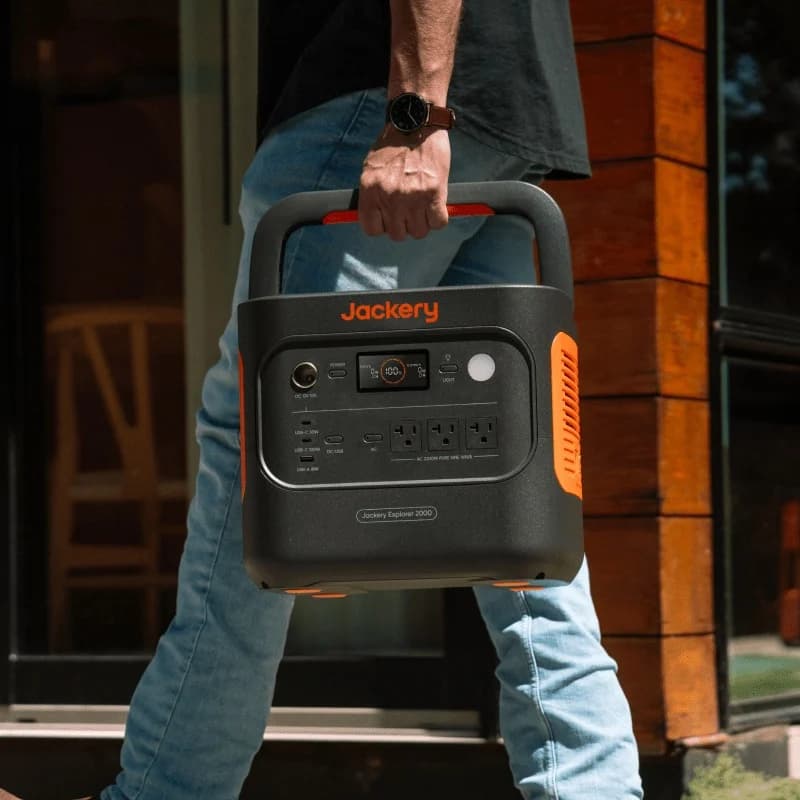
Compare Anker C2000 Gen 2 and Jackery 2000 v2 for fridge backup, carrying, expansion and solar. Get runtime estimates, complete kit checks and buying picks.