

Best picks
Best Power Stations for RVs
TT-30, Fridges and AC Limits
Choose an RV power station by usable watts, daily energy and DC needs. Compare TT-30 limits, fridge budgets, air conditioning and solar charging before buying.
By thisWATT EditorialUpdated November 3, 20268 min read2 picks
Our recommendation: Anker SOLIX C2000 Gen 2
More stored energy with an option to add a battery.
Limit: Expansion stops at one extra battery, for 4,096 Wh total.
On this page · Our picks at a glance
Our picks at a glance
- 1

Choose for: More stored energy with an option to add a battery.
Limit: Expansion stops at one extra battery, for 4,096 Wh total.
- 2
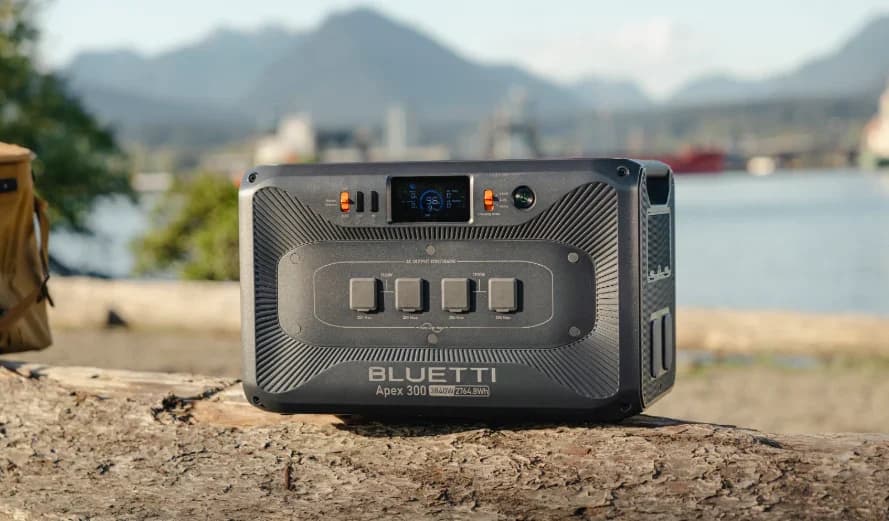
Choose for: Long maker-rated cell cycle life for a backup plan.
Limit: USB and 12 V outputs require the separate Hub D1; the manual excludes server/workstation UPS use.
For an RV owner who needs a station to lift in and out, choose the Anker SOLIX C2000 Gen 2: 2,048Wh, 2,400W continuous AC output, a TT-30R outlet and 41.7 lb. Choose the BLUETTI Elite 300 for more stored energy and a dedicated DC output, or the Apex 300 for more AC headroom. None is a promise of overnight air conditioning: buy for your simultaneous loads and daily energy budget.
Quick picks: outlet shape versus available power
These figures describe standalone US stations on battery power; capacities and ratings are the makers' figures.
Compare specifications and all conditions
Anker SOLIX C2000 Gen 2 / frequent lifting
- Battery / weight
- 2,048Wh / 41.7 lb
- Shared continuous AC ceiling
- 2,400W
- TT-30 AC limit
- 120V, 20A: 2,400W
All specifications
- DC provision
- 12V/10A car outlet
BLUETTI Elite 300 / more energy and DC loads
- Battery / weight
- 3,014.4Wh / 57.98 lb
- Shared continuous AC ceiling
- 2,400W
- TT-30 AC limit
- Within the 2,400W shared ceiling
All specifications
- DC provision
- 12V/30A XT90; all DC ports share 400W
BLUETTI Apex 300 / more simultaneous AC demand
- Battery / weight
- 2,764.8Wh / 83.78 lb
- Shared continuous AC ceiling
- 3,840W
- TT-30 AC limit
- 120V, 30A: at most 3,600W
All specifications
- DC provision
- Separate Hub D1 required
Full comparison table
Swipe to compare. Row labels stay visible.
| Station / choose it for | Battery / weight | Shared continuous AC ceiling | TT-30 AC limit | DC provision |
|---|---|---|---|---|
| Anker SOLIX C2000 Gen 2 / frequent lifting | 2,048Wh / 41.7 lb | 2,400W | 120V, 20A: 2,400W | 12V/10A car outlet |
| BLUETTI Elite 300 / more energy and DC loads | 3,014.4Wh / 57.98 lb | 2,400W | Within the 2,400W shared ceiling | 12V/30A XT90; all DC ports share 400W |
| BLUETTI Apex 300 / more simultaneous AC demand | 2,764.8Wh / 83.78 lb | 3,840W | 120V, 30A: at most 3,600W | Separate Hub D1 required |
Scroll horizontally to see every column
| Station / choose it for | Battery / weight | Shared continuous AC ceiling | TT-30 AC limit | DC provision |
|---|---|---|---|---|
| Anker SOLIX C2000 Gen 2 / frequent lifting | 2,048Wh / 41.7 lb | 2,400W | 120V, 20A: 2,400W | 12V/10A car outlet |
| BLUETTI Elite 300 / more energy and DC loads | 3,014.4Wh / 57.98 lb | 2,400W | Within the 2,400W shared ceiling | 12V/30A XT90; all DC ports share 400W |
| BLUETTI Apex 300 / more simultaneous AC demand | 2,764.8Wh / 83.78 lb | 3,840W | 120V, 30A: at most 3,600W | Separate Hub D1 required |
The Elite 300 has the largest battery here; the Apex 300 has the highest continuous output. Extra watts and extra watt-hours solve different problems.
Source: Official Anker and BLUETTI specifications linked below
Best for lifting into an RV: Anker SOLIX C2000 Gen 2
The C2000 Gen 2 is our default when carrying weight matters: it is the lightest pick here, with the same continuous AC ceiling as the Elite 300. Anker specifies 4,000W peak power, but the TT-30R is explicitly limited to 20A at 120V. Plan simultaneous loads against 2,400W, including the converter when it is running.
Anker SOLIX
A 2,048Wh LiFePO4 power station with 2,400W of AC output (4,000W peak), a TT-30R RV outlet, 1,800W wall charging, 800W of solar input and expansion to 4kWh with one BP2000 (Gen 2) battery.
Check package and model options
- 2,048 Wh capacity
- 2,400 W AC out
- LiFePO4
Anker's feature list labels standard AC output 1,800W, while its specification table lists 2,400W for NEMA 5-20R. Both give the TT-30 path 2,400W. Confirm ordinary-socket limits with Anker if your plan depends on them.
Its 9W idle-consumption claim is useful context for modest loads; it is not a runtime guarantee. One BP2000 Gen 2 expansion battery takes storage to 4,096Wh. Match that generation when shopping: a panel bundle adds charging equipment, while an expansion battery adds stored energy. Neither changes the stated continuous inverter rating.
Best for more energy and direct DC loads: BLUETTI Elite 300
The Elite 300 US model is our choice when the daily energy budget matters more than lifting weight. Its 3,014.4Wh battery is larger than either other pick's, but its AC ceiling remains 2,400W. The separate 12V/30A XT90 output can suit compatible DC equipment; BLUETTI caps total DC output at 400W. Have the maker confirm the cable and load compatibility before purchase.
There is no dedicated expansion-battery port. BLUETTI's specification table labels 4,800W as both surge and lifting power, while its FAQ restricts Power Lifting to resistive loads such as heaters. We do not use that lifting figure to approve compressor starts. Its US AC bypass limit is 1,800W, lower than its battery-powered output: simultaneous wall charging changes the comparison.
Variants: choose the standalone US unit or a panel/vehicle-charger bundle deliberately. The bundle names describe additional equipment; they do not increase the battery's capacity.
Best for more AC headroom: BLUETTI Apex 300
The Apex 300 makes sense when running watts eliminate the smaller picks. BLUETTI states 3,840W total AC output, a 120V/30A TT-30R, and a NEMA 14-50R. The TT-30 path is bounded by 120V × 30A = 3,600W; the larger socket still shares the station's inverter ceiling. At 83.78 lb, plan the lift and storage location before ordering.
BLUETTI
A 2,764.8Wh LiFePO4 home-backup unit with 3,840W of AC output, a NEMA 14-50R and TT-30R, 2,400W of solar input and expansion with up to six B300K batteries per unit.
Check package and model options
- 2,764.8 Wh capacity
- 3,840 W AC out
- LiFePO4
Its 2,764.8Wh battery is smaller than the Elite 300's. Hub D1 adds DC connections; an expansion-battery bundle adds storage. Check those separately, because the standalone station needs Hub D1 for DC power.
What the RV plug actually buys you
Leviton identifies TT-30R as a 30A, 125V-rated RV receptacle. On a nominal 120V supply, full 30A service means 120V × 30A = 3,600W. A matching socket on a smaller inverter does not create that power.
Apex 300's larger connector also does not provide full campground service: Micro-Air explains that 50A RV service has two 120V legs totaling 12,000W. Before buying, ask the RV and station makers to confirm the inlet, approved cord or adapter, output mode, and compatibility with the RV's electrical protection equipment. Have an RV electrical specialist assess integration.
Build a daily budget for AC and DC separately
Airstream explains that lights, fans and pumps use the house DC system, while a converter turns shore AC into DC and charges the house battery. Feeding the RV's inlet therefore puts that converter on the station's load budget.
Do not read a converter's DC amp rating as shore-input amps. For example, Progressive Dynamics specifies its PD9260C as 60A DC output, with 1,000W AC input. Check your actual converter, battery state and concurrent appliances.
Here is a hypothetical daily budget, not typical consumption. All loads are assumed at the station's outputs, including the converter's losses; the fridge is separately AC-powered in this example.
AC fridge, averaged across compressor cycles
- Assumed average draw
- 50W
- Hours per day
- 24
- Energy, Wh
- 1,200
Separate station-powered lights/phone charging
- Assumed average draw
- 10W
- Hours per day
- 5
- Energy, Wh
- 50
Converter, including house-side DC loads and charging
- Assumed average draw
- 100W
- Hours per day
- 4
- Energy, Wh
- 400
Total
- Assumed average draw
- —
- Hours per day
- —
- Energy, Wh
- 1,650
Full comparison table
Swipe to compare. Row labels stay visible.
| Independent load | Assumed average draw | Hours per day | Energy, Wh |
|---|---|---|---|
| AC fridge, averaged across compressor cycles | 50W | 24 | 1,200 |
| Separate station-powered lights/phone charging | 10W | 5 | 50 |
| Converter, including house-side DC loads and charging | 100W | 4 | 400 |
| Total | — | — | 1,650 |
Scroll horizontally to see every column
| Independent load | Assumed average draw | Hours per day | Energy, Wh |
|---|---|---|---|
| AC fridge, averaged across compressor cycles | 50W | 24 | 1,200 |
| Separate station-powered lights/phone charging | 10W | 5 | 50 |
| Converter, including house-side DC loads and charging | 100W | 4 | 400 |
| Total | — | — | 1,650 |
The arithmetic is watts × hours, then add the rows. If your fridge or lights are supplied through the converter, include them there and remove their separate row. Replace the assumed fridge average with a day of measured energy; for propane operation, check the refrigerator's manual for remaining electrical requirements. See our refrigerator energy guide.
Compare the same loads: runtime estimates
For comparison we assume 80% of nominal Wh is available after losses and reserve; this is our planning allowance, not measured efficiency. BLUETTI's published runtime formula includes discharge allowance, inverter efficiency and station self-consumption. Our shortcut cannot capture every low-load or temperature effect. In particular, Elite 300's advertised 4W standby figure applies with AC and DC outputs off.
C2000 Gen 2
- Assumed 100W total load: hours
- About 16
- Assumed 1,500W total load: minutes
- About 66
Elite 300
- Assumed 100W total load: hours
- About 24
- Assumed 1,500W total load: minutes
- About 96
Apex 300
- Assumed 100W total load: hours
- About 22
- Assumed 1,500W total load: minutes
- About 88
Full comparison table
Swipe to compare. Row labels stay visible.
| Standalone station | Assumed 100W total load: hours | Assumed 1,500W total load: minutes |
|---|---|---|
| C2000 Gen 2 | About 16 | About 66 |
| Elite 300 | About 24 | About 96 |
| Apex 300 | About 22 | About 88 |
Scroll horizontally to see every column
| Standalone station | Assumed 100W total load: hours | Assumed 1,500W total load: minutes |
|---|---|---|
| C2000 Gen 2 | About 16 | About 66 |
| Elite 300 | About 24 | About 96 |
| Apex 300 | About 22 | About 88 |
For example, 2,048Wh × 80% ÷ 1,500W × 60 = about 66 minutes. The same allowance leaves about 1,638 watt-hours from the C2000 Gen 2, already tight against our 1,650 watt-hours daily example. All estimates assume a full battery and no incoming charge.
Check simultaneous demand
Include the converter and compare the total with continuous output.
Count energy between recharges
Multiply average watts by hours; avoid counting DC loads again through the converter.
Plan replenishment
Choose enough storage and charging opportunity for your actual daily budget.
Air conditioning: starting, running and duration
Passing the running-watts check does not settle compressor starting. Dometic's RV guidance requires the right generator size for the exact AC model, pure sine wave output, and an appropriate starting aid. Obtain compatibility confirmation for the station, AC and any soft starter; use a qualified installer for modifications.
Even if it starts, our assumed 1,500W total load uses the standalone batteries in roughly an hour to an hour and a half. Other RV loads consume the same stored energy. Thermostat cycling may extend runtime, but do not buy these base units expecting an assured night of cooling.
Solar and vehicle recharging
C2000 Gen 2
- Maximum solar input
- 800W
- Maker's input limits
- 11–60V, 17A
Elite 300
- Maximum solar input
- 1,200W
- Maker's input limits
- 12–60V, 22A
Apex 300
- Maximum solar input
- 2 × 1,200W
- Maker's input limits
- 12–60V, 20A per input
Full comparison table
Swipe to compare. Row labels stay visible.
| Station | Maximum solar input | Maker's input limits |
|---|---|---|
| C2000 Gen 2 | 800W | 11–60V, 17A |
| Elite 300 | 1,200W | 12–60V, 22A |
| Apex 300 | 2 × 1,200W | 12–60V, 20A per input |
Scroll horizontally to see every column
| Station | Maximum solar input | Maker's input limits |
|---|---|---|
| C2000 Gen 2 | 800W | 11–60V, 17A |
| Elite 300 | 1,200W | 12–60V, 22A |
| Apex 300 | 2 × 1,200W | 12–60V, 20A per input |
Have the maker approve panel voltage, current and connector compatibility; do not choose by panel watts alone. BLUETTI notes that sunlight, panel angle and temperature change charging times.
Estimate daily solar harvest from expected panel output × useful sunlight hours, then allow for charging losses; compare it with your daily budget. Plan storage for the stretch without replenishment.
Anker quotes a full C2000 Gen 2 recharge in three hours with its separate 800W alternator charger, versus 23 hr from a 100W car input. Elite 300's Charger 2 advertising describes up to 1,200W from vehicle and solar together. These accessory claims are different from ordinary socket charging; have the vehicle maker and installer confirm suitability. Our portable solar panel guide covers panel selection.
How we choose
We compare official US specifications, outlet limits, stored energy, lifting weight and charging options. These are research picks; runtimes are arithmetic estimates. The older shortlist changed after checking official pages: BLUETTI labels AC200L discontinued, Jackery labels Explorer 2000 Plus discontinued, and Anker's F2000 purchase URL now opens C2000 Gen 2.
At our November 2, 2026 check, Anker showed C2000 Gen 2 orders from November 2 shipping from November 21; BLUETTI showed Apex 300 shipping from November 20. Check dispatch dates against your trip.
- Yes: Daily energy budget fits storage and planned recharging
- Yes: Simultaneous loads fit the station and individual outlet limits
- Partly: Compressor starting needs confirmation for the exact equipment
- Partly: Direct DC loads need compatible cables and voltage
For a permanent house-battery system, start with our RV batteries and solar components guide and an RV electrical specialist. Choose that category when daily DC integration matters more than moving one sealed station between uses.
Verdict
Choose C2000 Gen 2 for frequent lifting, Elite 300 for more stored energy and direct DC options, or Apex 300 for higher simultaneous AC demand. First settle the converter and fridge budget, then compressor compatibility and recharge opportunities. A convenient RV socket is only one part of that decision.
Frequently asked questions
What size power station do I need for an RV?
Choose continuous watts for everything running together, then stored watt-hours for the hours between recharges. Our hypothetical fridge, separate lights and converter budget totals 1,650 watt-hours daily. With our assumed 80% energy allowance, a 2,048Wh station provides about 1,638 watt-hours before recharging. That is already tight for this example, even before adding air conditioning. Replace those assumptions with your RV's measured consumption.
Does a TT-30 outlet supply a full 30 amps?
Check the station's specification. Anker rates the C2000 Gen 2 TT-30R at 120V, 20A and 2,400W despite its RV connector shape. BLUETTI rates the Apex 300 TT-30R at 120V/30A, within a shared 3,840W station ceiling. At 120V, that port's 30A rating corresponds to 3,600W. Other outlets do not create additional inverter capacity.
Can a power station run an RV air conditioner overnight?
Starting the compressor and sustaining it are separate checks. Dometic tells owners to consult the exact air conditioner's generator requirements and specifies pure sine wave power. For an assumed continuous 1,500W total load, our 80% planning allowance gives these standalone picks roughly an hour to an hour and a half. Thermostat cycling can change runtime; obtain model-specific startup confirmation before buying.
Can I charge my RV house battery from the station's 12V outlet?
An output voltage and current rating are not enough to approve a battery-charging connection. Ask the battery and station makers to confirm compatible charging equipment and have an RV electrical specialist assess the system. The Elite 300's 12V/30A XT90 is a DC output. Airstream explains that an RV converter instead takes shore AC power to supply DC loads and charge the house battery.
Anker SOLIX C2000 Gen 2
AmazonRelated guides
Best picks · Portable Power Stations
Best Battery Backup for Refrigerators: Picks by Outage Length
Choose a battery backup for your refrigerator by daily energy use, compressor starts and outage length, with clear picks, runtime estimates and kit checks.
Comparison · Portable Power Stations
AFERIY P280 vs Anker SOLIX C2000 Gen 2: Which Backup Kit Fits?
Compare the US AFERIY P280 and Anker C2000 Gen 2 for fridge backup: matching battery kits, runtime estimates, outlet limits, recharge needs and warranty gaps.
Comparison · Portable Power Stations
Anker SOLIX C2000 Gen 2 vs Jackery Explorer 2000 v2: Which to Buy?
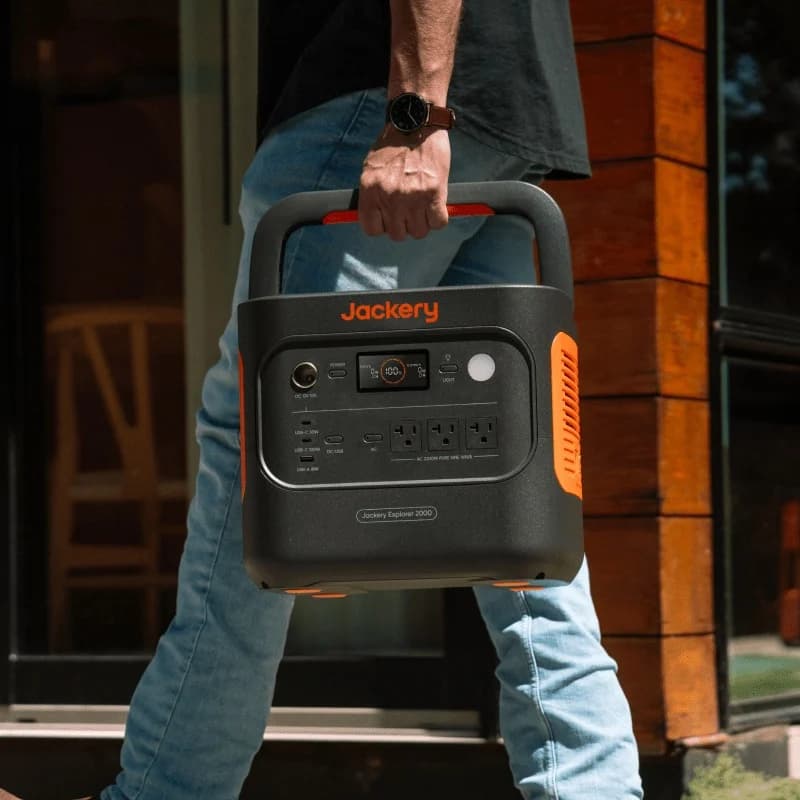
Compare Anker C2000 Gen 2 and Jackery 2000 v2 for fridge backup, carrying, expansion and solar. Get runtime estimates, complete kit checks and buying picks.