

Buying guide
NACS and J1772 Adapters: Which One Your EV Needs
J1772 to NACS or NACS to J1772? Match your car's port to the charger's plug, choose a UL 2252 adapter, and check which Supercharger adapter your automaker approves.
By thisWATT EditorialUpdated November 2, 202610 min read2 picks
Our picks at a glance
- See on Amazon1
Best J1772-to-NACS adapter
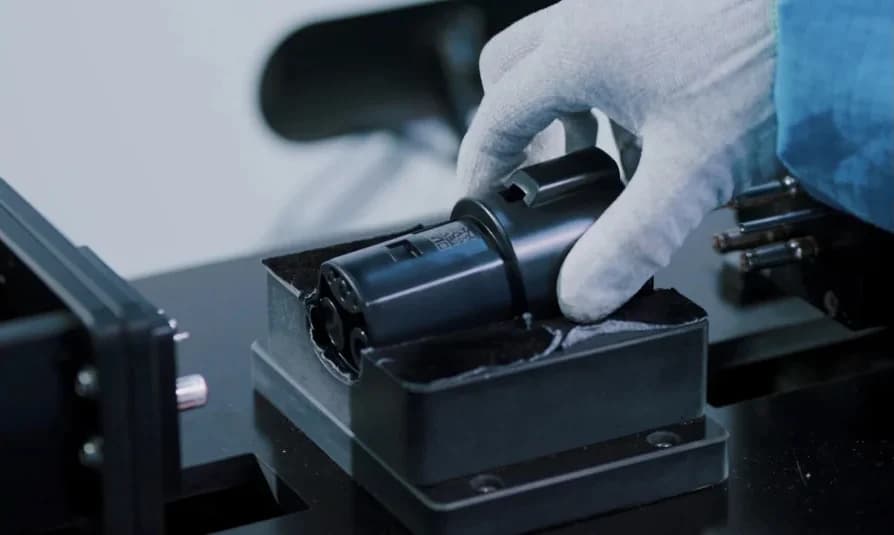
Lectron J1772 to Tesla (NACS) EV Adapter (80A, UL 2252)80A max · J1772 to NACS
- See on Amazon2
Best NACS-to-J1772 adapter
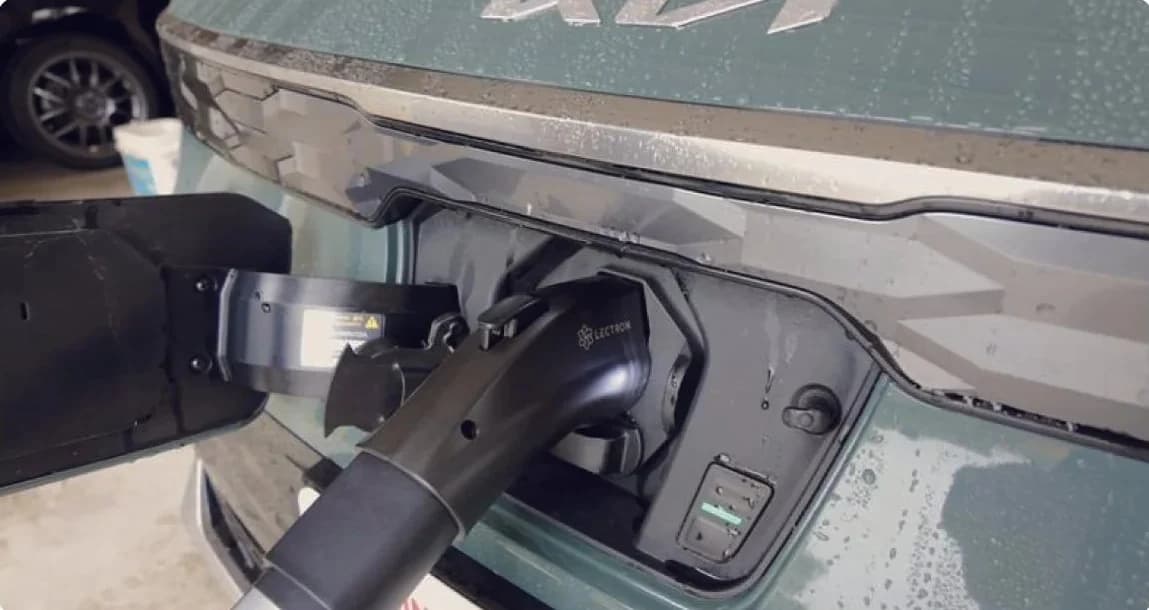
Lectron Tesla (NACS) to J1772 EV Adapter (80A, UL 2252)80A max · NACS to J1772
Adapters are named for the charger's plug first and your car's port second, so check both before you buy. If your car has a NACS (Tesla-style) port and the charger has a J1772 plug, you need a J1772-to-NACS adapter like Lectron's 80A UL 2252 model. If your car has a J1772 or CCS1 port and the charger is a Tesla Wall Connector or Destination Charger, you need the reverse, NACS-to-J1772. For fast charging at Tesla Superchargers, a car with a CCS1 port (the J1772 shape plus two large DC pins) needs a NACS DC adapter sold or provided by its automaker or by Tesla, or a Supercharger with Tesla's built-in adapter, which Tesla calls Magic Dock.
The search terms run both ways ("j1772 to tesla" and "tesla to j1772"), and buying the wrong direction is the most common mistake. This guide covers both AC directions, the DC fast-charging adapters automakers publish, and the safety standard to look for. Every rating comes from the maker's or automaker's own page, checked on November 1, 2026. We haven't lab-tested these adapters.
Which way does your adapter go?
Tap a label to explore. You can also hover or use your keyboard.
Scroll across to see every column
Bars start at zero and share a scale within each column.
Do not swap the pictured AC and DC adapters. Use an adapter your automaker supports and check compatible cars and sites in the relevant charging app.
Source notes14 references
Lectron’s J1772-to-NACS adapter connects a J1772 charging source to a Tesla or other NACS vehicle.
ev-lectron.com — source for Lectron’s J1772-to-NACS adapter connects a J1772 charging source to a Tesla or other NACS vehicle.Access J1772 chargers with Tesla & NACS EVs
That J1772-to-NACS adapter is not compatible with DC fast chargers or CCS stations.
ev-lectron.com — source for That J1772-to-NACS adapter is not compatible with DC fast chargers or CCS stations.not compatible with DC Fast Chargers or CCS stations
Lectron’s reverse adapter connects a Tesla/NACS source to a J1772 vehicle; its FAQ specifies AC charging sources.
ev-lectron.com — source for Lectron’s reverse adapter connects a Tesla/NACS source to a J1772 vehicle; its FAQ specifies AC charging sources.Unlock Tesla or North American Charging Standard (NACS) chargers for your J1772 EV.
That NACS-to-J1772 adapter does not work at Tesla Superchargers.
ev-lectron.com — source for That NACS-to-J1772 adapter does not work at Tesla Superchargers.not compatible with Tesla Superchargers
Rivian’s NACS DC Adapter converts a NACS DC charging source to a CCS vehicle port; the page specifies CCS1 in its vehicle-compatibility description.
gearshop.rivian.com — source for Rivian’s NACS DC Adapter converts a NACS DC charging source to a CCS vehicle port; the page specifies CCS1 in its vehicle-compatibility description.NACS DC charger to CCS vehicle port
Rivian identifies its adapter as an approved replacement part.
gearshop.rivian.com — source for Rivian identifies its adapter as an approved replacement part.Rivian approved replacement part
Rivian’s adapter is for compatible Tesla Superchargers, not unrestricted access to every site.
gearshop.rivian.com — source for Rivian’s adapter is for compatible Tesla Superchargers, not unrestricted access to every site.compatible Tesla Superchargers
Rivian expressly forbids using its DC adapter with an AC charger.
gearshop.rivian.com — source for Rivian expressly forbids using its DC adapter with an AC charger.Don't use it with an AC charger.
Hyundai’s native-NACS 2025 IONIQ 5 comes with a CCS adapter for public fast charging; its IONIQ 5 N exception is outside the native-NACS example.
owners.hyundaiusa.com — source for Hyundai’s native-NACS 2025 IONIQ 5 comes with a CCS adapter for public fast charging; its IONIQ 5 N exception is outside the native-NACS example.2025 IONIQ 5 owners with native NACS port will get a complimentary CCS adapter for public fast charging. NOTE: IONIQ 5 N vehicles do not have a native NACS port.
Hyundai explicitly says its fast-charging CCS adapter cannot be used with Level 1 or Level 2 J1772 AC charging.
owners.hyundaiusa.com — source for Hyundai explicitly says its fast-charging CCS adapter cannot be used with Level 1 or Level 2 J1772 AC charging.The L3 CCS adapter cannot be used with AC level 2 or level 1 J1772 inlets (as in home chargers). Do not attempt to use a J1772 AC level 2 charger with a CCS adapter.
Hyundai says charging stations that support its NACS adapter are marked in the app and can be filtered by connector type.
owners.hyundaiusa.com — source for Hyundai says charging stations that support its NACS adapter are marked in the app and can be filtered by connector type.Charging stations that support the NACS adapter will be marked within the app. You can filter the charging stations based on the type of connector in the app’s map feature.
Rivian explicitly identifies the vehicle port supported by this adapter as CCS1.
gearshop.rivian.com — source for Rivian explicitly identifies the vehicle port supported by this adapter as CCS1.CCS1 charge ports
Lectron’s reverse adapter FAQ explicitly identifies its Tesla charging sources as AC.
ev-lectron.com — source for Lectron’s reverse adapter FAQ explicitly identifies its Tesla charging sources as AC.Tesla AC charging sources
Hyundai’s North American compatibility table explicitly identifies its CCS vehicle-port variant as CCS1.
owners.hyundaiusa.com — source for Hyundai’s North American compatibility table explicitly identifies its CCS vehicle-port variant as CCS1.Ioniq 5 with CCS1 port
| Your car's port | The charger's plug | Adapter you need | Our pick |
|---|---|---|---|
| NACS (Teslas; the 2025 Hyundai IONIQ 5 except the IONIQ 5 N) | J1772 (most non-Tesla Level 2 chargers) | J1772-to-NACS (AC) | Lectron J1772 to NACS, 80A |
| J1772 or CCS1 | Tesla Wall Connector, Mobile Connector or Destination Charger | NACS-to-J1772 (AC) | Lectron NACS to J1772, 80A |
| CCS1 | Tesla Supercharger (sites open to your car) | NACS-to-CCS1 DC adapter from your automaker or Tesla | Your automaker's adapter |
| NACS | CCS1 fast charger (Electrify America, EVgo) | CCS1-to-NACS DC adapter | Hyundai includes one with the NACS IONIQ 5 |
How to read your own port: a CCS1 port is a J1772 inlet with two large DC pins beneath it (Hyundai's FAQ describes the top part as Level 1 and 2 and the bottom pins as Level 3). A NACS port is the smaller Tesla-style slot that handles both. When in doubt, the owner's manual names the port.
- Yes: J1772-to-NACS (AC): a NACS car at J1772 Level 1 and Level 2 chargers
- Yes: NACS-to-J1772 (AC): a J1772 car at Tesla Wall Connectors, Mobile Connectors and Destination Chargers
- No: Either AC adapter at a Supercharger or any DC fast charger
- No: A DC fast-charging adapter on an AC charger (Rivian and Hyundai both warn against it)
- Partly: A third-party DC adapter at a Supercharger: check your automaker's rules first
Best J1772-to-NACS adapter: Lectron J1772 to NACS (80A)
This is the adapter for a Tesla or other NACS-port car at the J1772 chargers that most homes, workplaces and public Level 2 sites use. Lectron rates it 80A at 240V AC (19.2kW) and certifies it to UL 2252, and it's IP67 with built-in temperature monitoring, per Lectron's product page. It works with SAE J1772 Level 1 and Level 2 chargers, but not with DC fast chargers or CCS stations.
Lectron
Lectron J1772 to Tesla (NACS) EV Adapter (80A, UL 2252)
An AC adapter that lets a Tesla or other NACS-port EV charge at J1772 Level 1 and Level 2 stations, rated 80A at 240V and certified to UL 2252.
Comes in 2 versions: see which to buy
- 80A max
- J1772 to NACS
80A is more than any home Level 2 charger in our Level 2 charger guide delivers (they top out at 50A), so the adapter won't be what limits your speed. In very hot conditions, Lectron says its safety system may reduce or pause charging; let the adapter and cable cool for about 30 minutes. Lectron also lists an older 80A version without "UL 2252 Certified" in its name, so make sure the listing says it.
Best NACS-to-J1772 adapter: Lectron Tesla to J1772 (80A)
This one goes the other way: it lets a car with a J1772 or CCS1 port charge from Tesla Wall Connectors, Mobile Connectors and Destination Chargers: Tesla's AC chargers at destinations like hotels, or in a Tesla owner's garage. Lectron rates it 80A at 240V AC, certified to UL 2252 and tested by SGS, with a temperature sensor and a snap-on tail cap, per Lectron's page. It doesn't work at Tesla Superchargers.
Lectron
Lectron Tesla (NACS) to J1772 EV Adapter (80A, UL 2252)
An AC adapter that lets a J1772-port EV charge from Tesla Wall Connectors, Mobile Connectors and Destination Chargers, rated 80A at 240V and certified to UL 2252.
Comes in 4 versions: see which to buy
- 80A max
- NACS to J1772
One inconsistency to know: Lectron's product bullets say IP67 and its FAQ says IP54, so we list both until Lectron settles it. A 48A version with a near-identical name also exists; the one to buy is the 80A UL 2252 model, in black or white.
Superchargers: use your automaker's DC adapter
Fast charging a CCS1 car at a Tesla Supercharger takes a NACS-to-CCS1 DC adapter, and here the automaker's rules matter more than the adapter's specs. Here's what three automakers say on their own pages:
| Automaker | What it says |
|---|---|
| Ford | A Fast Charging Adapter is required for Ford EVs at designated Tesla Superchargers. Ford sells a Ford-branded adapter that Lectron manufactures for it, and tells owners to "only use NACS DC adapters sold or provided by Ford or Tesla" at Superchargers, adding that "Tesla prohibits the use of any other adapter with Tesla charging stations." |
| Hyundai and Genesis | The 2025 IONIQ 5 has a native NACS port (the IONIQ 5 N doesn't) and comes with a CCS adapter for CCS-only networks. Eligible Hyundai and Genesis owners with CCS ports get access to NACS adapters for Tesla stations. Hyundai's IONIQ 5 table lists V3 and V4 Superchargers as compatible and V1 and V2 as not, and Hyundai says to use only adapters with CSA or UL certification. |
| Rivian | Sells a Rivian-approved NACS DC Adapter for 2022-2025 R1T and R1S (CCS1 port), rated 500A and 1,000V, for DC fast chargers only: "Don't use it with an AC charger." |
Some Supercharger sites also have Tesla's built-in "Magic Dock" CCS1 adapter at the post, which Hyundai's table lists as an option for CCS1 cars.
Third-party DC adapters exist. Lectron's own Vortex Plus is rated 500A at 1,000V DC, certified to UL 2252, with a dual interlock, for CCS1 cars approved for Supercharger access, and it doesn't work at V2 Superchargers or AC chargers (Lectron). But with Ford saying Tesla allows no other adapter at its stations, and Hyundai's warranty excluding damage from non-Hyundai accessories, we don't recommend a third-party adapter for Supercharging. Buy the one your automaker sells or provides.
What NACS (J3400) actually is
UL 2252 is the adapter standard to look for. UL Solutions describes UL 2252 as the Standard for Adapters for Use with Electric Vehicle Couplers. Both Lectron AC adapters here are certified to it, and Hyundai's guidance to use only CSA- or UL-certified adapters points the same way.
Speed, heat and the other traps
An adapter never adds speed. The charger's output and your car's onboard charger set the pace, and Lectron notes that actual speed also depends on battery state of charge and temperature. An 80A adapter simply stays out of the way of a 40A or 48A home charger.
Direction is the classic mistake. "J1772 to Tesla" and "Tesla to J1772" are different products. Check both ends before you order.
AC and DC adapters aren't interchangeable. Rivian says to use its NACS DC adapter "with DC fast chargers only," and Hyundai says its DC adapter can't be used with AC Level 1 or 2 J1772 inlets such as home chargers.
Old Superchargers may not work. Hyundai's IONIQ 5 table marks V1 and V2 Superchargers as incompatible, and Lectron's Vortex Plus excludes V2 sites. Your automaker's app or the Tesla app shows which stations support your car.
Store it in the car. Lectron says you can leave an adapter on a charger but recommends removing it and storing it in the vehicle to prevent theft, accidental damage and weather wear.
How we choose
We picked AC adapters rated well above the chargers in our Level 2 guide (80A against a 50A maximum), certified to UL 2252, from a maker that publishes its ratings and water protection. Where a page contradicts itself (Lectron's two water ratings), we show both. For DC fast charging, we quote the automakers' own pages rather than recommend a product, because the automaker decides which adapter it supports. We checked Lectron against the US Consumer Product Safety Commission's recall database on November 1, 2026 and found no recall. We haven't lab-tested these adapters. We earn a commission on qualifying purchases through our links; it never decides a pick (disclosure).
Verdict
For a Tesla or other NACS car at J1772 chargers, get the Lectron J1772 to NACS adapter (80A, UL 2252). For a J1772 or CCS1 car at Tesla's AC chargers, get the Lectron Tesla to J1772 adapter (80A, UL 2252). For Superchargers, use the DC adapter your automaker sells or provides. Setting up charging at home? Our Level 2 charger guide sizes the charger to your circuit, and our home battery backup guide covers keeping the house running when the grid goes down.
Frequently asked questions
Do I need a J1772 to Tesla adapter or a Tesla to J1772 adapter?
Adapters are named charger plug first, car port second. A J1772-to-Tesla (NACS) adapter puts a J1772 charger's plug into a Tesla or other NACS-port car. A Tesla (NACS)-to-J1772 adapter puts a Tesla charger's plug into a car with a J1772 or CCS1 port. Look at your car's charge port, then at the charger's plug, and buy the adapter that goes from the second to the first.
What is NACS?
NACS is the Tesla-style charging connector, standardized by SAE International as J3400, "North American Charging System (NACS) for Electric Vehicles." The same plug carries home AC charging and DC fast charging through two current-carrying contacts. J1772 is the older AC plug most non-Tesla EVs and home chargers use; CCS1 adds two DC pins below it for fast charging.
Can I use a J1772 adapter at a Tesla Supercharger?
No. The J1772 adapters in this guide are AC adapters for Level 1 and Level 2 charging. Lectron says its J1772-to-NACS adapter isn't compatible with DC fast chargers, and its NACS-to-J1772 adapter doesn't work at Superchargers. A CCS1 car needs a NACS DC adapter sold or provided by its automaker or by Tesla, and only at compatible Superchargers.
Is it safe to use a third-party adapter at a Supercharger?
Check your automaker first. Ford tells owners to use only NACS DC adapters sold or provided by Ford or Tesla at Superchargers, and says Tesla prohibits any other adapter at its stations. Hyundai says to use only adapters with CSA or UL certification and that its warranty won't cover damage caused by non-Hyundai accessories. For Supercharging, the automaker's own adapter is the safe choice.
Will an adapter slow down my charging?
Not if it's rated above the charger. Both Lectron AC adapters here are rated 80A at 240V, more than any charger in our Level 2 guide delivers, so the charger or the car's onboard charger sets the speed. Lectron notes that actual speed depends on your vehicle, battery state of charge, temperature and station output, and its adapters may slow or pause charging when they get hot.