

Best picks
Best Level 2 EV Chargers for Home (NACS and J1772) in 2026
Choose a home EV charger by your car's port, your circuit and your plug: 40A plug-in vs 48A hardwired, NACS or J1772, the GFCI trap, and the end of the 30C credit.
By thisWATT EditorialUpdated November 2, 202615 min read4 picks
Our picks at a glance
- See on Amazon1
Best overall for Tesla and NACS cars
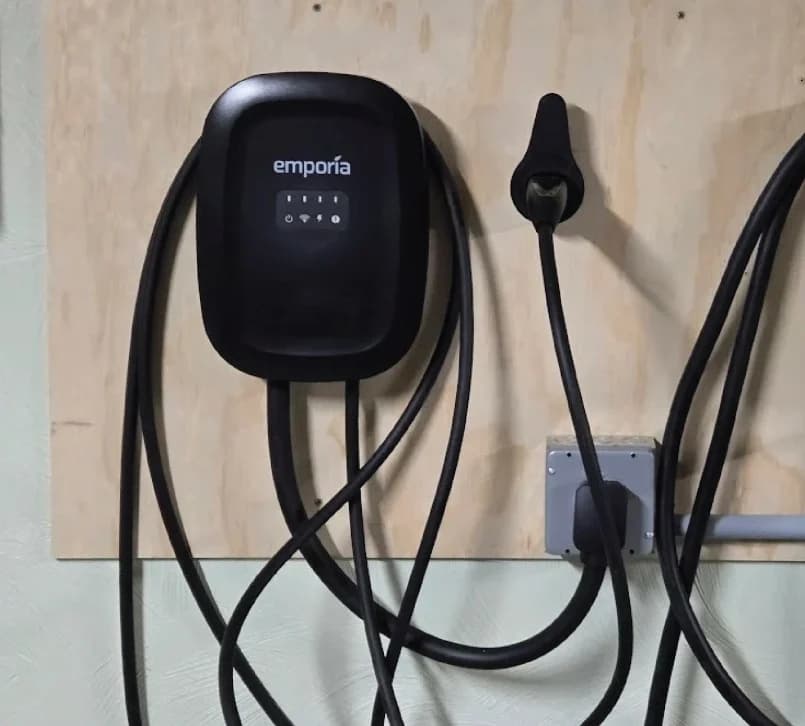
Emporia Classic Level 2 EV Charger (NACS, 48A)48A max · 11.5 kW max · NACS (J3400)
- See on Amazon2
Best for a full electrical panel
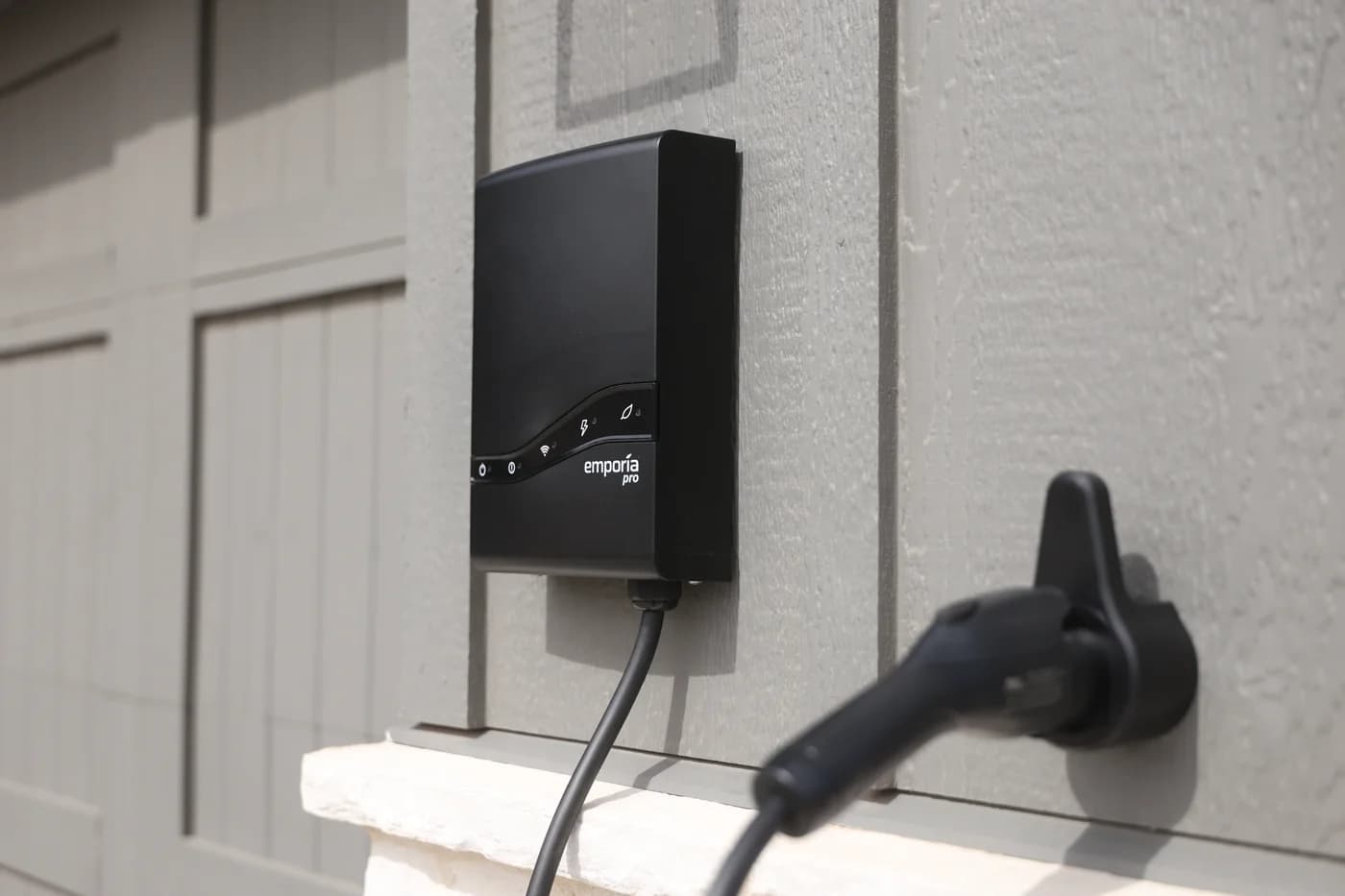
Emporia Pro Level 2 EV Charger (J1772, 48A)48A max · 11.5 kW max · J1772
- See on Amazon3
Best app-free charger
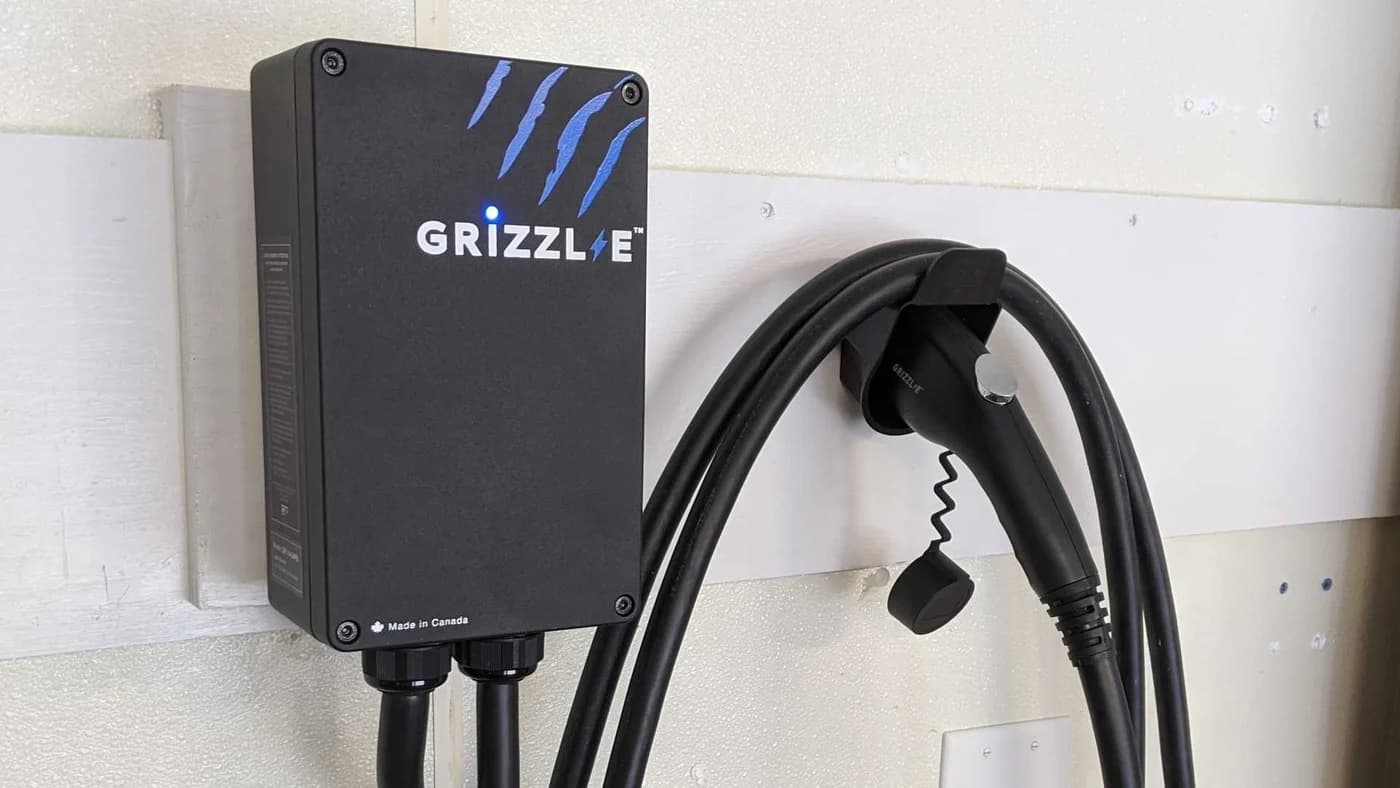
Grizzl-E Classic 40A Level 2 EV Charger (J1772, NEMA 14-50)40A max · 9.6 kW max · J1772
- See on Amazon4
App-free alternative
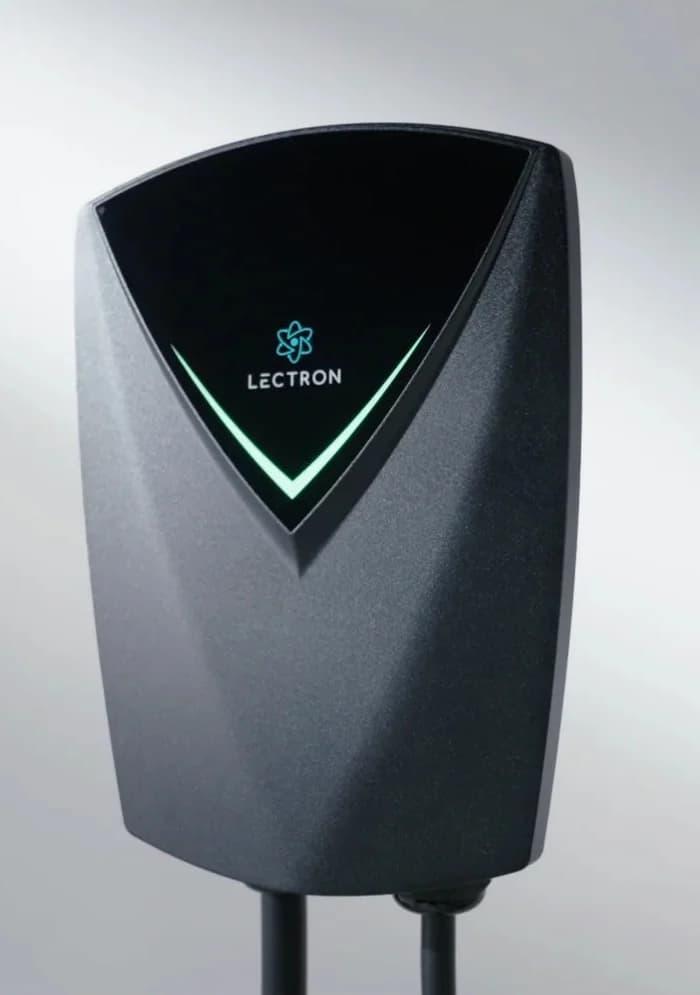
Lectron NEXUS Level 2 EV Charger (J1772, 40A, NEMA 14-50)40A max · 9.6 kW max · J1772
Choose a Level 2 charger by your car's port, your circuit and your plug, not by a lab test. For most homes the Emporia Classic is the pick: up to 48A (about 11.5kW) when hardwired or 40A on a NEMA 14-50 plug, ENERGY STAR certified and listed to UL 2594, in J1772 or NACS versions. If your electrical panel has little spare capacity, the Emporia Pro adds load management, which holds charging to the power your panel can spare, and for the widest range of circuits, the ChargePoint Home Flex adjusts from 16A to 50A.
Two things cap any home charger: your car's onboard charger and your circuit. EV charging is a continuous load, so the circuit is rated at 125% of the charging current, and ChargePoint's installation guide pairs a 50A circuit with 40A charging (plug-in or hardwired) and a 60A circuit with 48A (hardwired only). Specs come from the makers' pages and install guides, checked on November 1, 2026. We haven't lab-tested these chargers, and installing one is a licensed electrician's job.
- 40AMost a NEMA 14-50 plug-in charger here delivers (on a 50A circuit)
- 48ANeeds a 60A circuit and hardwiring for these chargers
- June 30, 2026Last day a home charger could be placed in service for the federal 30C credit (IRS)
Quick picks
| Charger | Connector | Max current | Install options | Cable | Smart features |
|---|---|---|---|---|---|
| Emporia Classic | J1772 or NACS | 48A (11.5kW) | NEMA 14-50 plug (40A) or hardwired (48A) | 25 ft | Wi-Fi app, scheduling |
| Emporia Pro | J1772 or NACS | 48A (11.5kW) | NEMA 14-50 plug (40A) or hardwired (48A) | 24-25 ft (sources differ) | Wi-Fi app, Vue 3 load management included |
| ChargePoint Home Flex | J1772 (NACS sold separately) | 50A (12kW) | NEMA 14-50 or 6-50 plug (40A) or hardwired | 23 ft | Wi-Fi app, adjustable 16-50A |
| Grizzl-E Classic 40A | J1772 | 40A (9.6kW) | NEMA 14-50 plug (6-50 also offered) | 24 ft | None |
| Lectron NEXUS 40A | J1772 | 40A (9.6kW) | NEMA 14-50 plug (48A hardwired version sold separately) | 23 ft | None |
Best overall: Emporia Classic (J1772 or NACS)
The Emporia Classic covers the most homes with the fewest compromises. It charges at up to 48A (11.5kW at 240V) when hardwired, or 40A (9.6kW) on its NEMA 14-50 plug, per Emporia's product page and spec sheet. It's ENERGY STAR certified and listed to UL 2594, the standard for electric vehicle supply equipment (file E528156), and its watertight NEMA Type 4 enclosure is rated for indoor or outdoor use from -22°F to 122°F. The 25-ft cable reaches across most garages, and the app schedules charging around your utility's rates over 2.4GHz Wi-Fi.
Emporia specifies a dedicated 50A or larger double-pole breaker for 40A charging and a 60A or larger one for 48A. Emporia says its PowerSmart load management can be added to the Classic for an extra cost; the Pro below includes it, with a Vue monitor in the box that an electrician installs in your panel. The warranty is 3 years.
Emporia
Emporia Classic Level 2 EV Charger (NACS, 48A)
A 48A (11.5kW) ENERGY STAR smart Level 2 home charger with a NACS (SAE J3400) connector that opens the Tesla charge port, a 25-ft cable and NEMA Type 4 enclosure.
- 48A max
- 11.5 kW max
- NACS (J3400)
The NACS version is the same charger with a SAE J3400 connector for Teslas and other NACS-port cars, and Emporia's spec sheet says it has a built-in UHF sensor that opens the Tesla charge port.
See the Emporia Classic (NACS) on Amazon
Best for a full electrical panel: Emporia Pro
Emporia
Emporia Pro Level 2 EV Charger (J1772, 48A)
A 48A (11.5kW) smart Level 2 home charger with a J1772 connector and a 24- or 25-ft cable (Emporia's sources differ) that comes with Emporia's Vue 3 panel monitor for PowerSmart load balancing.
- 48A max
- 11.5 kW max
- J1772
If an electrician tells you your panel is close to its limit, the Emporia Pro is the charger to ask about. It comes with Emporia's Vue 3 home energy monitor, two 200A current sensors that sit in your panel, and its PowerSmart feature limits charging to the panel's spare capacity. Emporia says this can avoid a panel upgrade; your electrician makes that call. Charging power matches the Classic: 48A hardwired with a 3-ft conduit, or 40A on a NEMA 14-50 plug with a 28-inch cord, per Emporia.
The Vue 3 install happens inside the electrical panel, so it's electrician work even with the plug-in version. Emporia lists the standards it's built to, including NEC 625, SAE J1772, SAE J3400 and UL 2594, and gives a 3-year warranty. It comes in white or black, with a J1772 or NACS connector.
See the Emporia Pro (J1772) on Amazon · See the Emporia Pro (NACS) on Amazon
Most adjustable: ChargePoint Home Flex
The Home Flex fits more circuits than any other charger here. You set its current in the ChargePoint app to 16, 24, 32, 40, 48 or 50A, so it works on circuits from 20A to 80A, and at 50A hardwired it delivers up to 12kW. It's UL and cUL listed (to UL 2594 and UL 2231) and ENERGY STAR certified, its enclosure is rated Type 3R, and ChargePoint's datasheet gives an operating range of -22°F to 122°F. It ships with a 23-ft J1772 cable; a NACS version is sold separately. ChargePoint's installation guide is also the clearest on circuit sizing, which is why its table anchors this page.
ChargePoint "recommends hardwiring for optimal performance," and its plug-in versions (NEMA 14-50 or 6-50) are limited to 40A, or 32A on a 40A circuit. Smart features and amperage changes run through the app over Wi-Fi. The warranty is 3 years.
See the ChargePoint Home Flex at ChargePoint
Best app-free charger: Grizzl-E Classic 40A
The Grizzl-E Classic is for people who want a charger, not an app. It has no internet connection at all, a 40A maximum (9.6kW at 240V) and switchable current limits of 40, 32, 24 or 16A for smaller circuits. It plugs into a NEMA 14-50 outlet (a 6-50 version is also offered), and its aluminum UL Type 4 enclosure is rated from -22°F to 122°F, per United Chargers. It's UL listed (file E510712) and ENERGY STAR certified, and it's made in Canada.
Grizzl-E
Grizzl-E Classic 40A Level 2 EV Charger (J1772, NEMA 14-50)
A non-smart, 40A Level 2 home charger in an aluminum UL Type 4 enclosure with a 24-ft J1772 cable, a NEMA 14-50 plug and switchable current limits, made in Canada by United Chargers.
Comes in 7 versions: see which to buy
- 40A max
- 9.6 kW max
- J1772
The cable is 24 ft by the user manual and the model code (GR1-14-24-PB), though the US product page says 25 ft. There's no 48A version of the Classic and no scheduling; Grizzl-E's Classic Connect adds Wi-Fi. The warranty is 3 years, with a 5-year option at purchase.
App-free alternative: Lectron NEXUS 40A
Lectron's NEXUS is the other simple plug-in: 40A at 240V (9.6kW) from a NEMA 14-50 outlet, an IP66 enclosure for indoor or outdoor use and a 23-ft J1772 cable, per Lectron. Lectron says it's ETL listed to UL 2594, UL 2231, UL 2251 and UL 817 and ENERGY STAR certified, with a 3-year warranty. A hardwired 48A NEXUS is sold separately, and the NEXUS Pro adds app control.
Lectron
Lectron NEXUS Level 2 EV Charger (J1772, 40A, NEMA 14-50)
A 40A (9.6kW) plug-in Level 2 home charger with a NEMA 14-50 plug, a 23-ft J1772 cable and an IP66 enclosure, ETL-listed to UL 2594, UL 2231 and UL 2251.
Comes in 4 versions: see which to buy
- 40A max
- 9.6 kW max
- J1772
Lectron's copy says the plug-in version needs no electrician. Plugging it into an existing NEMA 14-50 outlet takes no tools, but have an electrician confirm the outlet and circuit suit continuous EV charging, and adding a new 240V circuit and outlet is a licensed electrician's job.
How much charger do you need?
Your car sets the ceiling. A charger can't push more than the car's onboard charger accepts. Lectron notes that actual speed "depends on your vehicle's capabilities, battery state of charge, and temperature." Check your car's maximum AC charging rate in its manual before paying for 48A.
Your circuit sets the rest. ChargePoint's install guide says the charger "is a continuous load device. The circuit must be rated for 125% of the maximum load." Its installation-guide table stops at 70A; ChargePoint's product page lists hardwired support up to 80A:
Tap a label to explore. You can also hover or use your keyboard.
Scroll across to see every column
| Option | Plug-in | Hardwire |
|---|---|---|
20 A circuit16 A max chargingHardwire only for this Home Flex circuit setting. Sources: 2: The Home Flex table pairs a 20 A circuit with 16 A maximum charging: Hardwire only. | NoNot allowed at this setting. | YesConfigure for 16 A maximum charging. |
30 A circuit24 A max chargingHardwire only for this Home Flex circuit setting. Sources: 3: The Home Flex table pairs a 30 A circuit with 24 A maximum charging: Hardwire only. | NoNot allowed at this setting. | YesConfigure for 24 A maximum charging. |
40 A circuit32 A max chargingPlug-in or hardwire outside Canada; Canada allows plug-in only on a 50 A circuit. Sources: 4: The Home Flex table pairs a 40 A circuit with 32 A maximum charging: Plug-in or hardwire; see Canada note., 8: Home Flex plug-in installation in Canada is allowed only on a 50 A circuit. | DependsCanada: use a 50 A circuit. | YesConfigure for 32 A maximum charging. |
50 A circuit40 A max chargingPlug-in or hardwire for this Home Flex circuit setting. Sources: 5: The Home Flex table pairs a 50 A circuit with 40 A maximum charging: Plug-in or hardwire. | YesAllowed on this circuit size. | YesConfigure for 40 A maximum charging. |
60 A circuit48 A max chargingHardwire only for this Home Flex circuit setting. Sources: 6: The Home Flex table pairs a 60 A circuit with 48 A maximum charging: Hardwire only. | NoNot allowed at this setting. | YesConfigure for 48 A maximum charging. |
70 A circuit50 A max chargingHardwire only for this Home Flex circuit setting. Sources: 7: The Home Flex table pairs a 70 A circuit with 50 A maximum charging: Hardwire only., 1: Home Flex is a continuous load and its circuit must be sized for at least 125% of the maximum load., 8: Home Flex plug-in installation in Canada is allowed only on a 50 A circuit., 9: Home Flex current must be set to match the circuit and available panel capacity; the receptacle does not set it automatically., 10: The electrician sets maximum current in the ChargePoint Installer app; the owner separately activates the charger. | NoNot allowed at this setting. | YesConfigure for 50 A maximum charging. |
Home Flex instructions only; other chargers can differ. In Canada, plug-in requires a 50 A circuit; the electrician sets maximum current in the ChargePoint Installer app to match the circuit and available panel capacity.
Source notes10 references
Home Flex is a continuous load and its circuit must be sized for at least 125% of the maximum load.
docs.chargepoint.com — source for Home Flex is a continuous load and its circuit must be sized for at least 125% of the maximum load.Home Flex is a continuous load device. The circuit must be rated for 125% of the maximum load.
The Home Flex table pairs a 20 A circuit with 16 A maximum charging: Hardwire only.
docs.chargepoint.com — source for The Home Flex table pairs a 20 A circuit with 16 A maximum charging: Hardwire only.20 A 16 A 12 miles/19 km no yes
The Home Flex table pairs a 30 A circuit with 24 A maximum charging: Hardwire only.
docs.chargepoint.com — source for The Home Flex table pairs a 30 A circuit with 24 A maximum charging: Hardwire only.30 A 24 A 18 miles/29 km no yes
The Home Flex table pairs a 40 A circuit with 32 A maximum charging: Plug-in or hardwire; see Canada note.
docs.chargepoint.com — source for The Home Flex table pairs a 40 A circuit with 32 A maximum charging: Plug-in or hardwire; see Canada note.40 A 32 A 25 miles/40 km yes yes
The Home Flex table pairs a 50 A circuit with 40 A maximum charging: Plug-in or hardwire.
docs.chargepoint.com — source for The Home Flex table pairs a 50 A circuit with 40 A maximum charging: Plug-in or hardwire.50 A 40 A 30 miles/48 km yes yes
The Home Flex table pairs a 60 A circuit with 48 A maximum charging: Hardwire only.
docs.chargepoint.com — source for The Home Flex table pairs a 60 A circuit with 48 A maximum charging: Hardwire only.60 A 48 A 36 miles/58 km no yes
The Home Flex table pairs a 70 A circuit with 50 A maximum charging: Hardwire only.
docs.chargepoint.com — source for The Home Flex table pairs a 70 A circuit with 50 A maximum charging: Hardwire only.70 A 50 A 37 miles/60 km no yes
Home Flex plug-in installation in Canada is allowed only on a 50 A circuit.
docs.chargepoint.com — source for Home Flex plug-in installation in Canada is allowed only on a 50 A circuit.In Canada, a plug-in installation is only allowed with a 50 A circuit.
Home Flex current must be set to match the circuit and available panel capacity; the receptacle does not set it automatically.
docs.chargepoint.com — source for Home Flex current must be set to match the circuit and available panel capacity; the receptacle does not set it automatically.Home Flex must be set to match the rating of the circuit as determined by the available panel capacity.
The electrician sets maximum current in the ChargePoint Installer app; the owner separately activates the charger.
docs.chargepoint.com — source for The electrician sets maximum current in the ChargePoint Installer app; the owner separately activates the charger.The electrician sets the maximum current by using the ChargePoint Installer app, but the homeowner must activate the station and complete the set up using the ChargePoint driver app.
| Circuit breaker | Max charging current | Plug-in allowed? | ChargePoint's estimate |
|---|---|---|---|
| 70A | 50A | No, hardwire only | 37 miles of range per hour |
| 60A | 48A | No, hardwire only | 36 miles per hour |
| 50A | 40A | Yes | 30 miles per hour |
| 40A | 32A | Yes | 25 miles per hour |
| 30A | 24A | No, hardwire only | 18 miles per hour |
| 20A | 16A | No, hardwire only | 12 miles per hour |
Miles per hour for your car (estimate). Charging power in kW is amps × 240 ÷ 1,000. Divide by your car's EPA consumption in kWh per 100 miles, which fueleconomy.gov defines as "how many kilowatt-hours the vehicle would use to travel 100 miles," and multiply by 100. These are upper bounds: the car's onboard charger, temperature and battery level can all lower them.
| Charging current | kW | 2026 Tesla Model Y LR AWD (27.5 kWh/100 mi) | 2026 Hyundai IONIQ 5 RWD (30.0) | 2026 Ford Mustang Mach-E AWD Ext. (32.3) | 2026 Rivian R1T Dual Large (42.9) |
|---|---|---|---|---|---|
| 16A | 3.8 | 14 mph | 13 | 12 | 9 |
| 32A | 7.7 | 28 | 26 | 24 | 18 |
| 40A | 9.6 | 35 | 32 | 30 | 22 |
| 48A | 11.5 | 42 | 38 | 36 | 27 |
| Level 1 (120V, 12A) | 1.4 | 5 | 5 | 4 | 3 |
"mph" here means miles of range added per hour of charging. The ratings are fueleconomy.gov's combined figures for those 2026 models.
Plug-in or hardwired?
Every charger here comes as a NEMA 14-50 plug-in, and all of them limit the plug-in version to 40A. Hardwiring unlocks 48A (Emporia) or 50A (ChargePoint) on a bigger circuit, and ChargePoint recommends it in any case. For a plug-in, ChargePoint's guide calls for an industrial-grade NEMA 14-50 or 6-50 outlet, and Emporia says the outlet "must be industrial-grade and rated for continuous duty at 50A," adding that a standard residential-grade outlet isn't suitable for daily EV charging. In Canada, ChargePoint says a plug-in installation is only allowed on a 50A circuit; Canadian readers should check the Canadian Electrical Code and their utility.
Tap a label to explore. You can also hover or use your keyboard.
Wall connectionChoose NEMA 14-50 plug-in or hardwire
Emporia offers the Classic in either supply configuration; choosing the wall connection does not choose the connector for the car.
Sources: 1: The Emporia Classic is offered in NEMA 14-50 plug-in and hardwired configurations., 2: The Emporia Classic also has a separate choice of two car-connector types.- Chosen wall supply
Home chargerExample: Emporia Classic · AC Level 2
The Classic is offered with a choice of car connectors, separate from its wall configuration.
Sources: 2: The Emporia Classic also has a separate choice of two car-connector types., 3: J1772 is an AC car connector used for Level 1 and Level 2 charging; the maker groups its J1772 offering under a J1772 / CCS heading., 4: NACS is also called SAE J3400 and the connector standard supports AC Level 2 and DC fast charging; this pictured home product is an AC Level 2 charger. - Chosen car connector
Matching car inletChoose J1772 or NACS / SAE J3400
For a direct AC connection, match a J1772 connector to a J1772 car inlet, or a NACS connector to a NACS inlet. Choose the version that matches your car.
Sources: 3: J1772 is an AC car connector used for Level 1 and Level 2 charging; the maker groups its J1772 offering under a J1772 / CCS heading., 4: NACS is also called SAE J3400 and the connector standard supports AC Level 2 and DC fast charging; this pictured home product is an AC Level 2 charger., 5: Emporia tells the buyer to choose the car’s connector style.
Choose one wall configuration and one car-connector version. NACS also supports DC fast charging as a standard; this home charger supplies AC.
Source notes5 references
The Emporia Classic is offered in NEMA 14-50 plug-in and hardwired configurations.
shop.emporiaenergy.com — source for The Emporia Classic is offered in NEMA 14-50 plug-in and hardwired configurations.Charger Configuration NEMA 14-50 Hardwire
The Emporia Classic also has a separate choice of two car-connector types.
shop.emporiaenergy.com — source for The Emporia Classic also has a separate choice of two car-connector types.The Emporia Classic EV Charger comes in one of two connector types to support all EVs:
J1772 is an AC car connector used for Level 1 and Level 2 charging; the maker groups its J1772 offering under a J1772 / CCS heading.
shop.emporiaenergy.com — source for J1772 is an AC car connector used for Level 1 and Level 2 charging; the maker groups its J1772 offering under a J1772 / CCS heading.J1772 / CCS: The standard connector for most electric vehicles in North America. This connector is used for Level 1 (120 volt) and Level 2 (240 volt) AC charging.
NACS is also called SAE J3400 and the connector standard supports AC Level 2 and DC fast charging; this pictured home product is an AC Level 2 charger.
shop.emporiaenergy.com — source for NACS is also called SAE J3400 and the connector standard supports AC Level 2 and DC fast charging; this pictured home product is an AC Level 2 charger.Also referred to as SAE J3400, it is compatible with both AC Level 2 and DC fast charging.
Emporia tells the buyer to choose the car’s connector style.
shop.emporiaenergy.com — source for Emporia tells the buyer to choose the car’s connector style.NACS/Tesla and J1772 Options: Compatible with all EVs - just choose your car's connector style.
NACS or J1772?
Buy the connector your car has. Teslas and some newer models, such as the 2025 Hyundai IONIQ 5, have NACS (SAE J3400) ports; many other EVs have J1772 (with CCS1 for fast charging). The Emporia Classic and Pro come in both, and ChargePoint sells a NACS Home Flex. With a mixed household or a car you'll replace soon, a J1772 charger plus a UL 2252 adapter covers both: our NACS and J1772 adapter guide shows which direction you need.
The federal tax credit has ended
The IRS says the 30C credit covers home charging property placed in service "from January 1, 2023, to June 30, 2026," and only in eligible census tracts. A charger installed after June 30, 2026 doesn't qualify, whatever older articles say. Check your state and utility for their own programs.
How we choose
We picked chargers from established makers that publish full installation guides, circuit requirements and a safety listing from a nationally recognized lab (UL or ETL), then matched them to the common US circuits: 50A for 40A plug-ins and 60A for 48A hardwired. We favoured ENERGY STAR certified models and outdoor-rated enclosures. Where a maker's page contradicts its manual (Grizzl-E's cable length), we use the manual and say so. We checked each maker against the US Consumer Product Safety Commission's recall database on November 1, 2026 and found no charger recalls. We haven't lab-tested these chargers, and we never give wiring instructions. We earn a commission on qualifying purchases through our links; it never decides a pick (disclosure).
Verdict
For most homes, get the Emporia Classic in your car's connector: 48A hardwired or 40A plug-in, ENERGY STAR and UL 2594. Choose the Emporia Pro when your panel is tight, the ChargePoint Home Flex when your circuit is unusual or might change, and the Grizzl-E Classic 40A or Lectron NEXUS if you'd rather have no app at all. Whatever you buy, size it to your car's onboard charger and your circuit, and have a licensed electrician do the install. If you also want backup power for outages, see our home battery backup guide.
Frequently asked questions
Do I need a 40 amp or 48 amp EV charger?
It depends on your circuit and your car. EV charging is a continuous load, so the circuit must be rated for 125% of the charger's current: 40A charging needs a 50A circuit, and 48A needs a 60A circuit and, for the chargers here, hardwiring. A 48A charger only helps if your car's onboard charger accepts that much, so check its maximum AC charging rate in the owner's manual first.
Can a Level 2 charger plug into a NEMA 14-50 outlet?
Yes, and every charger here offers a NEMA 14-50 plug-in version, but plug-in models top out at 40A on a 50A circuit. ChargePoint's install guide calls for an industrial-grade NEMA 14-50 or 6-50 outlet, and both ChargePoint and Emporia recommend hardwiring if local code requires a GFCI breaker for a plug-in circuit. Have a licensed electrician check the circuit and outlet.
Is there still a federal tax credit for home EV chargers?
Not for chargers installed now. The IRS page for the Alternative Fuel Vehicle Refueling Property Credit (30C) covers property placed in service at your main home from January 1, 2023, to June 30, 2026, and only in eligible census tracts. A charger placed in service after June 30, 2026 doesn't qualify. Some states and utilities run their own programs, so ask yours.
How much faster is Level 2 than Level 1 charging?
Several times faster. A standard 120V outlet at 12A supplies about 1.4kW, roughly 4 to 5 miles of range per hour for an efficient EV by our arithmetic from EPA ratings. A Level 2 charger at 40A supplies 9.6kW, roughly 30 to 35 miles per hour for the same cars. ChargePoint's own estimate for 40A is 30 miles per hour. Your car's onboard charger sets the real ceiling.
Does a Tesla need a NACS charger?
No, but it's simpler. A Tesla or other NACS-port car can use a NACS charger directly, or any J1772 charger with a J1772-to-NACS adapter such as Lectron's 80A UL 2252 model. Both Emporia models here come in a NACS version, and Emporia says the Classic's NACS connector has a sensor that opens the Tesla charge port.