

Best picks
Battery Backup for Pellet Stoves
Picks, Runtime and Safe Shutdown
Choose a pellet stove battery backup that covers ignition, fans and shutdown. Compare pure sine power stations, transfer times and realistic runtime estimates.
By thisWATT EditorialUpdated November 2, 20268 min read2 picks
Our recommendation: EcoFlow DELTA 3 Plus
1,024 Wh of storage and 1,800 W continuous AC output in one expandable station.
Limit: The IP65 rating covers the battery pack only; the complete station is not weatherproof.
On this page · Our picks at a glance
Our picks at a glance
- 1
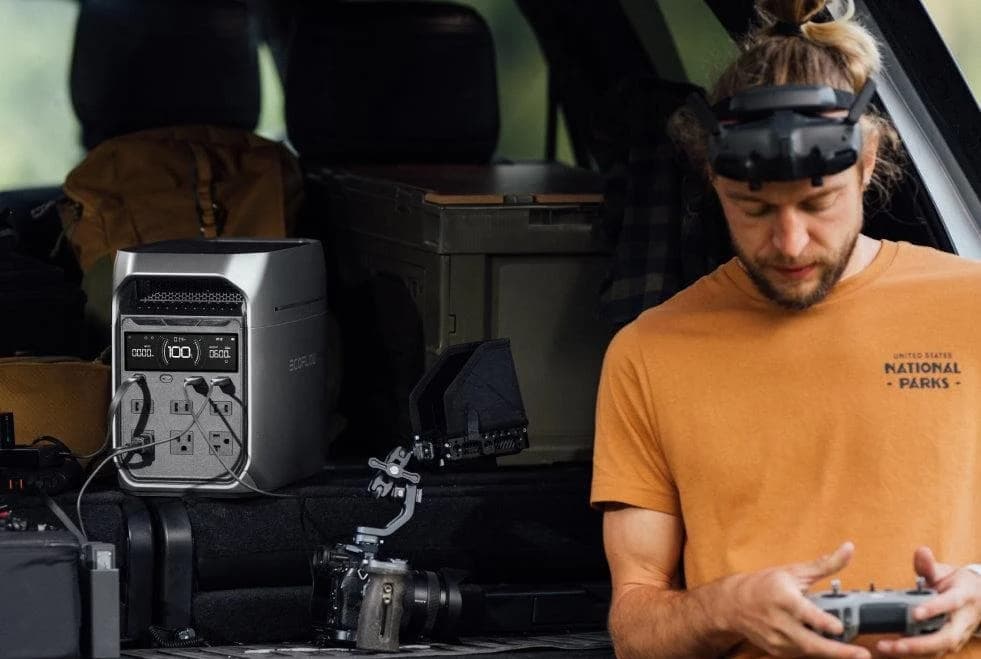
Choose for: 1,024 Wh of storage and 1,800 W continuous AC output in one expandable station.
Limit: The IP65 rating covers the battery pack only; the complete station is not weatherproof.
- 2
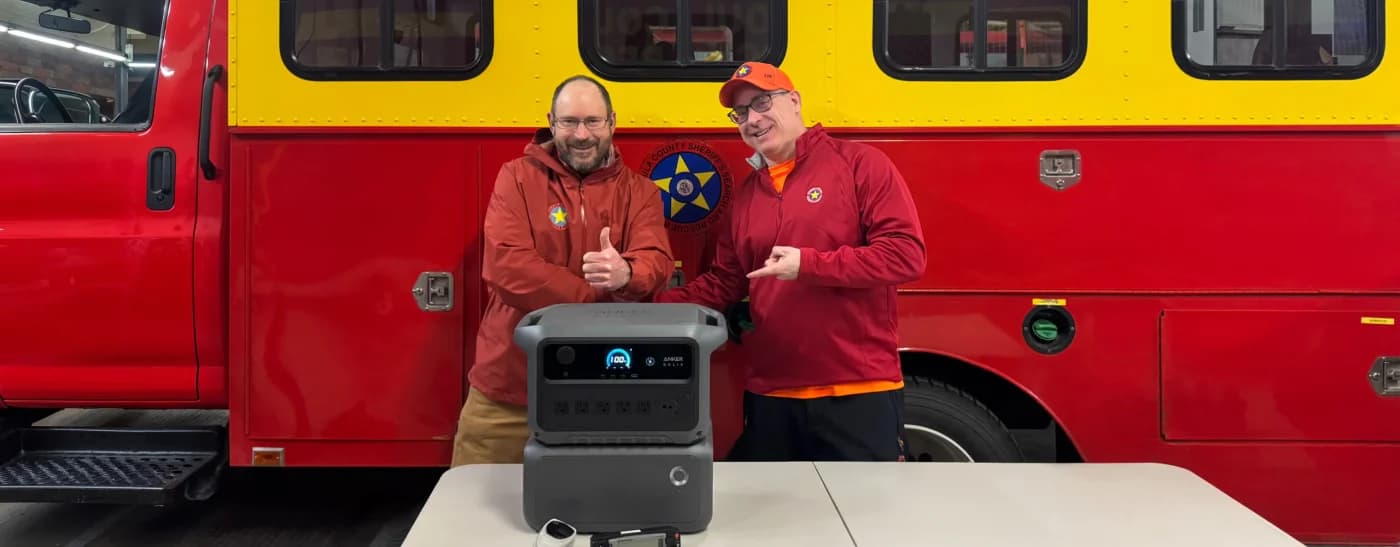
Choose for: More stored energy with an option to add a battery.
Limit: Expansion stops at one extra battery, for 4,096 Wh total.
For a pellet stove whose maker permits a general-purpose pure sine backup, start with the EcoFlow DELTA 3 Plus: 1,024Wh, 1,800W AC and a documented 10 ms transfer. Choose the Anker SOLIX C2000 Gen 2, with 2,048Wh, for longer outages; even that is only roughly eight hours at a steady 200W under the assumptions below. Harman owners should check the approved-backup guidance first: keeping a stove running and making it shut down automatically are different jobs.
Quick picks and comparison
Compare specifications and all conditions
EcoFlow DELTA 3 Plus — shorter outages
- Capacity
- 1,024Wh
- Continuous AC / published peak
- 1,800W / 3,600W
- Waveform; transfer
- Pure sine; 10 ms in manual
All specifications
- Main buying decision
- Expandable; do the runtime calculation before buying for overnight heat
Anker SOLIX C2000 Gen 2 — longer outages
- Capacity
- 2,048Wh
- Continuous AC / published peak
- 2,400W / 4,000W
- Waveform; transfer
- Pure sine; 10 ms
All specifications
- Main buying decision
- Add the matching BP2000 Gen 2 for 4,096Wh total
Anker SOLIX S2000 — lighter alternative
- Capacity
- 2,010Wh
- Continuous AC / published peak
- 1,500W / 3,000W
- Waveform; transfer
- Pure sine; 10 ms in comparison table
All specifications
- Main buying decision
- 35.7 lb, but no battery expansion
Full comparison table
Swipe to compare. Row labels stay visible.
| Choice | Capacity | Continuous AC / published peak | Waveform; transfer | Main buying decision |
|---|---|---|---|---|
| EcoFlow DELTA 3 Plus — shorter outages | 1,024Wh | 1,800W / 3,600W | Pure sine; 10 ms in manual | Expandable; do the runtime calculation before buying for overnight heat |
| Anker SOLIX C2000 Gen 2 — longer outages | 2,048Wh | 2,400W / 4,000W | Pure sine; 10 ms | Add the matching BP2000 Gen 2 for 4,096Wh total |
| Anker SOLIX S2000 — lighter alternative | 2,010Wh | 1,500W / 3,000W | Pure sine; 10 ms in comparison table | 35.7 lb, but no battery expansion |
Scroll horizontally to see every column
| Choice | Capacity | Continuous AC / published peak | Waveform; transfer | Main buying decision |
|---|---|---|---|---|
| EcoFlow DELTA 3 Plus — shorter outages | 1,024Wh | 1,800W / 3,600W | Pure sine; 10 ms in manual | Expandable; do the runtime calculation before buying for overnight heat |
| Anker SOLIX C2000 Gen 2 — longer outages | 2,048Wh | 2,400W / 4,000W | Pure sine; 10 ms | Add the matching BP2000 Gen 2 for 4,096Wh total |
| Anker SOLIX S2000 — lighter alternative | 2,010Wh | 1,500W / 3,000W | Pure sine; 10 ms in comparison table | 35.7 lb, but no battery expansion |
Figures are from EcoFlow's manual, Anker's C2000 specifications, its waveform description and S2000 specifications. EcoFlow's marketing says under 10 ms, while its manual says 10 ms; S2000's headline also says under 10 ms while its table says 10 ms. We use the table/manual figures. None establishes approval for a particular stove.
Best starting point: EcoFlow DELTA 3 Plus
The DELTA 3 Plus is our starting shortlist for owners who have confirmed stove compatibility and need shorter backup periods. Its manual specifies 1,024Wh of LFP storage and 1,800W pure sine AC with a 3,600W surge rating. Size ignition against the continuous rating, leaving peak capacity for brief demands.
EcoFlow
A 1,024Wh LiFePO4 portable power station with 1,800W of AC output, 1,500W wall charging, two 500W solar inputs and expansion to about 5kWh with EcoFlow extra batteries.
Check package and model options
- 1,024 Wh capacity
- 1,800 W AC out
- LiFePO4
The useful upgrade path is storage: EcoFlow lists expansion to about 5kWh. Its advertised wall refill is 56 minutes with 1,500W AC input. A refill specification helps when power returns between outages; it is not a stove-runtime claim.
Choose the exact variant. The Plus supports 1,000W solar input across two inputs; the regular DELTA 3 has 500W. A solar-panel bundle adds charging hardware, while an extra-battery bundle adds stored energy. Check the selected package rather than relying on the family name; our DELTA 3 model guide explains the siblings.
Best expandable option: Anker SOLIX C2000 Gen 2
Choose this when the runtime worksheet rules out a single 1kWh battery. Anker specifies 2,048Wh, 2,400W continuous AC, 4,000W peak and 10 ms UPS transfer. Anker explicitly identifies the pure sine inverter in its converter-versus-inverter article, rather than in that product's specification table.
Anker SOLIX
A 2,048Wh LiFePO4 power station with 2,400W of AC output (4,000W peak), a TT-30R RV outlet, 1,800W wall charging, 800W of solar input and expansion to 4kWh with one BP2000 (Gen 2) battery.
Check package and model options
- 2,048 Wh capacity
- 2,400 W AC out
- LiFePO4
The matching BP2000 Expansion Battery (Gen 2) raises total capacity to 4,096Wh. Match Gen 2 on both products: Anker describes this battery as exclusively designed for C2000 Gen 2 and says it is incompatible with F2000. Order the station as well as the battery, rather than the battery listing alone.
Its compromises are 41.7 lb and the need to buy more storage for longer protection. Anker quotes 88 minutes on AC alone at up to 1,800W; its 58-minute headline requires AC and solar together. Check dispatch timing before ordering for an imminent storm.
Also compare: Anker SOLIX S2000
The S2000 is worth comparing if carrying weight matters more than expansion: 2,010Wh, 35.7 lb, 1,500W rated pure sine AC and a 3,000W peak. Its table lists 10 ms UPS transfer and no expansion battery support. Choose C2000 Gen 2 if you expect to add storage; compare the S2000 if its lower continuous output covers your stove's requirement. A solar kit and a pack of multiple stations are separate package choices, not an expansion battery.
Size from the stove's label and manual
Watts determine whether it can operate; watt-hours determine how long. Record ignition demand separately from running demand and follow any backup minimum even when normal draw is lower.
Harman P43, archived manual
- What the maker actually states
- 200W standard use; 460W maximum
- Consequence for shopping
- Useful load example, but the same manual requires approved backup devices; check your revision
Quadra-Fire Castile pellet insert
- What the maker actually states
- At least 800W available from an inverter during the start cycle
- Consequence for shopping
- A 600W station misses that minimum
ComfortBilt backup guidance
- What the maker actually states
- Pure sine output; 1,000W minimum, 1,500W or greater preferred
- Consequence for shopping
- Meet this advice even if a watt meter shows a lower running load
Full comparison table
Swipe to compare. Row labels stay visible.
| Official example | What the maker actually states | Consequence for shopping |
|---|---|---|
| Harman P43, archived manual | 200W standard use; 460W maximum | Useful load example, but the same manual requires approved backup devices; check your revision |
| Quadra-Fire Castile pellet insert | At least 800W available from an inverter during the start cycle | A 600W station misses that minimum |
| ComfortBilt backup guidance | Pure sine output; 1,000W minimum, 1,500W or greater preferred | Meet this advice even if a watt meter shows a lower running load |
Scroll horizontally to see every column
| Official example | What the maker actually states | Consequence for shopping |
|---|---|---|
| Harman P43, archived manual | 200W standard use; 460W maximum | Useful load example, but the same manual requires approved backup devices; check your revision |
| Quadra-Fire Castile pellet insert | At least 800W available from an inverter during the start cycle | A 600W station misses that minimum |
| ComfortBilt backup guidance | Pure sine output; 1,000W minimum, 1,500W or greater preferred | Meet this advice even if a watt meter shows a lower running load |
Sources: P43 manual, Castile insert manual, ComfortBilt support. These are model-specific examples, not a universal pellet-stove wattage range.
Confirm the stove requirements
Record the exact model, region, ignition requirement and approved backup guidance.
Match normal AC output
Meet the maker's inverter minimum and ignition demand without relying on a boost mode.
Calculate stored energy
Use running watts and outage hours, then budget separately for ignition and shutdown.
Confirm transfer compatibility
Ask the stove maker or dealer whether the proposed backup and its transfer behavior suit your controls.
Why we do not make a small station the default: EcoFlow's RIVER 3 Plus holds 286Wh and supplies 600W. Its Max and Max Plus bundles increase storage to 572Wh and 858Wh while output stays 600W. Those bundles still miss the Castile inverter minimum and ComfortBilt's recommendation. X-Boost is not a substitute for the required normal AC rating: EcoFlow warns that X-Boost can lower voltage and is unsuitable for some voltage-sensitive devices.
Estimated runtime: an evening, overnight or longer?
For a consistent planning comparison, use capacity × 90% depth of discharge × 90% inverter efficiency ÷ (stove watts + 10W overhead). This borrows BLUETTI's Elite 100 V2 formula, which specifies 90% discharge depth, efficiency over 90% and about 10W self-consumption. These are shared planning assumptions, not measured losses for the stations below.
DELTA 3 Plus, 1,024Wh
- Estimated at a steady 100W
- About seven and a half hours
- Estimated at a steady 200W
- About four hours
C2000 Gen 2, 2,048Wh
- Estimated at a steady 100W
- About fifteen hours
- Estimated at a steady 200W
- About eight hours
S2000, 2,010Wh
- Estimated at a steady 100W
- About fifteen hours
- Estimated at a steady 200W
- About eight hours
Full comparison table
Swipe to compare. Row labels stay visible.
| Station | Estimated at a steady 100W | Estimated at a steady 200W |
|---|---|---|
| DELTA 3 Plus, 1,024Wh | About seven and a half hours | About four hours |
| C2000 Gen 2, 2,048Wh | About fifteen hours | About eight hours |
| S2000, 2,010Wh | About fifteen hours | About eight hours |
Scroll horizontally to see every column
| Station | Estimated at a steady 100W | Estimated at a steady 200W |
|---|---|---|
| DELTA 3 Plus, 1,024Wh | About seven and a half hours | About four hours |
| C2000 Gen 2, 2,048Wh | About fifteen hours | About eight hours |
| S2000, 2,010Wh | About fifteen hours | About eight hours |
For example, 1,024Wh × 90% × 90% ÷ (200W + 10W) ≈ four hours, before setting aside ignition and shutdown energy. The 100W column is an illustrative lower-load scenario, not a claim about your stove. The 200W column matches the standard-use figure in the archived P43 example; it does not establish Harman compatibility. Anker separately quotes 9W idle draw for C2000 Gen 2 and 6W active idle draw for S2000, illustrating why actual results differ.
Measure consumption over a representative thermostat cycle and record ignition separately. Castile's manual describes thermostat-controlled starts and stops, so allow for repeat ignitions when that is your operating pattern. Ask the stove maker how much powered shutdown time it needs; budget that energy before deciding how much heat runtime you can spend. Begin the normal shutdown with that reserve remaining.
At 200W, the unexpanded Anker options are borderline for an eight-hour night once reserves are included. For a longer outage, calculate the energy for the entire period and plan replenishment. Solar input ratings are ceilings, not guaranteed winter charging; use our portable solar panel guide to check the match. Our power station roundup compares larger capacities.
UPS/EPS mode and settings that matter
A documented automatic transfer is essential if you want the backup already waiting when grid power fails. EcoFlow's manual describes wall power feeding the station and appliances connected to its AC outputs. It also says input must exceed connected load to keep the battery charged. A published 10 ms transfer still needs your stove maker's acceptance.
For continuous use, EcoFlow advises setting AC timeout to “never” and checking battery level. Review equivalent standby, scheduled-output and reserve settings on the station you choose before depending on it.
- Yes: Check that the battery is charged and AC output remains enabled
- Yes: Plan an alert or check-in early enough to preserve shutdown energy
- Partly: Arrange a compatibility check using the stove maker's procedure
- No: Assume computer/NAS shutdown software can control a pellet stove
EcoFlow's automatic shutdown communication is for computers and NAS equipment. It is not evidence of stove control. Have a person responsible for starting shutdown unless the stove maker confirms a compatible automatic arrangement.
Safe shutdown and what a battery cannot fix
Use the stove's normal shutdown controls while backup energy remains. The Castile manual warns that unplugging before cooling can spill smoke and says to allow cooling with the exhaust blower off before disconnecting. Do not stop a burning stove by cutting its battery output.
Harman's brochure says to keep backup equipment away from stove heat and keep the doors and hopper lid closed during operation and shutdown. Its P43 manual explains that loss of the combustion blower can let exhaust enter the room; natural draft is not a guarantee against leakage. Extra battery capacity cannot repair deficient venting.
Follow the stove manual's smoke-detector and CO-monitor guidance and maintain them. EPA's archived installation guidance recommends annual professional inspection of the appliance, chimney and vent. Treat smoke leakage as a problem for the stove professional, not a reason to buy a bigger inverter.
How we choose
We compare official US specifications and manuals for waveform, normal AC output, transfer behavior, capacity, expansion and recharging. Stove instructions take priority over station marketing. The runtime table is arithmetic with explicit borrowed assumptions; no stove-and-station pairing here has been physically evaluated by thisWATT. We disclose conflicting manufacturer figures where they affect the decision.
Verdict
Choose DELTA 3 Plus for compatible stoves and shorter outages; choose C2000 Gen 2 when the worksheet calls for more stored energy or later expansion. Compare S2000 for lower carrying weight. For Harman or any stove requiring approved backup hardware, settle that compatibility first. Buy enough energy to finish the shutdown as well as supply the heat you want.
Frequently asked questions
What size battery backup do I need for a pellet stove?
Start with your stove's ignition requirement and its maker's backup rules. ComfortBilt recommends at least 1,000W output and prefers 1,500W or more; the Quadra-Fire Castile insert manual requires an inverter with at least 800W available during startup. Then choose watt-hours for your measured running load and outage length, leaving energy for ignition and the full shutdown cycle.
How long will a battery run a pellet stove?
Using the planning formula in this guide, 1,024Wh gives roughly seven and a half hours at a steady 100W, or four hours at 200W. A 2,048Wh station gives roughly fifteen or eight hours respectively. These estimates borrow BLUETTI's loss and overhead assumptions; they are not measured runtimes for our picks. Startup, shutdown reserve, battery condition and actual load change the result.
Can I use a computer UPS for my pellet stove?
Only when the stove maker accepts that exact setup. Harman documents particular approved UPS units that power a combustion-blower shutdown rather than continued heating. ComfortBilt instead specifies pure sine wave backup and an output minimum. Check the waveform, continuous watts, runtime and stove approval; a UPS label alone does not establish that it can start or safely shut down your stove.
Will a power station automatically shut down my pellet stove?
Do not assume so. EcoFlow's advertised automatic shutdown communication is for computers and NAS equipment. Harman's approved UPS shutdown behavior belongs to a specific stove-and-backup combination. A station that continues supplying AC may keep the stove heating until its battery reaches its limit. Follow your stove's shutdown procedure while sufficient battery energy remains, unless its maker confirms automatic shutdown compatibility.
EcoFlow DELTA 3 Plus
AmazonRelated guides
Comparison · Portable Power Stations
Anker SOLIX C1000 vs C1000 Gen 2: Which Generation Should You Buy?
Choose the right Anker SOLIX C1000 generation: compare BP1000 battery compatibility, charging conditions, US variants, bundles and equal-load runtime estimates.
Comparison · Portable Power Stations
LiFePO4 vs Lithium-Ion Power Stations: Cycles and Winter Use
Compare LiFePO4 and other lithium-ion power stations by rated cycles, capacity retention, weight and winter charging limits, with exact-model picks and checks.
Comparison · Portable Power Stations
Jackery Explorer 1000 vs 1000 v2 vs 1000 Plus: Which to Buy?
Compare the original Jackery Explorer 1000, 1000 v2 and 1000 Plus: battery types, output, discontinued expansion packs, solar bundles and warranty conditions.