

Best picks
Best Home EV Chargers for Polestar 2
Keep the Cord or Buy a Wall Unit?
Choose a Polestar 2 home charger with model-year checks, supplied-cord guidance, J1772 packages and an overnight worksheet to avoid an unnecessary upgrade.
By thisWATT EditorialUpdated November 3, 20268 min read1 pick
On this page · Our picks at a glance
Our picks at a glance
- 1
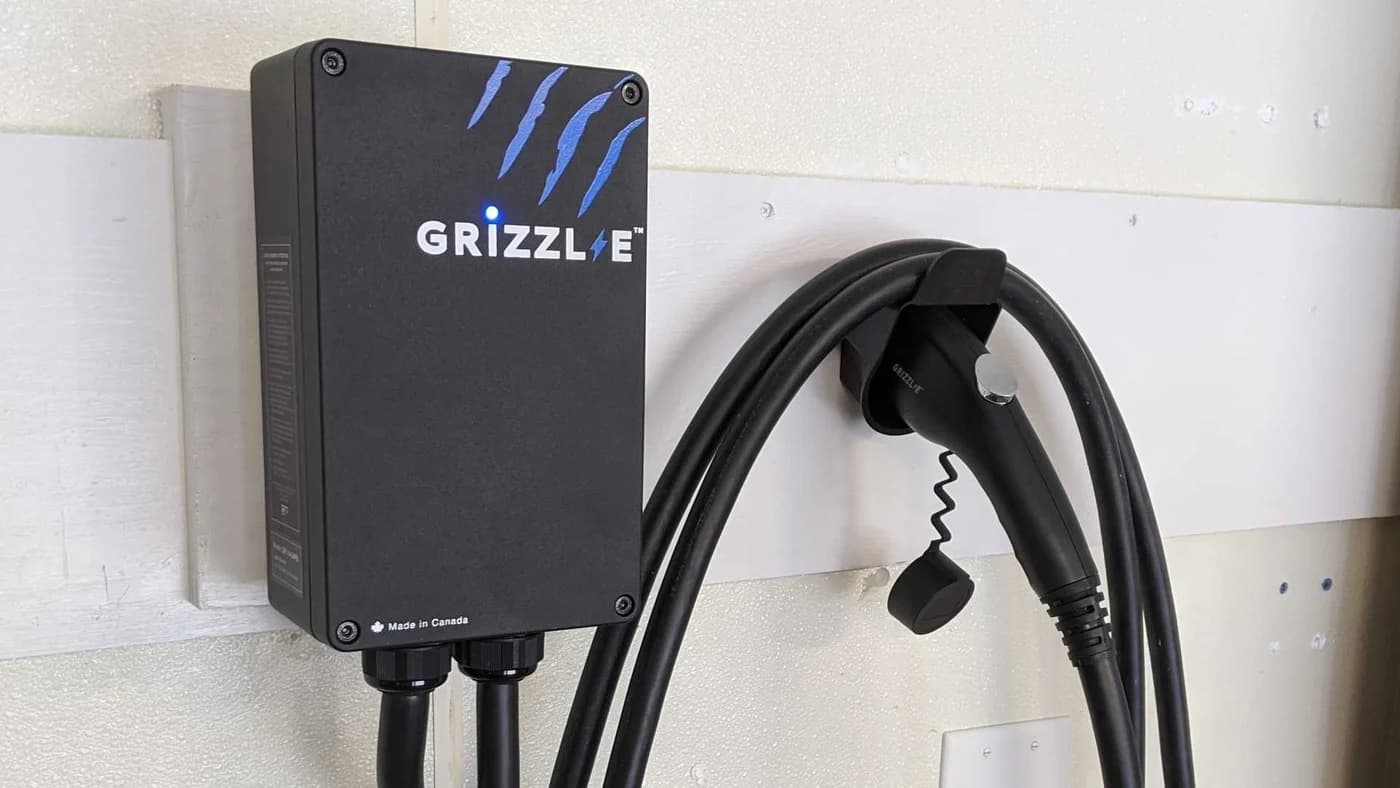
Grizzl-E Classic 40A Level 2 EV Charger (J1772, NEMA 14-50)
Choose for: Classic Black J1772 NEMA 14-50, GR1-14-24-PB
Check before buying: 40A maximum (no 48A hardwired version of the Classic)
For a US Polestar 2, our starting wall-unit pick is the Emporia Classic J1772, hardwired for up to 48A. If your existing Polestar cord is rated for 40A at 240V, another 40A plug-in unit offers no higher rated output; first check whether the cord already covers your overnight energy needs. Polestar recommends a charging station for regular charging, so keep the cord for its approved uses and choose a wall unit when you want a permanent charging setup.
Check your Polestar 2 year and supplied cord first
These US manuals all list a 48A, 11kW single-phase AC charging entry. The cable specifications identify SAE J1772; check the actual car and equipment rather than ordering by the Polestar badge alone.
2021
- AC cable standard
- SAE J1772
- Single-phase entry
- 48A / 11kW
- Supplied-equipment check
- Manual refers to a provided cable; verify its label and plug ends
2022
- AC cable standard
- SAE J1772
- Single-phase entry
- 48A / 11kW
- Supplied-equipment check
- Check the actual portable cord and delivery equipment list
2023
- AC cable standard
- SAE J1772
- Single-phase entry
- 48A / 11kW
- Supplied-equipment check
- Check the actual portable cord and delivery equipment list
2024
- AC cable standard
- SAE J1772
- Single-phase entry
- 48A / 11kW
- Supplied-equipment check
- Check the actual portable cord and delivery equipment list
2025
- AC cable standard
- SAE J1772
- Single-phase entry
- 48A / 11kW
- Supplied-equipment check
- Check the actual portable cord and delivery equipment list
Full comparison table
Swipe to compare. Row labels stay visible.
| Model year: official charging table | AC cable standard | Single-phase entry | Supplied-equipment check |
|---|---|---|---|
| 2021 | SAE J1772 | 48A / 11kW | Manual refers to a provided cable; verify its label and plug ends |
| 2022 | SAE J1772 | 48A / 11kW | Check the actual portable cord and delivery equipment list |
| 2023 | SAE J1772 | 48A / 11kW | Check the actual portable cord and delivery equipment list |
| 2024 | SAE J1772 | 48A / 11kW | Check the actual portable cord and delivery equipment list |
| 2025 | SAE J1772 | 48A / 11kW | Check the actual portable cord and delivery equipment list |
Scroll horizontally to see every column
| Model year: official charging table | AC cable standard | Single-phase entry | Supplied-equipment check |
|---|---|---|---|
| 2021 | SAE J1772 | 48A / 11kW | Manual refers to a provided cable; verify its label and plug ends |
| 2022 | SAE J1772 | 48A / 11kW | Check the actual portable cord and delivery equipment list |
| 2023 | SAE J1772 | 48A / 11kW | Check the actual portable cord and delivery equipment list |
| 2024 | SAE J1772 | 48A / 11kW | Check the actual portable cord and delivery equipment list |
| 2025 | SAE J1772 | 48A / 11kW | Check the actual portable cord and delivery equipment list |
The manual's reference to a supplied cable is not a historical packing list. The current US specification, describing the Long range Dual motor with Performance pack, explicitly lists a 12A/40A, Type 1, single-phase AC cable as standard. Do not apply that package retrospectively to every year or assume a used car retains it. Ask Polestar to confirm a replacement against the car; its manuals require a supplied or recommended replacement cable.
There is a regional-text conflict: the 2025 US charging instructions include a Type 2 identifier, while their cable specification says SAE J1772 and the US home-charging FAQ recommends J1772. Our shortlist follows the US J1772 guidance. For imports, later model years or another Polestar model, confirm the inlet and its own manual before buying.
Quick picks: compare the exact wall units
Maximum figures below describe the charging equipment, not guaranteed power into the car. Emporia advertises 11.5kW and ChargePoint 12kW; the Polestar manuals above list 11kW. A verified 40A/240V cord has a calculated 9.6kW supply ceiling, matching the maximum output of the plug-in choices here.
Compare specifications and all conditions
Emporia Classic — starting pick
- Exact package to choose
- J1772; hardwired for 48A
- Equipment output
- Up to 48A / 11.5kW hardwired; NEMA 14-50 version limited to 40A / 9.6kW
- Cable and enclosure
- 25 ft; NEMA Type 4
All specifications
- Safety listing and controls
- UL 2594; Emporia app scheduling
ChargePoint Home Flex — home/public app
- Exact package to choose
- J1772 hardwire, CPH50-HARDWIRE-L23-K
- Equipment output
- Up to 50A / 12kW; 48A is an available hardwire setting
- Cable and enclosure
- 23 ft; Type 3R
All specifications
- Safety listing and controls
- UL/cUL listed; ChargePoint app
Grizzl-E Classic — app-free
- Exact package to choose
- Classic Black J1772 NEMA 14-50, GR1-14-24-PB
- Equipment output
- Up to 40A / 9.6kW
- Cable and enclosure
- Manual: 24 ft; product page: 25 ft; Type 4 enclosure
All specifications
- Safety listing and controls
- UL E510712; no internet connection
Full comparison table
Swipe to compare. Row labels stay visible.
| Pick | Exact package to choose | Equipment output | Cable and enclosure | Safety listing and controls |
|---|---|---|---|---|
| Emporia Classic — starting pick | J1772; hardwired for 48A | Up to 48A / 11.5kW hardwired; NEMA 14-50 version limited to 40A / 9.6kW | 25 ft; NEMA Type 4 | UL 2594; Emporia app scheduling |
| ChargePoint Home Flex — home/public app | J1772 hardwire, CPH50-HARDWIRE-L23-K | Up to 50A / 12kW; 48A is an available hardwire setting | 23 ft; Type 3R | UL/cUL listed; ChargePoint app |
| Grizzl-E Classic — app-free | Classic Black J1772 NEMA 14-50, GR1-14-24-PB | Up to 40A / 9.6kW | Manual: 24 ft; product page: 25 ft; Type 4 enclosure | UL E510712; no internet connection |
Scroll horizontally to see every column
| Pick | Exact package to choose | Equipment output | Cable and enclosure | Safety listing and controls |
|---|---|---|---|---|
| Emporia Classic — starting pick | J1772; hardwired for 48A | Up to 48A / 11.5kW hardwired; NEMA 14-50 version limited to 40A / 9.6kW | 25 ft; NEMA Type 4 | UL 2594; Emporia app scheduling |
| ChargePoint Home Flex — home/public app | J1772 hardwire, CPH50-HARDWIRE-L23-K | Up to 50A / 12kW; 48A is an available hardwire setting | 23 ft; Type 3R | UL/cUL listed; ChargePoint app |
| Grizzl-E Classic — app-free | Classic Black J1772 NEMA 14-50, GR1-14-24-PB | Up to 40A / 9.6kW | Manual: 24 ft; product page: 25 ft; Type 4 enclosure | UL E510712; no internet connection |
Sources: Emporia specification, Home Flex specification and order codes, Grizzl-E product page and Classic manual.
- 11kWPolestar's AC figure in the linked US manuals
- 40AMaximum plug-in output for the shortlisted wall units
Emporia Classic J1772: best starting pick
Choose the J1772 Classic, with professional hardwiring if you need its 48A/11.5kW equipment rating. Its 25-foot cable, NEMA Type 4 enclosure and UL 2594 certification make a useful starting specification for a permanent home setup. The maker's page and specification distinguish it from the separately sold NACS model.
The reason to choose it is scheduling and energy visibility in the Emporia app. It uses 2.4GHz Wi-Fi; app setup is required to adjust rates and enable automation. Emporia says saved schedules and essential settings persist during an internet outage, although updates require connectivity.
Skip the upgrade for speed alone if you intend to use its NEMA 14-50 plug at 40A/9.6kW and already own an approved cord with the same rating. If panel capacity is tight, get an electrician's assessment before selecting the maximum setting.
ChargePoint Home Flex J1772 hardwired: best for its app
Choose CPH50-HARDWIRE-L23-K, the J1772 hardwired package. The official order-code table separates it from NACS and both NEMA plug versions. Its 23-foot cable, Type 3R enclosure and UL/cUL listing are documented there.
Its advantage is using one ChargePoint app for home and public charging. Polestar also names ChargePoint as a North American home-charging partner in its FAQ; that supports considering it, without making it a required brand.
Do not buy its 50A/12kW maximum expecting to exceed the car's documented 11kW figure. The installation FAQ offers a 48A hardwire setting, while either plug-in package tops out at 40A. Let the electrician select the compliant configuration.
Check installer eligibility: the May 2026 installation guide conditions warranty coverage on a ChargePoint-certified technician using approved methods, while the FAQ says any licensed electrician can install it. Confirm certification and warranty terms before booking.
Check the J1772 hardwire configuration at ChargePoint
Grizzl-E Classic Black: best without an app
Choose the non-connected Classic Black, GR1-14-24-PB, with J1772 and NEMA 14-50. Its manual rates it at 40A/9.6kW, and the product page lists an aluminum UL Type 4 enclosure and UL E510712 certification. This is our choice when you want to plug in without managing a charger account.
Grizzl-E
Grizzl-E Classic 40A Level 2 EV Charger (J1772, NEMA 14-50)
A non-smart, 40A Level 2 home charger in an aluminum UL Type 4 enclosure with a 24-ft J1772 cable, a NEMA 14-50 plug and switchable current limits, made in Canada by United Chargers.
Check package and model options
- 40 A max
- 9.6 kW max
- J1772
Two maker inconsistencies matter. The product page says 25 ft and 40A/10kW, but its linked manual specifies 24 ft for the GR1-14-24 family and 9.6kW at the maximum setting. Confirm the delivered cable length before relying on the last foot of reach; use the manual's output for planning.
The page also carries generic “Always connected” marketing despite the Classic specification saying “No Internet Connection.” Buy Classic Connect only if you specifically want that different connected product. For the Classic, the Polestar itself supports scheduled AC charging in its center display.
Keep the cord or buy a wall unit?
Keep a complete, undamaged OEM cord for the uses Polestar approves. For a missing or damaged cord, ask Polestar for its recommended replacement before buying an arbitrary portable kit. Polestar's charging guidance recommends a charging station for regular use and describes ordinary wall-outlet charging as extra charging.
A fixed unit earns its place when it gives you a permanent parking arrangement, the app functions you want or a shorter charging window. If you already meet that window, replace equipment only to solve a specific problem. Our Level 2 charger guide broadens the shortlist; the portable charger guide covers the separate travel-kit decision.
Daily-energy and overnight worksheet
Use wall energy from your charging history where available. If you start with driving energy reported by the car, leave additional allowance for charging losses and climate use rather than assuming every supplied kilowatt-hour reaches the battery.
Energy to replace after your usual day
- Calculation or decision
- Your daily charging energy in kWh
Hours actually available
- Calculation or decision
- Parking time inside any charging schedule or tariff window
Minimum average power
- Calculation or decision
- Daily wall kWh ÷ available hours
Check against your current setup
- Calculation or decision
- Compare with actual charging power, leaving reserve for unusual days
Full comparison table
Swipe to compare. Row labels stay visible.
| Write down | Calculation or decision |
|---|---|
| Energy to replace after your usual day | Your daily charging energy in kWh |
| Hours actually available | Parking time inside any charging schedule or tariff window |
| Minimum average power | Daily wall kWh ÷ available hours |
| Check against your current setup | Compare with actual charging power, leaving reserve for unusual days |
Scroll horizontally to see every column
| Write down | Calculation or decision |
|---|---|
| Energy to replace after your usual day | Your daily charging energy in kWh |
| Hours actually available | Parking time inside any charging schedule or tariff window |
| Minimum average power | Daily wall kWh ÷ available hours |
| Check against your current setup | Compare with actual charging power, leaving reserve for unusual days |
Illustrative assumptions: replacing 12kWh over 8 hours requires 12 ÷ 8 = 1.5kW average before adding reserve, using EIA's definition of energy units. Those are worksheet inputs, not a Polestar consumption claim. If the present setup consistently covers your own result, the higher maximum is optional.
Polestar's 2021–2023 tables estimate a full charge at 32A/7.2kW in 12 hours, versus 48A/11kW in 8 hours. These are approximate empty-to-full figures; use them as context, not a daily charging requirement. The later manuals warn that battery temperature, climate use and station limits can lengthen charging.
If charging is unexpectedly slow, check the car's AC amperage limit and timer. Polestar says the cable or station can restrict current below the car's selected setting. Its FAQ also warns that the app's charging timer is not location-based, so the same schedule can restrict AC charging away from home. Start with one scheduling system while you establish the routine.
Check the car and cord
Confirm market, inlet, equipment label and original delivery contents.
Size the charging window
Use daily energy and actual hours available, including schedule restrictions.
Get the site assessed
A licensed electrician should confirm capacity, package and permits before installation.
Parking, winter and electrician questions
Measure the cable route to the left-side charging door with the car parked as you normally use it. Include slack and storage space; do not use the charger's straight-line distance from the car as the whole measurement. Grizzl-E's cable-length conflict deserves particular attention here.
All three makers document outdoor-rated enclosures. Emporia and Grizzl-E specify −22°F to 122°F operation, as does ChargePoint's datasheet; that rating does not promise easy cable handling in freezing weather. Polestar warns that cold or hot conditions can divert charging energy to battery heating or cooling, so leave time margin.
Hardwired chargers need a licensed electrician and a permit where required. Ask about available capacity, the approved outdoor location, outlet condition if retained, and whether managed charging would help. ChargePoint's table pairs 48A output with a 60A circuit, and 40A with a 50A circuit; these are questions for the installer, not permission to select a breaker yourself. DOE's home-charging guidance explains capacity assessment and local permitting.
Before ordering or giving one
Match J1772, the exact model code, and hardwire versus the matching NEMA plug. J1772 is the vehicle connection; NEMA 14-50 and 6-50 describe different wall plugs. Home Flex offers both NEMA packages; the Emporia and Grizzl-E plug packages compared here use 14-50. Have the electrician confirm the outlet before choosing a plug.
For a holiday delivery, confirm the seller's current dispatch estimate, installation appointment, return conditions and package contents before committing. A delivered charger alone does not establish that the home is ready to use it.
Use the maker's documented accessories. The Classic box lists a regular EasyEvPlug holster and mounting kit; ChargePoint's order table lists a J1772 replacement charging cable separately from its NACS conversion kit. Request a supported replacement or mounting solution instead of extending a cable to rescue a poor location.
How we choose
We compare official US vehicle manuals, manufacturer specifications, safety listings, connector variants and current ordering information. These are research-based recommendations; we have not physically evaluated the chargers or their cold-weather handling. Document conflicts remain visible, and the worksheet is an estimate. The exact installation needs professional assessment. See our disclosure.
Verdict
Choose Emporia Classic J1772 hardwired as the starting wall-unit pick, Home Flex J1772 hardwired for the ChargePoint app, or Grizzl-E Classic Black NEMA 14-50 for app-free charging. Check your existing cord first: if its approved use already covers the energy window, another plug-in unit may add convenience without more output. Buy the package your car and electrician's assessment call for.
Frequently asked questions
What home charger does a Polestar 2 use?
For the US model-year manuals covered here, choose a J1772 AC home charger. Polestar's US home-charging FAQ recommends Level 2 J1772, and the linked 2021–2025 manuals list a 48A, 11kW single-phase charging entry. Check the actual inlet and market of an imported car before ordering. A NACS wall unit is a different connector choice.
Does the Polestar 2 come with a home charger?
Polestar's current US specification lists a 12A/40A Type 1 single-phase AC cable as standard equipment. That describes a cable, not an installed wallbox, and does not establish every earlier model year's delivery contents. Check the original equipment list and the actual cord, especially with a used car. Polestar recommends a charging station for regular charging and a supplied or Polestar-recommended replacement cable.
Does a Polestar 2 need a 48 amp EV charger?
Only choose the higher output if your charging window and electrical assessment justify it. A verified 40A cord or wall unit may already replenish your daily use. The Polestar manuals list 11kW at 48A; Emporia and ChargePoint require hardwiring for their 48A settings. Have a licensed electrician assess capacity and install a hardwired unit, with a permit where required.
Can I use a Tesla or NACS home charger with a Polestar 2?
The native AC choice for the US cars covered here is J1772. Polestar's Supercharger FAQ describes access to Level 3 DC charging using a NACS adapter; that does not establish compatibility with a NACS AC wall unit. Polestar says to use only adapters it approves. Buying the J1772 version avoids adding an adapter to this home-charging purchase.
How long does a Polestar 2 take to charge at home?
The US 2021–2023 manuals list approximately eight hours from empty to full at 48A/11kW and twelve hours at 32A/7.2kW. The 2024–2025 tables list eight hours for the long-range battery at 48A/11kW. These are manufacturer estimates with conditions, not nightly requirements: your starting charge, battery, temperature, climate use and station limits affect the result. Calculate the energy you actually need to replace each night.
Related guides
Best picks · Level 2 EV Chargers
Best Home EV Chargers for BMW iX: Keep the Cord or Buy?
Choose a home EV charger for your BMW iX: when to keep the BMW cord, which J1772 wall chargers to buy, and how to check model year, supply and overnight needs.
Best picks · Level 2 EV Chargers
Best Home EV Chargers for Subaru Solterra: 25-ft Picks by Year
Choose a home charger for your US Solterra by model year, connector and actual cable reach. Compare verified 25-ft options, shorter alternatives and setup.
Best picks · Level 2 EV Chargers
Best Home Chargers for Tesla Model Y: Buy for Your Daily Miles
Choose a Tesla Model Y home charger by vehicle limits, daily miles and parking reach. Compare Tesla, Emporia and Home Flex, or keep your Mobile Connector.